Dandruff and hair loss often share common causes, including overgrowth of Malassezia fungi, nutritional deficiencies in zinc and biotin, and stress-induced hormonal changes. While dandruff doesn’t directly cause hair loss, excessive scratching of an itchy, flaky scalp can damage hair follicles. You’ll see improvement by using medicated shampoos with ingredients like pyrithione zinc, maintaining a balanced diet, and managing stress. The connection between these conditions reveals important solutions for protecting your scalp health.
Key Takeaways
- Malassezia fungi overgrowth causes dandruff by feeding on scalp sebum and triggering inflammation and flaking.
- Nutritional deficiencies in iron, zinc, biotin, and vitamin D can contribute to both dandruff and hair loss.
- Stress weakens the immune system, allowing scalp conditions to develop and potentially disrupting normal hair growth cycles.
- Hormonal changes increase scalp oil production, creating an environment for dandruff and possibly triggering telogen effluvium.
- Scratching an itchy, flaky scalp damages hair follicles and can lead to temporary hair thinning or loss.
Understanding the Connection Between Dandruff and Hair Loss
Although many people worry that dandruff directly causes hair loss, the relationship between these two common scalp conditions is more complicated than it first appears.
While dandruff itself doesn’t directly lead to balding, it can contribute to temporary hair thinning through several mechanisms.
When you scratch your itchy, flaky scalp excessively, you can damage hair follicles and potentially dislodge hairs. Additionally, the Malassezia fungus that often triggers dandruff can cause inflammation around your hair follicles, potentially interfering with healthy hair growth.
It’s important to note that some conditions resembling dandruff, like scalp psoriasis, can more significantly impact your hair growth as thick plaques block follicles.
Using medicated shampoos and proper scalp care can help you manage dandruff and protect your hair follicles from related damage.
Common Scalp Conditions That Cause Both Issues
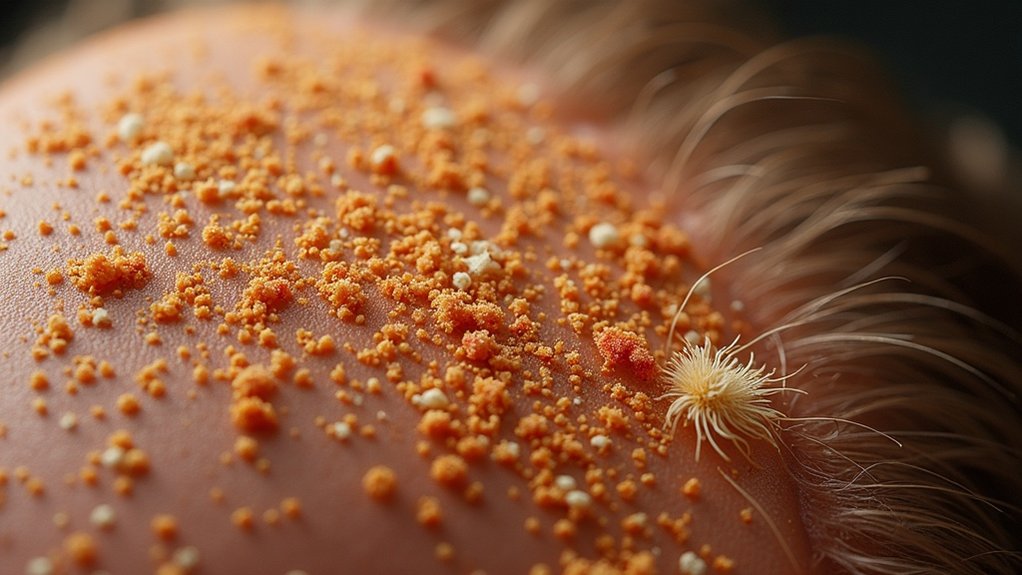
Several scalp conditions can trigger both dandruff and hair loss simultaneously.
Seborrheic dermatitis creates scaly patches that lead to flaking, while the resulting inflammation damages your hair follicles and causes breakage or thinning when you scratch frequently.
Fungal infections, such as scalp ringworm and Malassezia yeast overgrowth, appear as circular rashes or dandruff-like symptoms that can block follicles and interrupt normal hair growth if left untreated.
Seborrheic Dermatitis Effects
When your scalp develops redness, itchiness, and flaky skin that won’t seem to go away, you might be dealing with seborrheic dermatitis, a chronic inflammatory condition that commonly affects oily areas of your body.
This condition produces white or yellow flakes and scaly patches, particularly on your scalp.
If you constantly scratch the affected areas, you’re likely to experience hair breakage and temporary hair loss as your hair follicles weaken.
People with naturally oily skin, Parkinson’s disease, or those experiencing high stress levels are more vulnerable to this condition, which often worsens during cold, dry weather.
Without proper treatment using medicated shampoos or topical corticosteroids, chronic inflammation can develop, contributing to noticeable hair thinning.
Regular scalp cleansing is crucial for managing seborrheic dermatitis and protecting your hair health.
Scalp Fungal Infections
Fungal infections of the scalp represent a significant cause of both dandruff and hair loss, creating a frustrating cycle of symptoms that can damage your hair’s health.
Tinea capitis, commonly known as ringworm, appears as red, itchy circular patches that can cause hair to break and fall out in affected areas.
When Malassezia yeast overgrows on your scalp, it triggers inflammation that leads to dandruff and may eventually contribute to thinning hair.
You’ll notice persistent scaling and itching, which often prompts scratching that further damages your hair follicles.
Don’t delay seeking treatment if you suspect a fungal infection.
Prompt use of antifungal medications is crucial to prevent permanent follicular damage.
Maintaining proper scalp hygiene creates an environment where these infections can’t thrive, protecting both your scalp health and hair retention.
The Role of Malassezia Fungi in Scalp Health
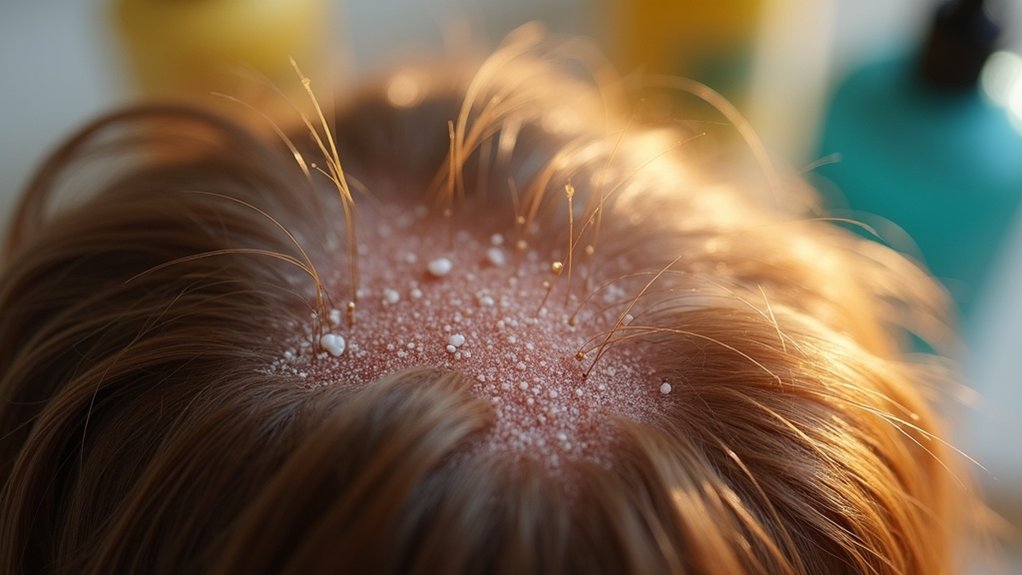
Microscopic fungi known as Malassezia play a significant role in your scalp’s health and can directly impact dandruff development.
These naturally occurring yeasts live on everyone’s scalp, but when they multiply excessively, they can trigger inflammation and flaking.
Malassezia thrives in oily environments, feeding on the sebum your scalp produces. If you have an oily scalp, you’re more likely to experience dandruff problems as these fungi have more “food” available.
Some people develop a hypersensitivity to Malassezia, resulting in itchiness and increased flaking.
Without proper treatment, these fungi can contribute to seborrheic dermatitis—a more severe condition characterized by redness, scaling, and potential hair loss.
Using medicated shampoos with ingredients like ketoconazole or zinc pyrithione helps control Malassezia populations and restore your scalp health.
Nutritional Deficiencies Affecting Your Scalp and Hair
Your body’s nutritional state directly impacts your scalp health, with deficiencies often revealing themselves through dandruff and hair loss. When you lack essential nutrients like iron, zinc, and biotin, your hair follicles can’t function properly, leading to thinning hair and an unhealthy scalp environment.
Vitamin D deficiency disrupts your normal hair growth cycle, potentially causing noticeable hair loss over time. Similarly, insufficient omega-3 fatty acids can leave your scalp dry and flaky, creating ideal conditions for dandruff to develop.
These nutritional deficiencies may also weaken your immune system, making your scalp more vulnerable to infections and inflammation that worsen existing dandruff and accelerate hair loss.
Stress and Hormonal Imbalances: The Hidden Culprits
While often overlooked, stress and hormonal fluctuations play a significant role in both dandruff formation and hair loss. When you’re under significant stress, your immune system weakens, creating an environment where the Malassezia fungus can thrive on your scalp, intensifying dandruff symptoms.
Hormonal changes, particularly during puberty or pregnancy, increase oil production on your scalp, providing an ideal breeding ground for dandruff-causing organisms. These same imbalances can trigger conditions like telogen effluvium, where you might notice increased hair shedding alongside flaky scalp issues.
Your body’s response to stress and fluctuating hormones, especially androgens, creates a challenging cycle that affects both scalp health and hair retention.
Incorporating stress management techniques into your daily routine can help reduce dandruff severity while promoting healthier hair growth.
Effective Treatment Options for Scalp Health
You’ve got options for treating dandruff and improving your scalp health, from medicated shampoos containing ingredients like pyrithione zinc to natural remedies such as tea tree oil.
Regular use of specialized shampoos, typically 2-3 times weekly, can effectively manage flaking while keeping your scalp moisturized with gentle oils helps prevent further irritation.
For persistent cases that don’t respond to over-the-counter solutions, your doctor might recommend clinical treatments, including prescription-strength medications or professional scalp therapies.
Medicated Shampoo Solutions
When dandruff and scalp issues persist despite regular washing, medicated shampoos offer a powerful solution that targets the root causes of these conditions.
These specialized formulations contain active ingredients like pyrithione zinc, salicylic acid, ketoconazole, and selenium sulfide that work directly against the Malassezia fungus and excess oil buildup on your scalp.
For mild dandruff, you’ll typically see significant improvement after using a medicated shampoo consistently for several weeks.
It’s crucial that you follow the application instructions carefully to get the best results and avoid potential side effects.
Pay attention to how your scalp responds to the treatment—if you don’t notice improvement or if symptoms worsen, you may need to try a different formula or consult a dermatologist for personalized advice.
Natural Remedy Approaches
For those seeking gentler alternatives to medicated treatments, natural remedies offer promising solutions for managing dandruff and supporting overall scalp health.
You can try tea tree oil, which contains antifungal properties that combat the Malassezia fungus often responsible for dandruff.
Aloe vera soothes irritation while reducing dryness, creating a healthier environment for your scalp. For a simple home solution, diluted apple cider vinegar helps balance your scalp’s pH and decrease flakiness.
Coconut oil serves as an excellent natural moisturizer with antimicrobial benefits that fight fungal growth.
Additionally, essential oils like rosemary and lavender not only improve scalp health but can stimulate hair growth by enhancing blood circulation to your follicles.
These natural remedies provide effective options without harsh chemicals.
Clinical Treatments Available
Despite the effectiveness of natural remedies, many stubborn cases of dandruff and related hair loss require more powerful clinical interventions. Your dermatologist may recommend medicated shampoos containing ingredients like pyrithione zinc, salicylic acid, or selenium sulfide to combat flaking and inflammation.
These products work by targeting the underlying causes rather than just treating symptoms.
For severe conditions like scalp psoriasis, prescription-strength topical corticosteroids or immunosuppressive therapies can help manage inflammation and prevent hair loss.
If fungal infections are causing your symptoms, antifungal treatments may be prescribed in either oral or topical forms.
Remember to keep regular appointments with your dermatologist to monitor your progress.
They’ll help adjust your treatment plan as needed, especially if you’re dealing with chronic conditions that require ongoing management.
Prevention Strategies to Maintain Healthy Hair
Although dandruff and hair loss can be frustrating problems, you’ll be glad to know that several effective prevention strategies exist to maintain your scalp health.
You can prevent hair loss and combat dandruff symptoms by incorporating medicated shampoos containing pyrithione zinc or salicylic acid into your regular hair care routine. These ingredients effectively control flaking while protecting your follicles.
Maintain healthy hair by washing and conditioning gently, avoiding tight hairstyles that pull on your scalp.
Don’t underestimate the impact of stress on your hair health—practicing relaxation techniques like yoga or meditation can significantly improve your scalp condition.
Additionally, nourish your hair from within by consuming foods rich in iron, zinc, and biotin, which support strong follicles and reduce dandruff-related hair loss.
When to Seek Professional Medical Help
While many cases of dandruff and mild hair loss respond well to home treatments, knowing exactly when you should consult a professional can save you from unnecessary complications.
You’ll need professional medical help if your dandruff persists despite regularly using medicated shampoos, as this might signal an underlying condition requiring specialized care.
If you notice significant hair loss occurring in clumps or accompanied by severe itching, don’t delay seeing a dermatologist. Symptoms of scalp psoriasis, such as thick silvery scales and inflamed patches, also warrant prompt medical evaluation for proper diagnosis and treatment.
Watch for worsening symptoms or signs of infection like redness and swelling.
Remember that dandruff-related hair thinning can potentially cause permanent follicle damage if left untreated, so early intervention through expert consultation is your best defense.