
Perfume expires when its chemical compounds break down through oxidation, typically occurring within 3-5 years after opening. You’ll notice signs like altered scent (sour or metallic notes), color changes, or reduced performance. Different formulations last longer—Eau de Parfum outlasts Eau de Toilette, while citrus scents deteriorate faster than musks or ouds. Proper storage away from sunlight, heat, and humidity extends lifespan significantly. The chemistry behind fragrance degradation reveals fascinating insights about preserving your favorite scents.
Key Takeaways
- Perfume expires through oxidation when exposed to air, affecting lighter notes first and eventually changing the scent.
- Most fragrances last 3-5 years when properly stored, with unopened bottles lasting significantly longer.
- Signs of expired perfume include sour or vinegary smells, color changes, and decreased projection.
- Direct sunlight, heat, humidity, and uncapped bottles accelerate the deterioration process.
- While expired perfumes typically won’t cause harm, they may irritate sensitive skin and have altered scent profiles.
The Chemistry Behind Perfume Degradation
When you spray your favorite perfume, you’re releasing a carefully crafted mixture of chemicals that’s vulnerable to breakdown over time. This chemical composition undergoes oxidation when exposed to air, particularly affecting the lighter notes first.
You’ll notice your favorite citrus or floral scents fade as oxygen molecules alter their structure. The balance between natural and synthetic ingredients affects how quickly your fragrance has gone bad.
Natural components typically degrade faster, while synthetic elements provide stability. Your perfume’s alcohol content also serves as a protective barrier, slowing the oxidation process.
Proper storage conditions matter tremendously. Exposure to light and temperature fluctuations accelerates chemical reactions, leading to color changes and altered scents.
That’s why manufacturers include an expiration date, typically ranging from 3-5 years after opening.
Identifying Signs of an Expired Fragrance
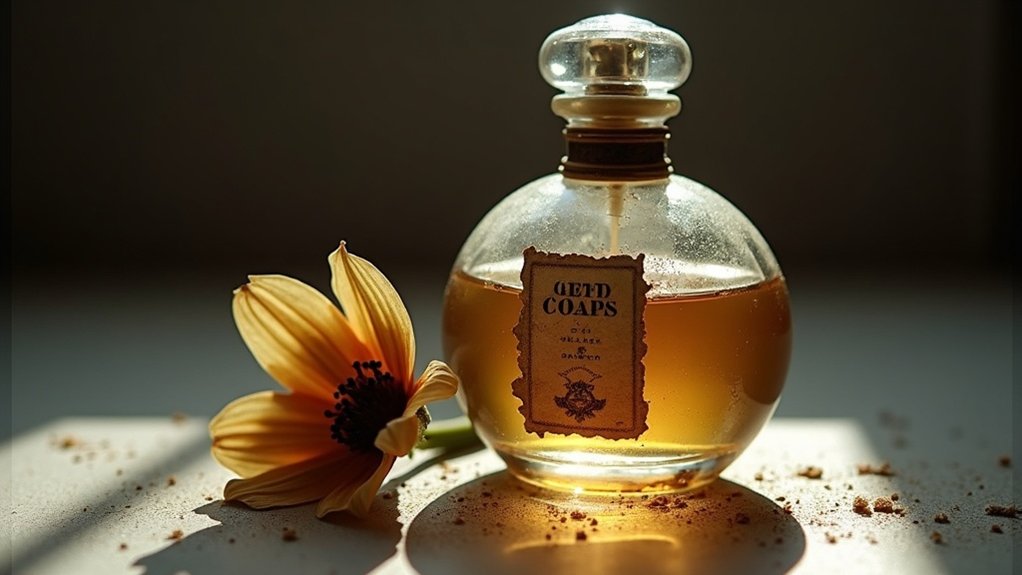
How can you tell if your beloved perfume has passed its prime? Your nose knows best when it comes to fragrance expiration. If you notice your perfume has developed a sour, metallic, or vinegary scent, that’s oxidation at work breaking down the ingredients.
Visual clues matter too—watch for color changes from pale yellow to darker or more opaque shades, as well as any separation or unusual sediment in the bottle.
Pay attention to performance issues, like decreased projection or “sparkle” when applied. The most concerning sign is skin irritation after application, which indicates the fragrance may no longer be safe to use.
Proper storage can extend your perfume’s life, but knowing these expiration signs helps you determine when it’s time to replace your favorite scent.
Shelf Life: How Long Different Perfume Types Last
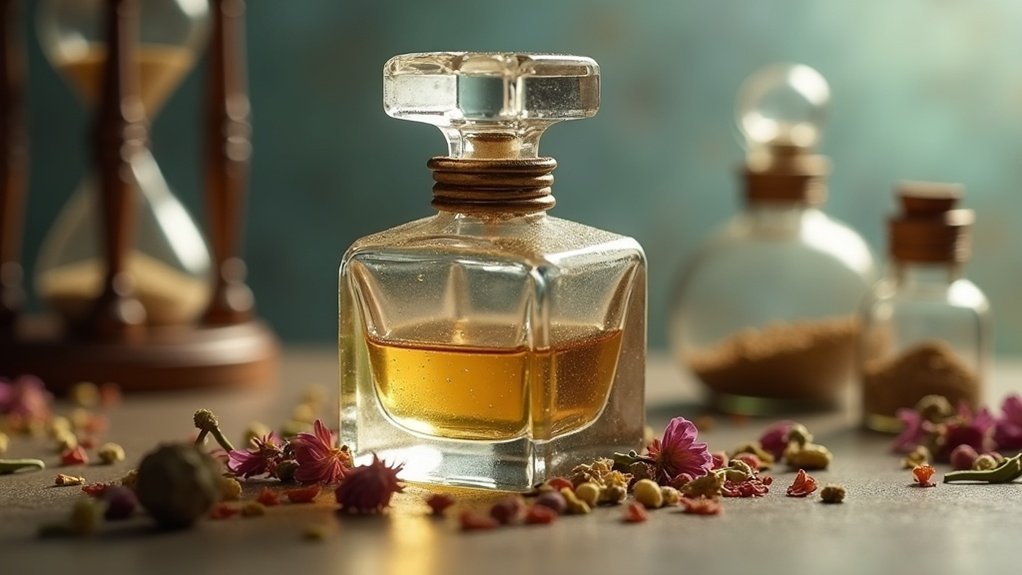
Now that you can recognize the telltale signs of expired fragrance, understanding the expected shelf life of your perfumes will help you manage your collection better.
Most fragrances remain viable for three to five years when properly stored, but this varies by type. Your Eau de Parfum bottles, with their higher concentration of perfume oils (12-18%), typically outlast Eau de Toilette formulations (8-12%).
Citrus and floral scents have a shorter shelf life due to their vulnerability to oxidation, while musk and oud notes remain stable longer.
Always store your fragrances away from sunlight and heat to maximize longevity. Keep perfume in its original packaging when possible for added protection.
Unopened bottles can last indefinitely, but once opened, aim to enjoy them within two to three years for the best experience.
Storage Factors That Accelerate Expiration
The way you store your perfume directly influences how quickly it expires, with several common factors dramatically shortening its lifespan.
Exposure to light, especially direct sunlight, breaks down delicate fragrance notes through oxidation, compromising the scent’s integrity. High temperatures in bathrooms or cars accelerate evaporation and chemical reactions that degrade your perfume’s quality.
Humidity presents another threat, potentially promoting mold growth and altering the chemical composition of your favorite scents.
Leaving bottles uncapped introduces excess air, increasing oxidation and significantly reducing fragrance lifespan. To protect your investment, always keep perfumes in their original packaging, which shields them from damaging light and air.
Can You Still Use Expired Perfume Safely?
While proper storage extends your perfume’s prime lifespan, you might wonder what happens when that bottle of fragrance has technically expired. The good news is that expired perfume typically won’t cause harm, though the scent experience may disappoint you with sour or metallic notes that weren’t part of the original fragrance profile.
If you have sensitive skin, approach expired fragrances with caution. Consider doing a patch test before application, as oxidation changes can sometimes trigger irritation or allergic reactions.
Watch for signs of deterioration like discoloration or cloudiness in your perfume storage area. These visual cues often indicate that your favorite scent is past its prime.
For best results, use your perfumes within three to five years, and regularly check them to ensure they’re still safe to use.
Extending Your Fragrance’s Lifespan: Expert Tips
Proper storage techniques can dramatically extend your perfume’s lifespan, saving you money and ensuring you enjoy your favorite scents for years to come.
To properly store your perfume, keep bottles away from direct sunlight in a cool, dark place. This prevents the breakdown of delicate ingredients in a perfume, particularly the lighter top notes.
Always close bottles tightly after use to minimize exposure to oxygen, which causes oxidation and degrades fragrances.
Avoid bathroom storage, where humidity can alter chemical composition and accelerate evaporation. Instead, choose a bedroom drawer or closet shelf.
To help your collection last longer, organize bottles by opening date and try to use them within three years.
Take care to regularly check for signs of expiration, including changes in color, scent, or texture.
The Difference Between Oxidation and True Expiration
Your perfume doesn’t simply go bad overnight, but undergoes a gradual process of oxidation when exposed to air, light, and heat.
This chemical reaction causes the fragrance molecules to break down, with the lighter top notes typically degrading first and creating those unpleasant sour smells you might notice.
True expiration, however, occurs when your perfume has significantly changed in scent, color, or developed an off-putting odor that signals it’s time to say goodbye to that bottle.
The Science Behind Oxidation
When you open that beautiful bottle of perfume, a silent countdown begins as the fragrance molecules inside start their gradual dance with oxygen. This chemical interaction, called oxidation, transforms your perfume over time, particularly affecting the top notes—those initial scents you detect immediately after application.
Perfumes with essential oils are especially vulnerable to this process, as natural ingredients break down faster than synthetic ones when exposed to air. You’ll notice this change first in citrus or fruity components, which may develop a sour quality.
The good news? Perfumes with a higher percentage of alcohol resist oxidation better, as alcohol acts as a natural preservative.
To extend your fragrance’s life, keep it stored in a cool, dark place, minimizing exposure to heat, sunlight, and air.
Preserving Fragrance Quality
Although oxidation gradually alters your perfume’s scent profile, it doesn’t necessarily mean your fragrance has completely expired.
True expiration occurs when your perfume develops unpleasant odors and loses its intended character, rather than simply experiencing subtle changes.
You can extend your fragrance’s life by implementing proper storage techniques. Keep your perfume in its original bottle, away from direct sunlight and heat, preferably in a cool, dark place.
Regularly check for signs of oxidation, such as color changes or altered scent profiles, particularly in fragrances containing delicate citrus or floral notes.