
You’ll still tan with sunscreen because no product blocks 100% of UV rays. SPF 30 lets about 3% of UVB rays reach your skin, while SPF 50 allows around 2%. Even with proper application, these small percentages accumulate during extended sun exposure, especially if you don’t reapply every two hours. Your skin type also matters – darker skin tones tan more easily through sunscreen than fair skin. The following strategies will help you balance protection and color.
Key Takeaways
- SPF 30 allows about 3% of UVB rays through, meaning tanning still occurs gradually with regular sunscreen use.
- Higher SPF offers better protection but doesn’t completely prevent tanning as some UV rays always penetrate.
- Darker skin tones tan more easily with sunscreen than fair skin due to naturally higher melanin production.
- Reapplication frequency significantly impacts tanning potential; infrequent reapplication leads to more color development.
- Even with proper sunscreen application, prolonged sun exposure will eventually result in some tanning effect.
The Science Behind Tanning With Sunscreen
While you might think sunscreen completely blocks the sun’s rays, it actually allows a small percentage to reach your skin.
Even with SPF 30, about 3% of UVB rays penetrate your skin barrier, triggering melanin production that causes tanning.
Broad-spectrum sunscreen helps protect your skin from both UVA and UVB rays, but it’s not a perfect shield.
UVA rays penetrate deeper into your skin and contribute to tanning and skin aging, while UVB rays primarily affect the surface layers.
When you’re outdoors, this limited UV exposure accumulates, especially if you forget reapplication every two hours.
SPF Levels and Their Effect on Tanning
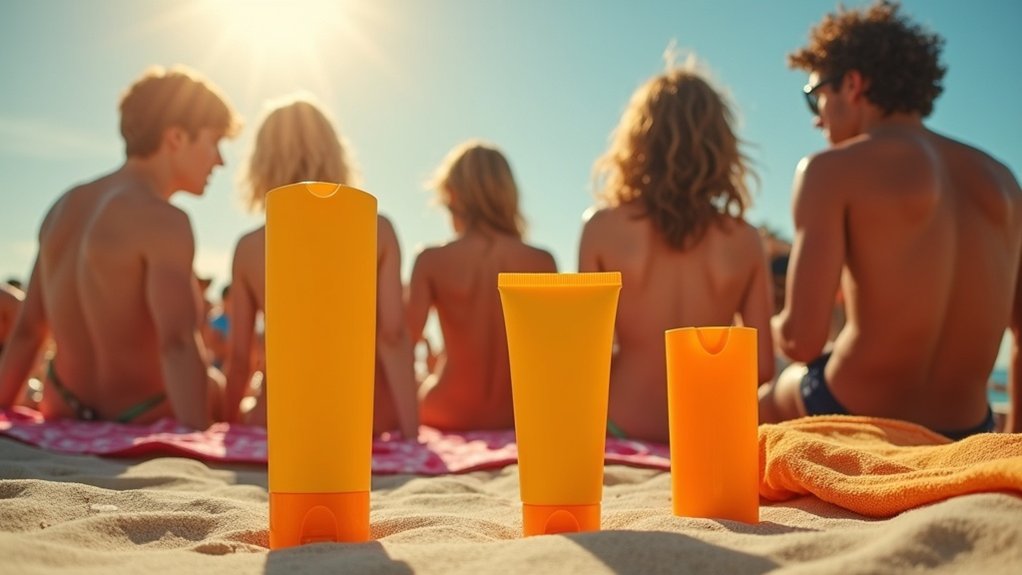
Although most people assume higher SPF numbers provide complete protection against tanning, the reality is more nuanced.
When you apply sunscreen with an SPF of 30, you’re blocking about 97% of UV rays, while SPF 50 blocks approximately 98%. This means you can still tan with sunscreen, just at a slower rate.
The 2% of UVB rays that penetrate SPF 50 sunscreens are enough to trigger the tanning process in your skin. Remember, your skin’s reaction to UV exposure is what causes tanning in the first place.
To minimize harmful effects of UV and reduce your risk of skin cancer and skin damage, make sure you apply sunscreen thoroughly and reapply regularly.
Higher SPF levels will protect against UVA and UVB rays more effectively, but won’t completely prevent a tan.
How Different Skin Types Tan Through Sunscreen

Your skin type significantly impacts how you’ll tan even when wearing sunscreen. If you have fair skin (types I and II), you’ll burn easily and may tan minimally despite protection.
You’ll need to be extra diligent about the amount of sunscreen applied and reapplication every two hours to protect against both UVA and UVB rays.
Those with medium to dark skin (types III to VI) experience a different tanning process. Your skin naturally produces more melanin in response to UV exposure, allowing you to tan more readily even with sunscreen use.
While the sunscreen slows this process, your skin can still develop color over time. Remember, all skin types can experience tanning when UV rays penetrate sunscreen, especially during prolonged exposure when protection may become compromised.
Best Practices for Safer Tanning With Protection
Despite the protection that sunscreen provides, achieving a tan safely requires strategic planning and consistent application techniques.
You’ll need to apply broad-spectrum SPF 50 sunscreen thoroughly 20 minutes before sun exposure, which blocks 98% of harmful UV rays while still allowing your skin to develop a healthy tan gradually.
Always reapply your water-resistant sunscreen every two hours, especially after swimming or sweating, to maintain consistent protection.
Limit your sun exposure during peak hours (10 AM to 4 PM), and seek partial shade periodically to reduce potential skin damage.
Instead of marathon tanning sessions, opt for incremental exposure—starting with 15-30 minutes and gradually increasing time as your tan develops.
This methodical approach helps protect your skin while still achieving the color you want.
Alternative Ways to Achieve a Sun-Kissed Glow
When seeking that coveted bronzed appearance, self-tanners and bronzing products offer excellent alternatives to traditional sun exposure. These products contain dihydroxyacetone (DHA), which temporarily darkens your skin without harmful UV exposure.
You’ll find them in various formulations—lotions, sprays, and mousses—that can last up to a week.
Remember, self-tanners don’t provide UV protection, so always apply sunscreen daily. For a more natural approach, try DIY bronzing agents like coffee or cocoa powder for a temporary tint. These solutions maintain your skin health while giving you that sun-kissed look.
Complete your protected bronzed appearance with UPF clothing, wide-brimmed hats, and sunglasses.
This comprehensive approach lets you enjoy a beautiful glow while serving as a positive example of sun-smart behavior to others.