
Your perfume has likely expired if you notice changes in color (yellowing or cloudiness), weakened scent intensity, or altered fragrance profiles. Check for floating particles, crystallization around the dispenser, or separation of ingredients as visual warning signs. Pay attention to skin reactions like redness or itching after application, and any sour, metallic, or vinegar-like notes that weren’t present originally. The PAO symbol on your bottle can guide you about expected shelf life after opening.
Key Takeaways
- Check for sour, metallic, or vinegar-like notes that signal perfume expiration.
- Look for visible changes like yellowing, cloudiness, separation, or tiny crystals around the dispenser.
- Monitor skin reactions including redness, itching, or rashes after applying older fragrances.
- Compare current fragrance intensity with its original profile to identify significant degradation.
- Check the PAO (Period After Opening) symbol which indicates how many months the perfume remains effective.
Recognizing Changes in Fragrance Intensity and Profile
When your favorite perfume doesn’t smell quite right anymore, it’s often signaling that it has reached the end of its lifespan.
You’ll notice a decrease in fragrance intensity, requiring more frequent application to achieve the same effect you once enjoyed with just a spritz or two.
Be alert to changes in scent profile that suggest oxidation has occurred. If you detect sour, metallic, or vinegar-like notes that weren’t present before, your expired perfume is no longer suitable for use.
To avoid potential skin irritation, test the fragrance on paper or cloth first rather than directly on your skin.
Being familiar with original fragrance characteristics is essential, as any significant deviation indicates degradation.
When your once-vibrant scent feels noticeably weaker, it’s time to consider a replacement.
Understanding Perfume Shelf Life and Expiration Dates
The Period After Opening (PAO) symbol, which looks like an open jar with a number followed by “M” (months), will tell you exactly how long your perfume should last after you’ve first opened it.
Natural fragrance ingredients tend to break down faster than synthetic ones, with natural perfumes lasting about 2-5 years while synthetic formulations can remain stable for up to a decade.
You’ll need to consider both the perfume’s formulation type and when you opened it to accurately determine if it’s still safe and effective to use.
Decoding PAO Symbols
Most perfume lovers don’t realize that tiny symbols on their fragrance packaging hold crucial information about when their beloved scents might go bad.
The PAO (Period After Opening) symbol—usually depicting an open jar with a number and “M”—tells you how many months your perfume will remain at peak quality after you’ve broken the seal.
Finding this symbol on your original bottle is essential for tracking perfume shelf life. The number ranges from 6 to 60 months, depending on the chemical composition of your fragrance.
When you exceed this timeframe, it’s a sign that your perfume may develop off-notes or cause skin irritation.
Proper storage can extend your perfume’s lifespan, but it’s always wise to respect the expiration date indicated by the PAO symbol to ensure both safety and optimal scent experience.
Formulation Lifespan Factors
Beyond the PAO symbol, understanding what’s actually inside your perfume bottle will help you predict its lifespan more accurately. Your perfumes’ shelf life varies significantly based on their ingredients – natural fragrances typically last 2.5 to 5 years, while synthetic formulations can remain viable for up to 10 years.
Pay attention to your perfume’s composition: citrus and floral scents with lighter top notes deteriorate faster than woody or resinous fragrances with heavier base notes.
Proper storage conditions are crucial – keep your perfume bottles in cool, dark places away from humidity to maximize longevity. While unopened perfume can last several years longer, once opened, you’ll get optimal results within two to three years.
Remember that environmental factors and your body chemistry can affect how quickly a fragrance degrades, so trust your nose when determining if it’s time for replacement.
Identifying Visual Warning Signs of Degradation
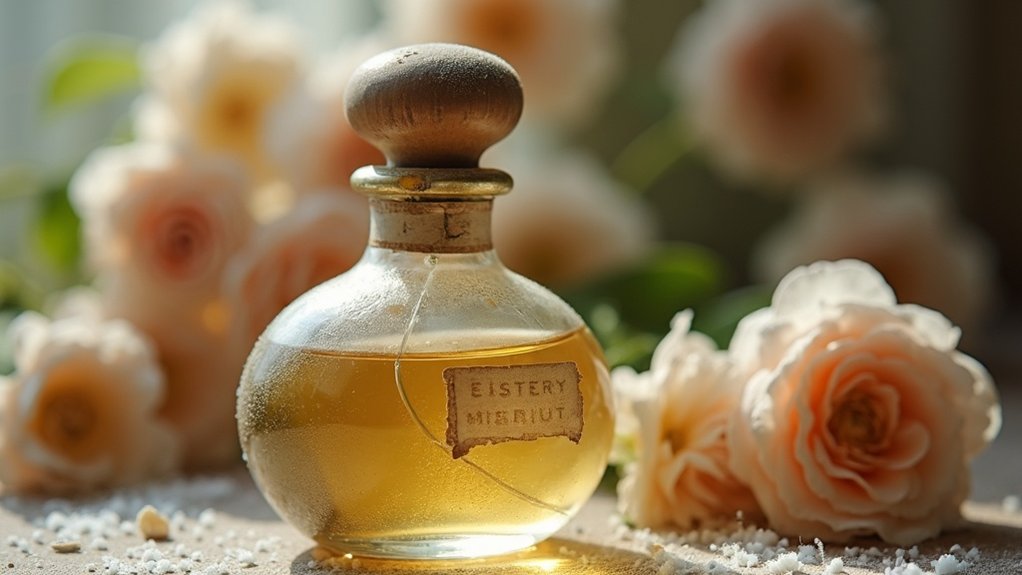
Your perfume’s appearance can reveal a lot about its freshness, so watch for key visual indicators that signal it’s time for replacement.
First, check for any color changes in your fragrance, as a shift from yellowish to brown or the development of cloudiness suggests the perfume has expired.
You’ll also want to examine the bottle for floating particles or separation of ingredients, and don’t forget to inspect the dispenser for tiny crystals, which indicate oxidation has occurred.
Color Changes Indicate Expiration
When examining your perfume collection, visible color alterations serve as telltale indicators that your fragrance may have passed its prime.
Pay close attention to any shift from clear to yellowish or brown hue, as this transformation suggests chemical breakdown in the formula.
If you notice your once-transparent perfume developing a cloudy look or showing particles settling at the bottom, it’s time to consider replacing it.
These visual warning signs of aging aren’t merely aesthetic concerns—they signal potential skin irritation risks if you continue using the product.
Make regular visual inspections part of your fragrance maintenance routine.
Watch For Sediment Formation
Inspecting the bottom of your perfume bottle regularly can reveal another critical sign of expiration—sediment formation.
When you notice visible crystals or floating particles in your once-clear fragrance, you’re witnessing oxidation in action. These chemical changes typically accompany a decline in scent quality and indicate your perfume has likely passed its expiration date.
The presence of sediment suggests that fragrance ingredients have separated, compromising the perfume’s stability.
Before applying a fragrance with visible particles to your skin, test it on paper or cloth first. This precaution helps prevent potential irritation that may occur from using destabilized perfume.
Make checking for sediment part of your regular perfume maintenance routine—it’s a straightforward visual warning sign that your favorite scent may no longer offer the same quality or safety.
Bottle Dispenser Crystallization
Beyond sediment in the liquid itself, the perfume’s dispenser often reveals early warning signs of degradation.
When examining your fragrance bottle, look for tiny crystals forming around the spray nozzle or atomizer. These crystals result from oxidation, where volatile compounds evaporate and leave behind solid residue. This crystallization is a clear indicator your perfume may expire soon, if not already.
This visual change appears more commonly in fragrances containing essential oils or natural ingredients, which are more susceptible to chemical breakdown.
When you notice these crystalline deposits, your scent experience will likely be compromised, as the perfume’s composition has fundamentally altered.
Make checking your bottle’s dispenser part of your regular fragrance maintenance routine, especially for treasured scents you want to preserve for special occasions.
Detecting Sour or Off-Notes in Your Scent
How quickly can you tell if your favorite fragrance has gone bad? Your nose knows best when it comes to identifying expired perfumes.
If you notice a sour or metallic scent that wasn’t there before, it’s likely your perfume has deteriorated through oxidation.
An altered fragrance profile is a key indicator that something’s wrong. Try testing the scent on paper rather than directly on your skin—this helps you detect off-notes without risking irritation.
Significant scent changes, such as a weaker aroma or an astringent quality, suggest it’s time to replace your perfume.
Always compare what you smell to your memory of the original scent. When vinegar-like or unusual notes emerge that weren’t part of the intended fragrance composition, it’s best to discontinue use.
Monitoring Skin Reactions to Older Fragrances
Your skin offers valuable feedback about your perfume’s condition that your nose might miss. When expired perfumes undergo fragrance degradation, they can cause skin irritation that appears as redness, itchiness, or rashes.
These reactions often indicate that changes in the scent profile have occurred, possibly introducing sour or metallic notes that your skin rejects.
Be aware that your reaction might differ from others, as individual body chemistry affects how you respond to aging fragrances.
Start monitoring reactions by testing on paper or cloth before you apply directly to your skin. If you notice any unusual sensations after application—even mild discomfort—your perfume has likely expired.
This cautious approach protects your skin while helping you determine when it’s time to replace your favorite scent.
Proper Storage Techniques to Extend Perfume Longevity
While perfumes might seem resilient in their beautiful bottles, proper storage significantly impacts how long they’ll maintain their intended fragrance profiles. To prevent your favorite scent from developing a smell sour note before its expiry date, keep bottles in their original box to shield them from light degradation and oxygen exposure.
Never store perfume in bathrooms where humidity and temperature fluctuations accelerate deterioration. Instead, find a dark spot in your bedroom or closet where stable temperature conditions prevail. Your refrigerator can be an excellent option for extending fragrance life, particularly during summer months when heat threatens delicate scent molecules.
Regularly examine your collection for color changes or altered scents, which indicate chemical breakdown. With proper storage practices, you’ll enjoy your perfumes long past when improperly stored bottles would have deteriorated.