
When your perfume expires, its chemical composition changes, potentially causing altered scent profiles and skin irritation. You’ll notice signs like darkening color (yellow to brown), unusual smells (metallic or sour), or visible separation of ingredients. While most fragrances last 2-5 years when properly stored away from heat, light, and humidity, they don’t suddenly become unsafe on a specific date. Proper storage techniques and recognizing degradation indicators will help you maximize your fragrance investment.
Key Takeaways
- The scent profile changes, often developing metallic or sour odors that differ from the original fragrance.
- The liquid typically darkens from clear to yellow or brown and may become cloudy or show separation.
- Expired perfumes can cause skin irritation, redness, or allergic reactions when applied.
- The fragrance loses potency, requiring more sprays for effect due to molecular breakdown.
- Once expired, perfumes cannot be revived as the chemical changes are irreversible.
Understanding Perfume Expiration: Myths vs. Reality
While many of us believe perfumes come with strict expiration dates like milk or medication, the truth about fragrance longevity is much more nuanced.
Perfumes don’t suddenly “go bad” on a specific date; rather, their chemical composition gradually changes over time, affecting fragrance intensity.
Most fragrances have a shelf life of at least two years, though unopened perfume can last significantly longer—sometimes five years or more.
You’ll recognize signs of expiration through changes in color (darkening or cloudiness), altered scent profiles, or skin irritation upon application.
The biggest myths vs. reality disconnect concerns proper storage.
Keeping your fragrances away from sunlight, heat, and humidity dramatically extends their lifespan, making expiration dates less relevant.
With appropriate care, your favorite scent can remain beautiful long past its suggested timeline.
Key Signs Your Fragrance Has Gone Bad
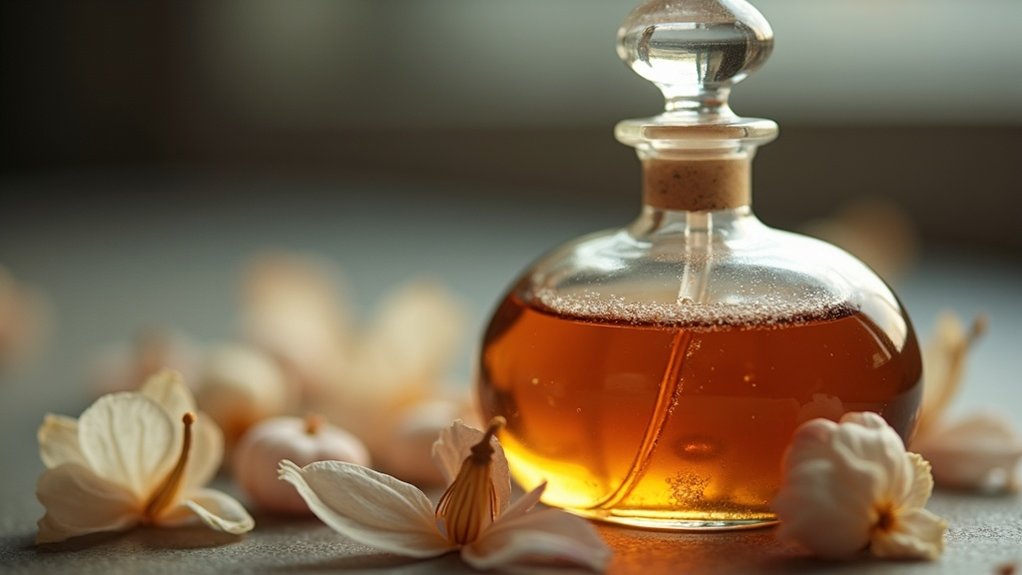
Five unmistakable signals can alert you when your beloved perfume has passed its prime.
First, notice any scent changes – if your fragrance develops a metallic odor or sour smell, it’s expired.
Second, watch for visual clues: when your perfume darkens from yellow to brown or appears cloudy, these are clear signs it’s gone bad.
Third, pay attention to your skin’s reaction; unexpected redness or irritation after application suggests the formula has deteriorated.
Fourth, examine the bottle for visible separation of ingredients or floating particles, which indicate chemical breakdown.
Finally, if you’ve noticed a significant loss of intensity where you need more sprays than before, your once-powerful scent is fading away.
Recognizing these warning signs helps you avoid using perfumes that are no longer at their best.
How Storage Conditions Affect Perfume Lifespan
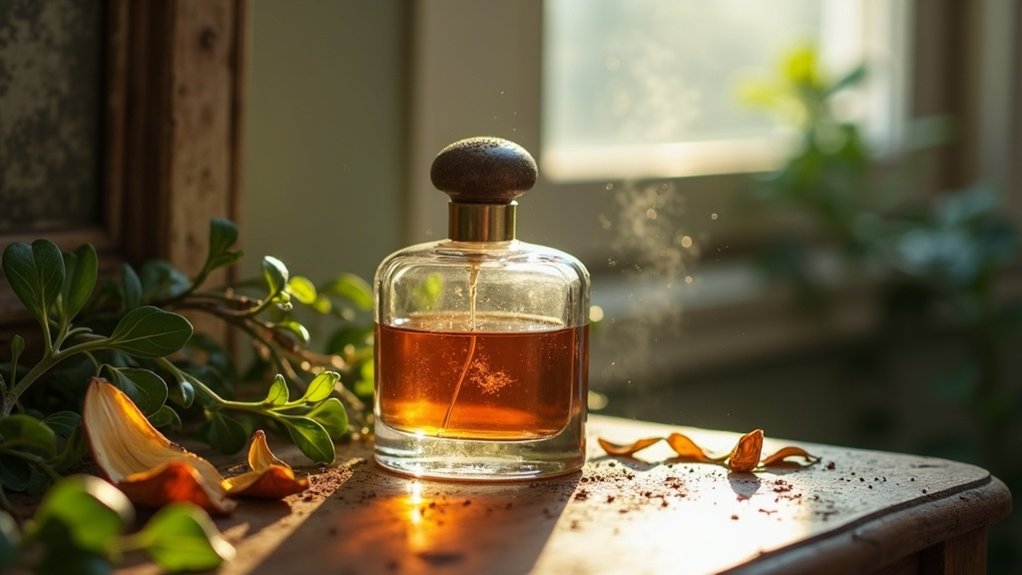
Storing your precious perfume collection properly isn’t just about organization—it’s the difference between enjoying your signature scent for years or discovering it’s spoiled within months. Proper storage conditions can dramatically extend your fragrance’s potency and prevent degradation.
Always keep your perfumes in a cool, dark place, as exposure to light and heat accelerates chemical breakdown. Humidity is equally damaging, causing scent molecules to evaporate faster. Your bathroom, despite its convenience, is actually one of the worst places for perfume storage.
To minimize air exposure and slow oxidation, keep bottles in their original packaging and tightly closed when not in use.
Make it a habit to check for signs of expiration—such as color changes or altered scents—every few months to ensure your fragrances haven’t started to expire.
The Chemical Changes in Expired Perfumes
When your perfume expires, it undergoes a complex molecular breakdown process that fundamentally changes its chemical structure.
You’ll notice these changes most obviously in the altered scent profile, as the fragrance molecules oxidize and transform from their original composition into something that might smell sour or metallic.
The perfume’s top notes are typically the first casualties of this chemical degradation, which explains why your once-favorite scent no longer delivers that initial burst of fragrance you once loved.
Molecular Breakdown Process
The delicate chemistry of your favorite fragrance undergoes significant transformation once it’s past its prime. When perfume expires, a process called oxidation begins, where fragrance molecules break down through exposure to air, light, and heat.
This molecular breakdown affects the top notes first, causing them to lose their vibrant character and develop sour, acidic, or even metallic undertones.
You’ll notice visible signs of this chemical change as your perfume transitions from clear to yellowish or brown. The liquid might also separate, appearing cloudy with floating particles.
Beyond these aesthetic changes, expired perfumes can trigger skin irritation and allergic reactions when applied. The compounds that once created your signature scent have fundamentally changed, potentially causing your skin to react differently than it did with the fresh product.
Altered Scent Profiles
Your once-beloved signature scent transforms dramatically as it expires, creating an olfactory experience you didn’t bargain for. When oxidation occurs in expired perfume, it fundamentally alters fragrance molecules, replacing pleasant aromas with sour, acidic, or metallic unpleasant smells.
The delicate top notes degrade first, disrupting the carefully designed scent pyramid that perfumers intended.
You’ll notice your perfume’s chemical composition changes visibly too—bottles often darken in color, turning from clear or light yellow to brown or cloudy. Sometimes, separation of ingredients becomes apparent, with particles floating or distinct layers forming in the liquid.
The most disappointing change is the significant loss of intensity. Your fragrance no longer lingers as intended, requiring more product for less effect—a clear signal that your perfume has reached the end of its aromatic lifespan.
Potential Skin Reactions From Using Old Fragrances
Despite their lovely scents and personal appeal, expired perfumes can trigger uncomfortable skin reactions you shouldn’t ignore. When fragrance components degrade over time, they can cause skin irritation including redness, rashes, and allergic reactions that weren’t present when the perfume was fresh.
Pay special attention to perfumes that change color or show separation, as these contain unstable ingredients more likely to cause adverse effects. Citrus and floral notes are particularly problematic, as they expire faster and may intensify skin sensitivities.
If you notice burning, itching, or unusual skin reactions after application, discontinue use immediately. Your skin’s response often serves as the first indication that your once-favorite scent has passed its prime and is no longer safe for application.
Comparing Shelf Life: Eau De Parfum vs. Eau De Toilette
While your eau de parfum typically lasts longer than eau de toilette due to its higher concentration of perfume oils (12-18% compared to 8-12%), both formulations can still maintain their quality for three to five years when properly stored.
The higher oil content in eau de parfum provides greater stability against degradation, which explains why these fragrances often retain their scent profile longer than their lighter counterparts.
However, regardless of which type you own, proper storage away from heat, light, and humidity will always matter more than the fragrance classification when it comes to maximizing shelf life.
Concentration Affects Longevity
Fragrance concentration plays a crucial role in determining how long your perfume will last before it expires.
Your eau de parfum, with its higher oil content (12-18%), typically maintains its integrity longer than eau de toilette, which contains only 8-12% perfume oil.
The science behind this difference relates directly to how fragrance molecules interact over time.
When your eau de toilette’s lower concentration of oils evaporates more quickly, its expiry date arrives sooner than its stronger counterpart.
While both formulations generally have a shelf life of three to five years under ideal storage conditions, your eau de parfum is more resilient against deterioration.
Storage Trumps Classification
Although your eau de parfum contains a higher concentration of oils than eau de toilette, proper storage conditions ultimately matter more than fragrance classification when determining shelf life.
Both types can last three to five years when you protect them from their greatest enemies: heat, light, and air.
Your eau de toilette, despite its lower oil concentration, won’t necessarily reach expiry faster if you’re diligent about storage.
Keep all your fragrances in their original boxes, in cool, dark places like drawers or cabinets.
Understanding the chemical composition helps you appreciate why this matters—oxidation changes your perfume’s molecular structure, affecting its scent and longevity.
Can You Revive an Expired Perfume?
Unfortunately, once your perfume has expired, there’s typically no way to truly bring it back to life. The chemical changes and oxidation that occur over time irreversibly alter the fragrance molecules, making revival attempts largely unsuccessful.
While some people suggest mixing expired perfume with carrier oils, this rarely improves the degraded scent—it simply dilutes it.
Before discarding your fragrance, you can assess its condition by testing it on a perfume strip to determine the extent of deterioration.
If your perfume has only lost some intensity rather than fully expired, layering it with a similar scent might temporarily enhance its performance.
However, if you notice discoloration or sour notes, it’s best to simply discard the perfume, as these are clear signs that chemical breakdown has occurred.
When to Keep vs. When to Discard Aging Scents
Deciding whether to keep or toss an aging perfume requires careful assessment of several key indicators. If your fragrance still smells pleasant with minimal loss of scent intensity, it’s likely safe to continue using.
However, you should immediately discard any perfume that shows visible separation of ingredients, has floating particles, or has undergone a change in scent to metallic or sour smells.
Watch for physical changes like darkening or a cloudy appearance, which signal degradation of the formula.
Most importantly, prioritize your health—if you experience any skin irritation, redness, or rashes after application, the perfume has expired and should be discarded right away.
Remember that even subtle changes in appearance or performance can indicate that your once-beloved scent is no longer safe for use.
Extending Your Perfume’s Longevity: Essential Tips
Properly storing your favorite fragrances can dramatically extend their shelf life and preserve their intended scent profile for years beyond their typical expiration date.
To achieve a longer shelf life, always store your fragrances in a cool, dark place and keep away from sunlight and heat sources. Remember to keep the bottle closed when not in use, preventing oxygen exposure that can accelerate spoilage.
Avoid bathroom storage where humidity can damage delicate scent compounds. Instead, use the original bottle for storage, as manufacturers design these containers specifically to maintain fragrance integrity.
Regularly check your fragrances for signs of expiration include a change in color, altered scent profile, or skin irritation after application.
Which Fragrance Notes Deteriorate Fastest (And Which Last Longest)
When you understand which components of your perfume are most vulnerable to time, you’ll make smarter decisions about which fragrances to invest in and how to care for them.
Citrus and floral notes, particularly lemon and jasmine, deteriorate fastest, typically expiring within 2-3 years due to their volatile compounds. Fruity notes follow closely behind, as they’re prone to oxidation that can transform your once-pleasant perfume into something undesirable.
On the other end of the spectrum, woody notes like sandalwood and cedar demonstrate impressive staying power, often lasting 3-5 years when properly stored. Spicy notes such as cinnamon and clove also show resilience, maintaining their integrity for up to 5 years.
Storage conditions significantly impact how quickly any fragrance deteriorates, with proper temperature and light control extending your perfume’s lifespan considerably.