
To determine your skin tone, examine your wrist veins in natural light (blue veins suggest cool undertones; green indicate warm), notice which jewelry flatters you (silver for cool, gold for warm), and assess your reaction to sun exposure (burning easily suggests cool undertones). You can also test foundation shades along your jawline, looking for one that disappears into your skin. These simple tests will reveal both your surface tone and underlying undertone, unlocking the secrets to your most flattering colors.
Key Takeaways
- Examine your wrist veins in natural light – blue/purple veins indicate cool undertones, green veins suggest warm undertones.
- Test jewelry preferences – silver typically flatters cool undertones while gold enhances warm undertones.
- Place a white paper next to your face to see if your skin appears more yellowish (warm) or pinkish (cool).
- Observe how your skin reacts to sun exposure – easily burning suggests cool undertones while tanning indicates warm undertones.
- Apply foundation swatches along your jawline in natural daylight to find which undertone category blends seamlessly with your skin.
The Basics of Skin Tone vs. Undertone
Although many people use the terms interchangeably, skin tone and undertone are two distinct characteristics that affect how colors look on your face. Your skin tone refers to the surface color—light, medium, or dark—which can change with sun exposure.
In contrast, your undertone is the subtle hue beneath the surface that remains consistent over time.
To determine your skin tone accurately, you’ll need to identify both elements. People with cool undertones have pink or bluish hints, while those with warm undertones show yellow or golden hues. If you have aspects of both, you likely have neutral undertones.
Understanding this difference helps you select makeup and clothing that truly complement your natural coloring, allowing you to better serve others with your knowledge and enhance their appearance choices.
Understanding the Three Main Undertone Categories
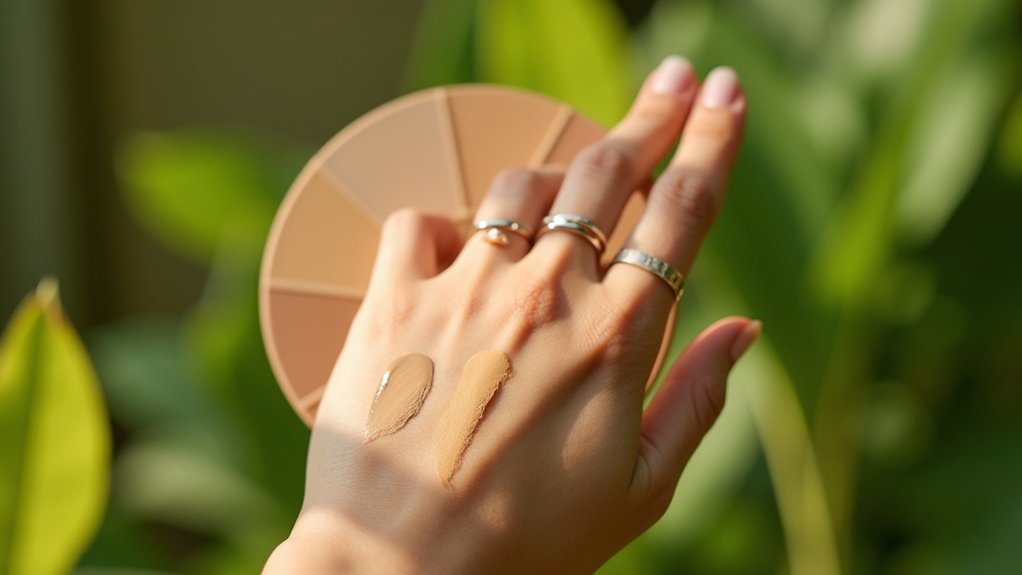
Your skin’s undertone falls into one of three main categories: cool (with pink, red, or blue hues), warm (with yellow, peach, or golden hues), or neutral (with a balanced mix of both).
You’ll know you have cool undertones if your veins appear blue, you look better in silver jewelry, and white fabrics flatter your complexion more than cream colors.
If you have warm undertones, your veins will appear greenish, gold jewelry enhances your look, and earth tones like olive, orange, and brown complement your skin beautifully.
Cool vs. Warm Undertones
Beneath your skin’s surface lies a subtle hue that forms the foundation of your unique complexion. This underlying tone plays a crucial role in determining your skin tone and affects how different colors look on you.
Cool undertones typically appear pinkish, reddish, or bluish beneath the skin, while warm undertones have yellowish, peachy, or golden hues.
To determine which category you fall into, examine your veins—bluish veins suggest cool undertones, while greenish ones indicate warm undertones. The jewelry test offers another helpful clue: if silver jewelry complements your skin better than gold, you likely have cool undertones; if gold looks more flattering, you probably have warm undertones.
You can also hold white paper against your face; a bluish or pinkish cast suggests cool undertones, while a yellowish appearance indicates warm undertones.
Neutral Skin Characteristics
The middle ground between warm and cool undertones reveals itself in neutral skin characteristics, where a harmonious balance of both yellow and pink hues creates a versatile complexion.
If you’ve noticed that both gold and silver jewelry complement your appearance equally well, you likely have a neutral skin tone and undertone.
When examining your veins, you’ll see a blend of blue and green colors, making it sometimes challenging to find the right category for your skin.
Your neutral undertones offer flexibility in makeup choices, allowing you to experiment with both warm and cool color palettes.
You’ll find that softer shades like taupes, beiges, and muted earth tones enhance your natural beauty, while extremely bright colors may overwhelm your balanced complexion.
Undertone Test Methods
How can you accurately determine which of the three main undertone categories—cool, warm, or neutral—best describes your skin? Several simple tests can reveal your skin undertone with surprising accuracy.
First, examine your wrist veins in natural light. Blue or purple veins typically indicate cool undertones, while green-appearing veins suggest warm undertones.
The jewelry test offers another reliable method—if gold jewelry complements your skin better, you likely have warm undertones, whereas silver flatters cool undertones.
For a third approach, hold a white paper next to your face and notice any color changes; a yellowish cast indicates warm undertones, while pinkish or bluish hues suggest cool.
If you find both gold and silver look equally flattering, you’re probably blessed with neutral undertones, giving you versatility in color choices.
The Vein Test: What Your Wrists Reveal
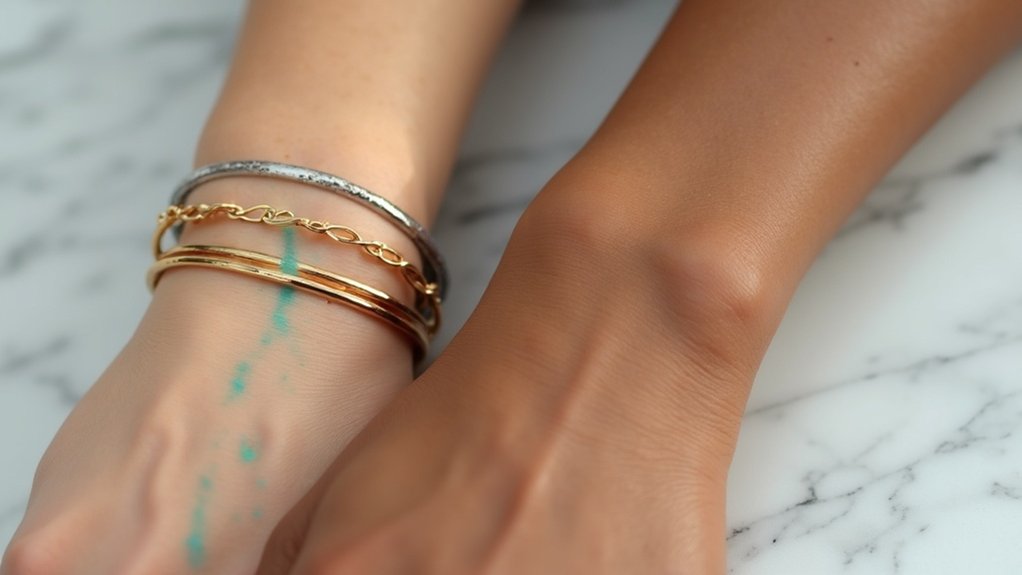
Ever wondered why your foundation looks perfect in the store but slightly off when you get home? The secret might be in your veins!
The Vein Test is a simple way to determine your skin’s undertone by examining the color of veins on your wrist.
In natural light, look at your inner wrist. If your veins appear blue or purple, you likely have cool undertones.
Green or greenish-blue veins suggest warm undertones. Can you see both colors? You might’ve neutral undertones, giving you more flexibility with color choices.
Jewelry and Clothing Color Preferences
When you’ve discovered your skin’s undertone through the vein test, you’ll find that certain jewelry and clothing colors naturally enhance your appearance while others might wash you out.
If you have warm undertones, gold jewelry typically brings out your natural radiance, while earthy clothing colors like reds, oranges, and yellows will complement your skin tone beautifully.
For those with cool undertones, silver jewelry often creates a harmonious look, and clothing in blues, greens, and purples will make your complexion appear more vibrant.
If you’re blessed with neutral undertones, you’ll enjoy flexibility with both jewelry metals and clothing colors.
Pay attention to which colors make you feel most confident – this intuitive response often aligns with your natural undertones and can guide your wardrobe choices as you serve others with your best appearance.
How Your Skin Reacts to Sun Exposure
Beyond your wardrobe choices, the way your skin behaves under the summer sun offers valuable clues about your natural skin tone.
Pay attention to whether you burn easily or develop a tan—this reaction reveals important information about your skin color and undertones.
If you experience frequent sunburns and rarely tan, you likely have fair skin with cool undertones.
Medium skin tones typically tan moderately with occasional burning, suggesting neutral undertones.
Darker skin that tans deeply without burning often indicates warm undertones.
Remember that your skin’s response to sun exposure may change as you age.
Older skin might react differently, developing uneven pigmentation or appearing duller.
Understanding these patterns helps you select appropriate sunscreen and skincare products specifically formulated for your unique skin tone.
Natural Light Assessment Techniques
You’ll get the most accurate view of your skin tone by examining your face in morning daylight, when the sun’s rays are bright but not harsh.
Try placing a white sheet of paper next to your jawline, which helps reveal whether your skin has warm, cool, or neutral undertones through the contrast created.
Another effective method is the shadow test, where you’ll observe how your skin appears in partial shadow versus direct light, noting if it takes on a more golden hue (warm) or bluish cast (cool) in the shaded areas.
Morning Daylight Evaluation
The three most reliable minutes for accurate skin tone assessment occur within an hour after sunrise, when natural light is at its purest form.
During this golden window, you’ll see your skin without distortion, revealing whether you have warm skin tones or a cool skin tone.
Position yourself near a window facing east and examine your jawline, which typically shows your true complexion.
Look closely at your veins—blue or purple indicates cool undertones, while green suggests warmth.
Understanding the importance of knowing your skin tone helps you choose makeup, clothing, and hair colors that enhance your natural beauty.
Try this evaluation several days in a row for consistency.
If morning assessment isn’t possible, aim for overcast days when light diffuses evenly across your skin.
Surface Color Comparison
While morning light offers ideal conditions, comparing your skin to various surfaces in natural daylight creates another powerful assessment method.
To assess your skin tone, gather different colored fabrics or papers and hold them against your clean jawline in natural light. Notice which colors make your complexion appear vibrant versus those that make it look dull or washed out. This surface color comparison will help determine if you have cool or warm undertones.
If your skin looks best against silver, blue, or pink shades, you likely have cool undertones. Alternatively, if gold, peach, or yellow hues enhance your appearance, you probably have golden undertones.
Remember to perform this test after your skin has settled for about 15 minutes to ensure the most accurate results.
Shadow Test Method
Among the most reliable techniques for determining your skin tone, the Shadow Test offers a natural and intuitive approach that doesn’t require special equipment. This method relies on observing the color of shadows cast by your hand in natural light.
To perform the shadow test, find a well-lit outdoor area during midday when the sun is at its highest. Place your hand against a plain white background and observe the shadow’s color.
If you notice a blue or purple shadow, you likely have a cool skin tone. Yellow or brown shadows indicate a warm skin tone, while gray shadows suggest a neutral skin tone.
The midday sun provides the clearest results, as shadows appear more pronounced at this time. This simple yet effective assessment helps you accurately identify your skin tone without specialized tools.
Makeup Foundation as a Skin Tone Indicator
Finding your perfect makeup foundation can serve as a revealing diagnostic tool for determining your precise skin tone. When you’re exploring foundation options, pay attention to how brands categorize their shades into three main undertones: warm (golden or yellow), cool (pink or blue), and neutral. These classifications help you identify which family your skin naturally belongs to.
For the most accurate assessment, apply small foundation swatches along your jawline in natural daylight. Watch how each shade interacts with your skin—does it disappear seamlessly or create a noticeable line?
Many makeup brands now offer extensive shade ranges specifically designed to match various skin tones. The foundation that virtually vanishes into your skin not only provides the most flattering coverage but also confirms your true skin tone.
Seasonal Changes and Your Skin Tone
Four distinct seasons can dramatically transform your skin tone throughout the year, creating a natural shift that many people overlook when selecting makeup and skincare products.
If you have lighter skin, you’ll likely notice significant variations between summer and winter months, requiring different foundation shades to maintain a natural look.
During summer, increased sun exposure stimulates melanin production, often warming your skin undertones and darkening your complexion. Remember to protect against sun damage with appropriate SPF.
Conversely, winter months typically lighten your skin tone, sometimes revealing cooler undertones.
For effective makeup application year-round, observe how your skin responds to seasonal changes.
Those with medium skin tones may experience more dramatic shifts, tanning easily in summer while returning to cooler undertones in winter.
Selecting Products That Complement Your Tone
Once you’ve identified your skin’s undertone, selecting makeup and skincare products becomes a much more straightforward process that can transform your entire beauty routine.
To know your skin tone is to understand which colors will enhance your natural beauty.
If you have cool undertones, look for products with pink or blue bases. Foundation, blush, and lipstick with these undertones will blend seamlessly with your complexion.
For warm undertones, select makeup choices with golden or yellow hues that will complement your natural warmth.
Those blessed with neutral undertones have more flexibility in selecting products from both spectrums.
Remember to test makeup on your jawline in natural light before purchasing, ensuring there’s no visible line between your face and neck.
Seasonal color trends can also guide your selections while maintaining harmony with your undertone.