
When cologne expires, it undergoes chemical changes that affect its quality and safety. You’ll notice visible signs like darkening or cloudiness, while the fragrance may develop sour or rancid notes. Expired cologne can cause skin irritation and loses its potency, requiring more sprays for the same effect. Different types last varying periods: Eau de Cologne (2-3 years), Eau de Toilette (3-5 years), and Eau de Parfum (up to 5 years). Proper storage and regular inspection can help maximize your fragrance’s lifespan.
Key Takeaways
- Cologne undergoes oxidation over time, causing essential oils to break down and develop unpleasant sour or rancid notes.
- Visual signs of expiration include darkening, yellowing, cloudiness, separation, thickened consistency, or crystallization in the bottle.
- Expired cologne typically has diminished potency, requiring more sprays for the same effect.
- Using expired cologne may cause skin irritation or allergic reactions due to chemical degradation of ingredients.
- Different concentrations have varying shelf lives: Eau de Cologne (2-3 years), Eau de Toilette (3-5 years), and Eau de Parfum (up to 5 years).
The Chemistry of Fragrance Breakdown
When your favorite cologne starts to smell a bit off, it’s likely undergoing a natural chemical transformation. This degradation occurs primarily through oxidation, where air exposure alters the fragrance’s chemical composition over time.
Your cologne’s ingredients, especially essential oils, gradually break down, transforming pleasant aromas into unpleasant odors that might smell sour or rancid. The shelf life of your fragrance depends largely on its alcohol content—higher percentages actually preserve your cologne longer by preventing bacterial growth and slowing oxidation.
You’ll notice that citrus and floral scents in your collection typically reach expiration faster than woody notes.
To extend your cologne’s lifespan, protect it from the elements that accelerate degradation: light and heat, which can rapidly diminish its original character.
Visual Signs Your Cologne Has Gone Bad
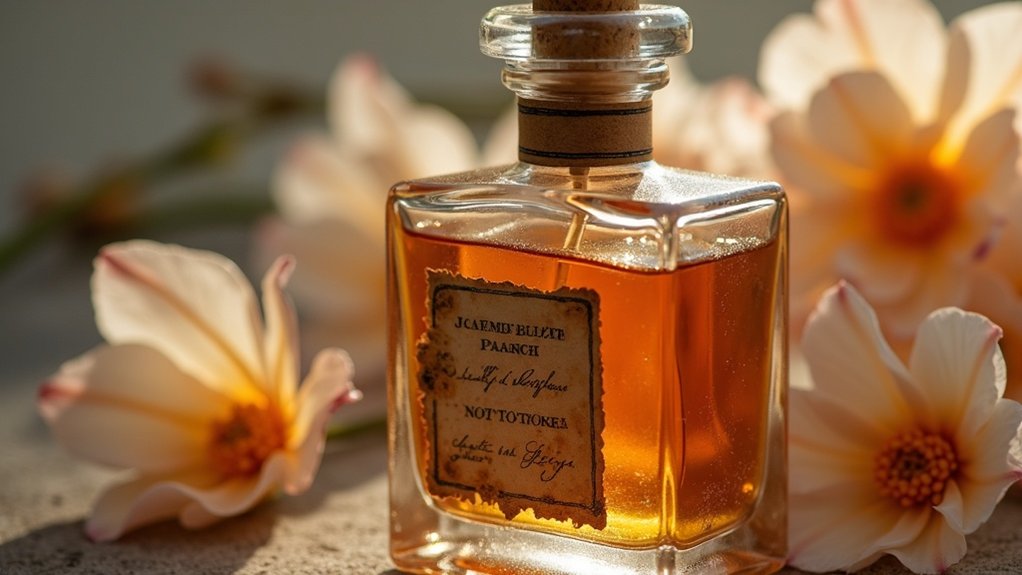
Unlike subtle changes in scent, you’ll notice several unmistakable visual clues that your cologne has reached its expiration point.
Examine your fragrance for darkening or yellowing of the liquid, which indicates chemical changes have occurred within the formula.
When you inspect your bottle, look for cloudiness or murky appearance rather than the clear liquid you originally purchased. This haziness signals ingredient breakdown that affects both performance and safety.
Similarly, separation within the bottle—visible as floating particles or distinct layers—shows the formula is no longer stable.
Check for thickened consistency by gently tilting the bottle; expired cologne won’t flow as smoothly as fresh fragrance.
Finally, crystallization or sediment accumulating at the bottom of your cologne bottle provides definitive evidence that it’s time to replace your fragrance.
Olfactory Clues That Signal Expiration
Your nose serves as the most reliable detector for determining if a cologne has expired. When fragrance molecules break down through the oxidation process, you’ll notice a significant change in odor – often developing sour or rancid notes that weren’t present in the original scent.
This noticeable change typically accompanies visual cues like discoloration or texture change in the liquid.
If your cologne’s potency diminishes substantially, requiring more sprays to achieve the same effect, it’s likely past its expiration date.
Pay attention to your body’s reactions too; expired colognes frequently cause skin irritation or allergic reactions when applied.
The change in color to yellow or brown, combined with these olfactory warning signs, indicates that your fragrance has deteriorated and should be replaced to ensure you’re presenting your best self.
Skin Reactions to Expired Fragrances
The chemical deterioration of expired cologne often leads to more than just an unpleasant smell—it can trigger uncomfortable skin reactions that shouldn’t be ignored.
When fragrance compounds break down past their expiration date, they can irritate your skin, causing redness, itching, or rashes in areas of application.
You’re also at higher risk for allergic reactions with expired fragrances, as the breakdown of ingredients can create new compounds that your skin may not tolerate.
These adverse reactions might be accompanied by unpleasant odors that signal chemical changes.
Before using cologne that’s past its prime, conduct a patch test on a small area of skin to check for irritation.
Remember that expired fragrances can also leave stains on both skin and clothing, creating additional problems beyond discomfort.
Average Shelf Life of Different Cologne Types
You’ll find significant differences in longevity when comparing various cologne types, with concentration playing the key role in determining shelf life.
Eau de Cologne, with its modest 2-5% perfume oil content, will typically last only 2-3 years, while the highly concentrated Perfume Extract, containing over 20% oils, can remain viable for 5+ years under proper storage conditions.
The specific ingredients in your fragrance also impact its longevity, as natural components tend to deteriorate faster than synthetic ones, which is why properly stored synthetic-heavy formulations often outlast their expiration dates.
Eau vs. Extract Longevity
When comparing fragrance longevity, concentration plays a crucial role in determining how long your cologne will remain viable.
Eau de Cologne, with just 2-4% perfume oil, has the shortest shelf life at 2-3 years. Your eau de toilette will last longer—typically 3-5 years—because it contains 8-12% perfume oil.
For greater longevity, consider Eau de Parfum, which contains 12-18% perfume oil and can remain fresh for up to 5 years.
Perfume extract offers the longest shelf life, often exceeding 7 years, thanks to its impressive 20-40% concentration of fragrance oils.
Remember that storage conditions significantly impact how quickly your fragrances expire.
Also, products containing natural ingredients will oxidize faster than synthetic ones, regardless of concentration, shortening their overall longevity.
Ingredient Impact Analysis
Beyond concentration levels, specific ingredients play a defining role in how long your cologne remains wearable. The natural components in your fragrance often determine its shelf life, with citrus-based scents being particularly volatile and prone to expire faster than their woody or oriental counterparts.
You’ll notice that colognes with predominantly synthetic ingredients typically outlast those with natural elements, sometimes extending their usability by several years.
When you store your cologne properly—away from heat, light, and humidity—you effectively slow the oxidation process that degrades your fragrance over time.
Watch for expiration signs like color changes, reduced scent projection, or altered fragrance notes.
Remember that Eau de Parfum formulations (12-18% oil concentration) generally offer the longest shelf life, while lighter Eau de Cologne compositions may deteriorate more quickly.
Proper Storage Techniques for Maximum Longevity
Extending the life of your cologne requires proper storage techniques that protect its delicate chemical composition.
To properly store cologne, choose a cool, dark place away from windows and heat sources to prevent breakdown of fragrance molecules. Your bathroom is actually one of the worst locations due to humidity and temperature fluctuations that accelerate degradation.
Always ensure the cap is tightly sealed after each use to minimize oxygen exposure, which causes oxidation.
For serious collectors, a wine fridge provides ideal conditions for fragrance preservation.
Regularly inspect your bottles for signs of expiration such as changes in color or altered scent profiles. It’s also smart to rotate your collection, using older bottles first to enjoy each fragrance at its peak quality.
The Impact of Ingredients on Expiration Timelines
Different ingredients in your cologne create a complex chemical puzzle that directly determines how long your fragrance will remain fresh and vibrant.
Natural ingredients typically degrade faster than synthetic ones, significantly affecting expiration timelines. You’ll notice that colognes with citrus notes have a shorter shelf life—usually just one to two years—while woody and oriental fragrances can last up to five years with proper storage.
The alcohol content in your cologne acts as a preservative; higher concentrations, like those in Eau de Cologne, extend longevity.
Be aware that fragrances with more volatile compounds (especially fruity or floral scents) undergo oxidation more quickly, diminishing their potency.
Essential oils like patchouli and jasmine can become unstable over time, altering your cologne’s scent profile and signaling that it’s approaching the end of its useful life.
How to Test if Your Cologne Is Still Wearable
When you’re unsure if your cologne has passed its prime, you’ll need to rely on your senses and a few simple tests to determine its wearability.
First, examine the liquid for changes in color—yellowing or darkening often indicates expired cologne. Next, evaluate any changes in scent; if you detect an unpleasant odor or the fragrance seems weaker than before, it’s likely deteriorated.
Inspect older bottles for visible signs of expiration like sediment or a thicker consistency in the liquid. If these physical indicators are present, the fragrance has likely broken down.
Finally, perform a patch test on a small area of your wrist. Wait several hours to ensure no skin irritation develops before applying the cologne more generously.
These simple checks help you confidently determine if your cologne remains safe to use.
Alternative Uses for Expired Cologne
Even if your cologne has expired for personal use, you can repurpose it around your home as a creative fragrance solution.
You’ll find it works well in a spray bottle with water to create a custom room freshener that costs nothing but gives your space a signature scent.
The alcohol content in your expired cologne also makes it useful in natural cleaning mixtures, helping to disinfect surfaces while leaving behind a pleasant aroma.
Creative Home Fragrance
Rather than tossing your expired cologne in the trash, you’ll find numerous creative ways to repurpose it throughout your home.
Transform that outdated fragrance into a pleasant scent for your living space by creating a room spray—simply dilute it with water in a spray bottle. You can also craft DIY potpourri by adding a few drops to dried flowers or citrus peels, providing an aromatic touch to any room.
Combat odors by using expired cologne as a shoe deodorizer, spritzing lightly inside footwear to eliminate unpleasant smells.
For your linens, apply a subtle fragrance with a light mist before storage, avoiding direct skin irritation while maintaining freshness.
Even homemade cleaning solutions benefit from a dash of expired cologne, masking chemical odors while adding antibacterial properties to your routine.
Natural Cleaning Solutions
Though commercial cleaners dominate store shelves, your expired cologne can transform into powerful natural cleaning solutions for everyday household tasks. The high alcohol content in expired cologne makes it an effective disinfectant for wiping down countertops and doorknobs when applied with a clean cloth.
You’ll find expired cologne particularly useful for eliminating tough stains on fabrics. Create a DIY cleaning solution by mixing it with vinegar or baking soda for enhanced cleaning power. This combination works wonderfully on stubborn spots that regular cleaners can’t tackle.
Beyond cleaning, your expired cologne serves as an air freshener or fabric freshener, masking unpleasant odors throughout your home. For a lasting fragrance option, incorporate the aromatic properties of your old cologne into homemade potpourri by adding a few spritzes to dried flowers and herbs.
When to Replace vs. When to Revive Your Scents
How can you tell when your favorite cologne needs to be tossed versus when it just needs a little help? Pay attention to significant changes in your perfume smells. If there’s a change in the odor that seems sour or rancid, it’s a clear sign that your cologne has expired and may cause skin irritation—discard it rather than attempt to revive it.
Similarly, if the liquid has darkened or yellowed, it’s time for replacement.
However, if the scent remains pleasant but has simply lost potency, revival is possible. Keep it fresh by layering with complementary scented products to enhance longevity. Proper storage in cool, dark places can extend the life of your cologne.
Before using an older fragrance, consider testing a small patch of skin to ensure it doesn’t cause irritation.