
The key difference between Eau de Parfum (EDP) and Eau de Toilette (EDT) is concentration. EDP contains 15-20% fragrance oils, lasting 6-8 hours with stronger projection, while EDT has only 5-15%, lasting 4-6 hours with lighter presence. You’ll pay more for EDP (about £20-30 extra), but it’s often better value due to fewer applications needed. EDT works best for casual daytime wear, while EDP shines at evening events. Proper selection depends on your specific occasion needs.
Key Takeaways
- EDP contains 15-20% fragrance oil concentration while EDT contains only 5-15%, resulting in different scent intensities.
- EDP lasts 6-8 hours with stronger projection, whereas EDT typically lasts 4-6 hours with more moderate sillage.
- EDPs are ideal for evening events and special occasions, while EDTs work better for casual daytime wear.
- EDPs cost £20-30 more on average but may offer better value due to fewer required applications.
- Both have similar shelf lives, but require different application techniques—EDP should be applied sparingly while EDT may need reapplication.
Understanding Fragrance Concentrations
Fragrance enthusiasts often find themselves confused when choosing between different perfume types. The main difference between Eau de Parfum (EDP) and Eau de Toilette (EDT) lies in their fragrance oil concentration.
EDPs contain a higher concentration of fragrance oils, typically 15-20%, while EDTs contain just 5-15%.
This concentration difference significantly impacts how you’ll experience the scent. When you select an Eau de Parfum, you’re choosing a more potent formula that delivers a richer fragrance experience lasting 6-8 hours.
In contrast, an Eau de Toilette provides a lighter scent that typically lasts 4-6 hours, making it perfect for daytime wear or casual settings.
Understanding these concentration differences helps you select the right fragrance type for your needs, whether you’re serving clients or attending important events.
The Composition and Strength of Eau De Parfum
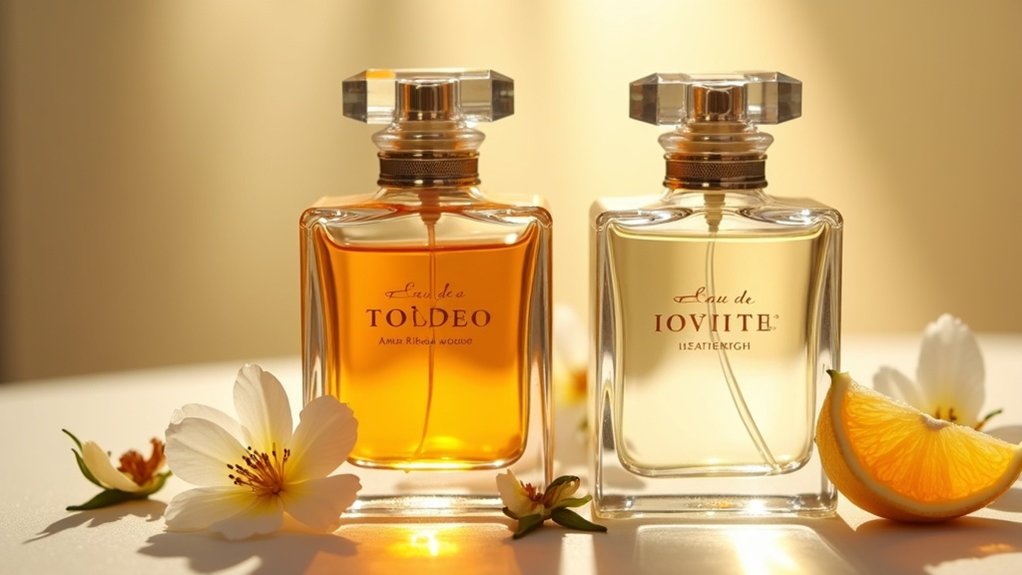
Building on our understanding of fragrance concentrations, let’s examine what makes Eau de Parfum (EDP) a premium choice among perfume enthusiasts.
Eau De Parfums contain 15-20% concentrated fragrance oils, giving them a richer, more intense character than lighter alternatives.
When you choose an EDP, you’re investing in long-lasting fragrances that typically remain present for 6-8 hours. This extended wear comes from the higher concentration of oils that slowly release fragrance notes throughout the day.
You’ll notice a more complex scent experience as top, middle, and base notes unfold on your skin.
The sophisticated composition creates a more pronounced scent trail, making EDPs perfect for special occasions when you want your fragrance to make a lasting impression.
This enhanced formulation explains why EDPs command a higher price point.
The Characteristics of Eau De Toilette
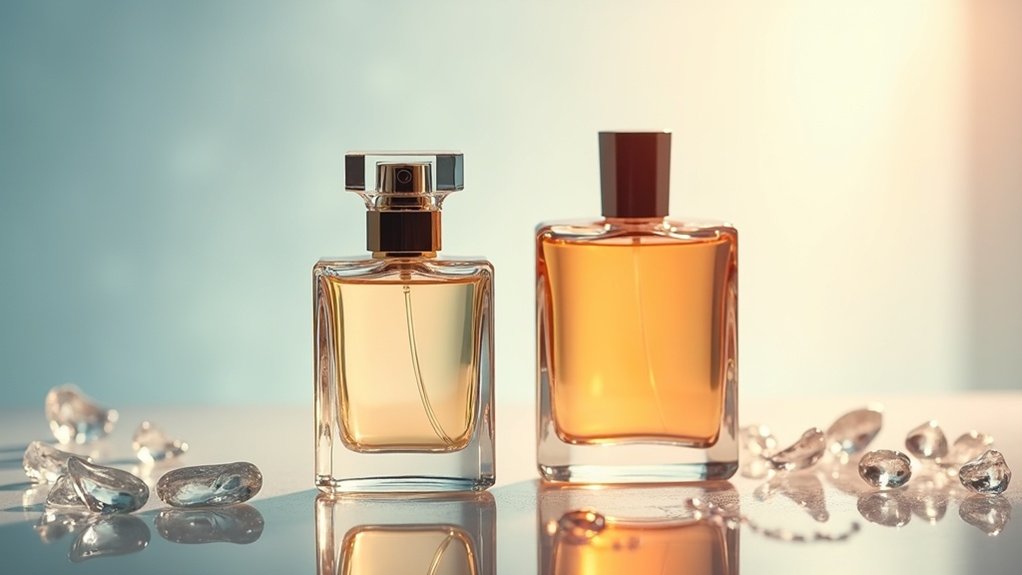
Eau de Toilette offers a lighter experience with its 5-15% fragrance oil concentration, making it perfect for your everyday activities.
You’ll notice its scent lasts about 4-6 hours, providing enough presence without overwhelming others in casual or professional settings.
EDT works beautifully for daytime wear, warmer seasons, or when you’re seeking a more subtle fragrance option that won’t break your budget.
Fragrance Concentration Levels
When you’re exploring different fragrance options, understanding the concentration levels becomes essential to finding your perfect scent match.
Eau de Toilette contains a fragrance oil concentration of 5-15%, making it significantly lighter than Eau de Parfum. This lower concentration affects longevity, with Eau de Toilette typically lasting 4-6 hours on your skin.
The concentration level directly impacts how you’ll use your fragrance throughout the day. With Eau de Toilette, you’ll find it’s perfectly formulated for reapplication without overwhelming those around you.
This makes it an ideal choice for service professionals who want to maintain a pleasant, subtle scent while working closely with others. The lighter concentration also contributes to its affordability, allowing you to enjoy quality fragrance without the higher price tag of more concentrated options.
Longevity and Projection
Unlike heavier perfume options, Eau de Toilette offers a distinct wearing experience characterized by its moderate longevity and softer projection profile.
When you apply EDT, you’ll notice it typically lasts 4-6 hours on your skin, making it perfect for daytime activities or work environments where you don’t want your scent to overwhelm others.
The projection of Eau de Toilette creates a subtle, refreshing aura around you without dominating a room, unlike the stronger presence of Eau de Parfum.
You’ll appreciate how EDT allows for reapplication throughout your day without becoming too intense or cloying.
This balanced approach to fragrance makes it ideal for those who prefer a lighter scent that whispers rather than shouts, while still expressing your personal style with elegance.
Ideal Usage Occasions
The perfect moments to wear Eau de Toilette align naturally with its lighter concentration and refreshing character.
You’ll find EDT particularly suitable for daytime activities when you’re serving clients, attending meetings, or working in close quarters with others. Its subtle nature won’t overwhelm those around you.
The concentration impacts how and when you should apply your fragrance. While Eau de Parfum works better for evening events or special occasions, Eau de Toilette is ideal for daytime use and casual settings.
During warm weather, EDT’s lighter formulation feels more comfortable and appropriate.
Consider keeping your EDT at work or in your bag for quick refreshes throughout the day. Since it typically lasts 4-6 hours, you might need to reapply once during a full workday to maintain that pleasant, professional impression.
Longevity and Projection Differences
Understanding the key differences between Eau de Parfum and Eau de Toilette can help you make better fragrance choices for various occasions.
When you select between these two formulations, you’re choosing different experiences of longevity and projection.
Eau de Parfum (EDP) offers remarkable staying power, typically lasting 6-8 hours on your skin thanks to its higher concentration of fragrance oils (15-20%).
You’ll notice EDPs create a more pronounced scent trail and project more intensely into your surroundings.
In contrast, Eau de Toilette (EDT) provides a lighter experience, generally lasting 4-6 hours with its lower concentration (5-15%).
EDTs give you a subtler projection, making them perfect for daytime wear when you want a fresher, less imposing fragrance presence.
Price Points and Value Considerations
When comparing EDPs and EDTs, you’ll notice the price difference directly relates to the concentration of fragrance oils, with EDPs costing £20-30 more on average.
This cost difference isn’t just about the label but reflects the additional ingredients that make your EDP last several hours longer throughout the day.
You’re essentially weighing a higher initial investment against the frequency of application needed, which might make an EDP more economical in the long run if you don’t need to reapply as often.
Cost Versus Concentration
Although both fragrance types enhance your personal style, Eau de Parfum commands a higher price tag than Eau de Toilette due to its concentrated formula containing 15-20% fragrance oils compared to EDT’s modest 5-15%.
This concentration difference directly impacts how long your fragrance will last throughout the day. While you might pay around £45 for a 50ml bottle of Eau de Toilette, expect to invest about £58 for the same size in Eau de Parfum.
The higher cost reflects not just stronger scent intensity but also extended longevity—EDPs typically last 6-8 hours, while EDTs fade after 4-6 hours.
For those serving in professional environments where maintaining a consistent impression matters, the premium price of EDP often represents better value despite the initial expense.
Long-term Investment Analysis
The price difference between fragrance types reveals a deeper story about their value over time.
While you’ll initially pay more for Eau de Parfum compared to Eau de Toilette (approximately £58 versus £45 for a 50ml bottle), this investment offers significant returns in daily use.
The higher concentration of fragrance in EDPs (15-20% versus EDT’s 5-15%) means you’ll enjoy a long-lasting scent that remains present for 6-8 hours, compared to EDT’s 4-6 hour window.
This longevity translates to fewer applications and potentially greater value over months of use.
For those serving in professional environments where maintaining a consistent impression matters, the long-term value of EDP becomes apparent.
Your fragrance will reliably carry through important meetings and evening events without requiring midday refreshing.
Choosing the Right Fragrance for Different Occasions
How often have you stood in front of your fragrance collection, unsure which scent would be perfect for the day ahead? Understanding the difference between Eau de Parfum and Eau de Toilette is key to choosing the right fragrance for any situation.
For evening events and special occasions, reach for your Eau de Parfum. Its richer, longer-lasting formula (6-8 hours) will make a sophisticated impression throughout formal gatherings. When serving at important functions, this fragrance type ensures you remain pleasantly noticeable.
Reserve your Eau de Toilette for daytime activities and casual outings. Its lighter, refreshing character lasts 4-6 hours—perfect for everyday wear.
Consider the seasons too: EDPs work beautifully in cooler months, while EDTs shine during summer. Remember, your personal preference matters most when selecting between these fragrance types.
Storage and Shelf Life Comparisons
Now that you’ve learned to match fragrance types with occasions, let’s explore what happens to your scents when they’re sitting on your shelf.
Both Eau de Parfum and Eau de Toilette have similar shelf lives—approximately 3 years unopened and about 1 year after opening.
Proper storage significantly impacts longevity. Keep your fragrances in cool, dry places away from direct sunlight, which can break down the delicate aromatic compounds.
Always ensure bottles are tightly closed to prevent air exposure that accelerates deterioration.
Watch for expiration signs like altered scent, color changes, or unusual texture. These indicators suggest it’s time to replace your fragrance.
Remember that expired perfumes can irritate sensitive skin, causing unexpected reactions.
Application Techniques for Maximum Impact
Mastering fragrance application involves understanding three essential pulse points where your scent will make its greatest impact. Apply your fragrance to wrists, neck, and behind ears, where body heat naturally amplifies the scent’s diffusion.
For Eau de Parfum, remember that less is more—apply sparingly to these key areas for a sophisticated trail that lasts throughout your day.
With lighter Eau de Toilette formulations, you’ll want to consider reapplication after 4-6 hours for continued freshness. Avoid rubbing the fragrance into your skin, as this breaks down the scent molecules and alters the intended profile.
To enhance your fragrance experience, try layering with matching scented body products before applying your perfume or toilette. This technique creates depth and extends longevity, ensuring you’re making the most of your fragrance investment.