Dandruff itself doesn’t directly cause hair loss, but it can contribute to conditions that affect your hair health. When you have dandruff, you might scratch your itchy scalp, potentially damaging hair follicles. The Malassezia fungus that causes dandruff creates inflammation, which may disrupt your normal hair growth cycle. Using medicated shampoos with ingredients like zinc pyrithione or ketoconazole can effectively treat dandruff and protect your hair. The connection between scalp health and hair strength goes much deeper than most people realize.
Key Takeaways
- Dandruff itself doesn’t directly cause hair loss but creates conditions that can impact hair health and retention.
- Scratching an itchy, dandruff-affected scalp can damage hair follicles and lead to hair breakage.
- Chronic inflammation from dandruff may disrupt the hair growth cycle and weaken follicles over time.
- Malassezia fungus associated with dandruff produces oils that irritate the scalp and potentially affect hair growth.
- Treating dandruff with medicated shampoos or natural remedies can prevent related hair issues and support healthy growth.
Understanding the Relationship Between Dandruff and Hair Health
While many people believe dandruff directly causes hair loss, the relationship between these two conditions is more complex than it appears. Dandruff itself doesn’t directly make your hair fall out, but it can create conditions that impact hair growth and retention.
When you have dandruff, your scalp becomes itchy and inflamed, often leading to scratching that may damage hair follicles. This damage can disrupt your hair’s natural growth cycle.
Additionally, the Malassezia fungus responsible for dandruff produces oleic acid, which increases itchiness and scalp irritation.
Chronic inflammation from untreated dandruff, especially when it progresses to seborrheic dermatitis, can gradually weaken hair follicles.
Over time, this persistent inflammation may contribute to thinning hair or increased shedding that you might mistake for permanent hair loss.
The Science Behind Dandruff: Causes and Symptoms
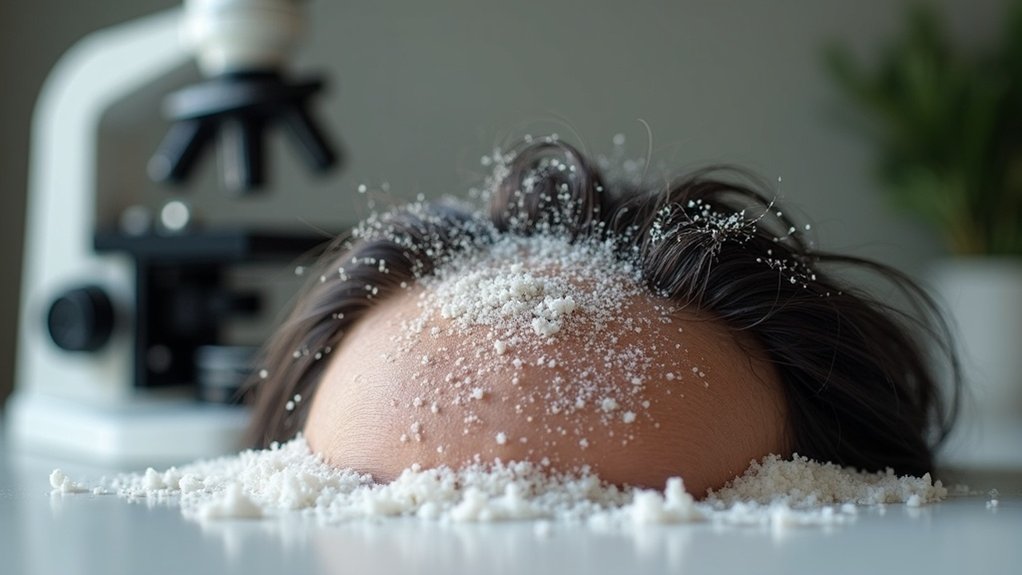
Although dandruff appears as a simple scalp condition, its underlying mechanisms involve complex biological processes that affect millions worldwide.
When the Malassezia fungus overgrows on your scalp, it triggers increased skin cell turnover and excessive sebum production, creating the perfect environment for dandruff to develop.
You’ll typically notice dandruff symptoms like white or yellow flakes on your shoulders, mild itching, and a visibly flaky scalp. These symptoms often worsen in dry climates.
Nearly half the global population experiences dandruff at some point, with factors like stress, hormonal changes, and unsuitable hair products contributing to its development.
Left untreated, dandruff can lead to inflammation and irritation that may damage your hair follicles through chronic scratching, potentially affecting your hair’s natural growth cycle.
How Scratching and Inflammation Affect Hair Follicles
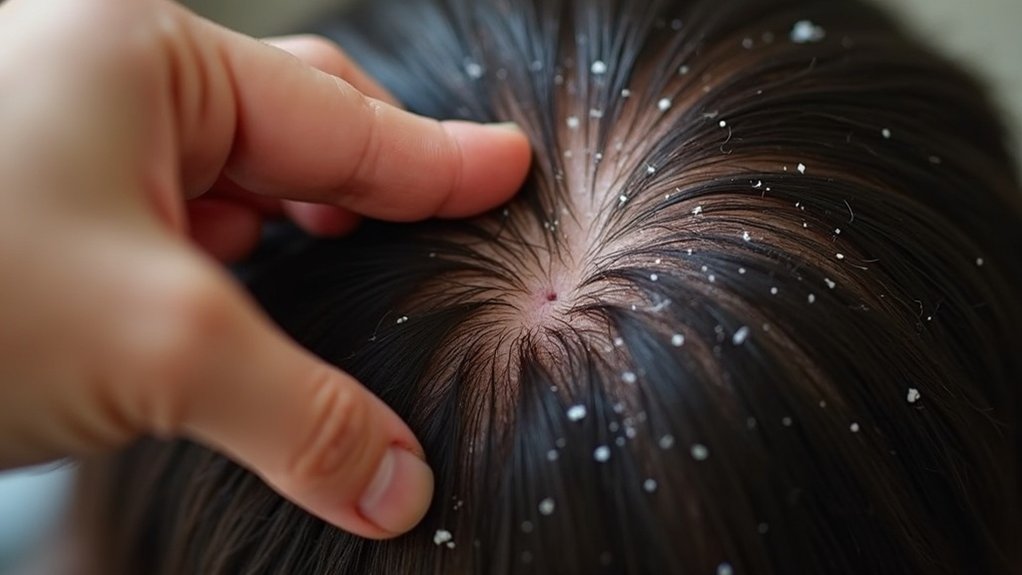
When you repeatedly scratch your itchy scalp due to dandruff, you’re unknowingly starting a damaging cycle that can threaten your hair’s health. Each time you scratch, you potentially damage hair follicles, weakening the roots that anchor your hair securely to your scalp.
This physical trauma triggers inflammation, which can disrupt your natural hair growth cycle. The Malassezia fungus responsible for dandruff produces oleic acids that intensify itching, prompting more scratching and creating a harmful cycle.
Over time, this chronic inflammation can interfere with normal follicle function, potentially leading to thinning hair. Most concerning is that prolonged, untreated inflammation may cause permanent damage to your follicles.
When helping others with dandruff concerns, remember that addressing the condition quickly helps protect their hair’s long-term health.
Differentiating Dandruff From Scalp Psoriasis and Other Conditions
While both dandruff and scalp psoriasis cause flaking, you’ll notice dandruff produces smaller white flakes with mild itching, whereas scalp psoriasis creates thicker, silvery scales with red, inflamed patches that may extend beyond your hairline.
Your treatment approach should vary significantly between conditions, as dandruff often responds to over-the-counter medicated shampoos, while scalp psoriasis typically requires prescription medications to manage the autoimmune response.
Identifying the correct condition is crucial for your hair health, since untreated scalp psoriasis can lead to more severe inflammation, potentially causing temporary hair loss that won’t occur with ordinary dandruff.
Symptoms That Distinguish Conditions
How can you tell if those flakes on your shoulders are just dandruff or something more serious like scalp psoriasis?
Look closely at the flakes themselves. With dandruff, you’ll notice lighter, smaller white or yellow flakes accompanied by mild itching. Your scalp might feel either dry or oily.
In contrast, scalp psoriasis produces thicker, silvery scales with red, inflamed patches that may extend beyond your hairline. The itching is typically more intense, and your skin might feel tender.
While dandruff results from an overgrowth of Malassezia fungus, scalp psoriasis is an autoimmune condition causing rapid skin cell turnover and inflammation.
The treatment approaches differ significantly too. Regular anti-dandruff shampoos can manage dandruff effectively, but scalp psoriasis usually requires specific medical treatments to control symptoms and prevent potential hair loss.
Inflammation-Related Hair Problems
The underlying inflammatory processes in scalp conditions directly impact your hair’s health and growth cycle.
When you have scalp psoriasis, inflammation causes rapid skin cell turnover, creating thick scales that can block hair follicles and lead to hair loss. This differs from dandruff, where Malassezia fungus causes milder inflammation that typically doesn’t obstruct follicles directly, though scratching can damage them.
You’ll notice that psoriasis produces thicker flakes extending beyond your hairline with intense itching, while dandruff presents lighter flakes confined to the scalp area.
Other conditions like folliculitis or lichen planopilaris might seem similar with flaking and inflammation, but they cause more significant hair loss.
Each scalp condition requires specific treatment—psoriasis needs medical intervention, while dandruff typically responds to over-the-counter remedies.
Scalp Treatments Differ Significantly
Selecting the right treatment for your scalp condition requires accurate identification of what you’re actually dealing with, as dandruff and scalp psoriasis demand fundamentally different approaches.
While dandruff responds well to over-the-counter shampoos containing zinc pyrithione or ketoconazole that target fungal overgrowth, scalp psoriasis needs medical interventions like topical corticosteroids to address its autoimmune nature.
Misdiagnosing your condition can lead to ineffective treatment and potentially worsened hair loss.
If you notice thick, silvery scales extending beyond your hairline or experience intense itching and tender skin, you’re likely facing scalp psoriasis rather than simple dandruff.
Remember, dandruff typically presents as white or yellow flakes with mild itching.
When in doubt, consult a dermatologist who can properly diagnose your condition and recommend appropriate treatments to protect your scalp and hair.
Effective Treatments for Dandruff to Prevent Hair Issues
When dandruff threatens your hair health, medicated shampoos containing zinc pyrithione, selenium sulfide, or ketoconazole offer powerful solutions that can be rotated for maximum effectiveness.
You’ll find natural alternatives like tea tree oil and apple cider vinegar rinses helpful for milder cases, though they shouldn’t replace prescribed treatments for severe conditions.
Creating a gentle hair care routine that includes regular washing, avoiding irritating products, and limiting heat styling will strengthen your defense against both dandruff and related hair loss.
Medicated Shampoo Options
Effectively treating dandruff requires specialized medicated shampoos that target the underlying causes of flaking and irritation.
You’ll find several effective options to improve your scalp health and prevent dandruff-related hair loss.
Zinc pyrithione, selenium sulfide, and ketoconazole shampoos combat the microorganisms causing dandruff while reducing inflammation.
Coal tar formulations slow down skin cell turnover, decreasing flaking that can lead to hair problems.
For excess buildup, try salicylic acid shampoos, which exfoliate your scalp and prevent clogged follicles.
Use your medicated shampoo as directed on the label for best results.
If you don’t see improvement after 4-6 weeks, it’s time to switch to a different formula.
Regular use helps maintain a healthy scalp environment that supports strong hair growth.
Natural Remedies Spotlight
Many natural ingredients can effectively combat dandruff while protecting your hair from further damage. For your natural hair care routine, try tea tree oil or coconut oil treatments, which contain powerful antifungal properties that target the Malassezia fungus responsible for dandruff flakes.
Aloe vera gel soothes an irritated scalp, reducing the inflammation that can lead to hair loss if left untreated.
For a simple home remedy, dilute apple cider vinegar with water to restore your scalp’s pH balance and fight fungal overgrowth without harsh chemicals found in commercial dandruff shampoo.
Lemon juice works as a natural exfoliant, removing dead skin cells that cause flaking.
Prevention-Focused Hair Care
Prevention-focused hair care forms the backbone of any effective dandruff management strategy. By incorporating medicated shampoos with zinc pyrithione or ketoconazole into your routine, you’ll effectively combat dandruff and hair loss while protecting your scalp’s health.
Don’t underestimate the power of moisturizing your scalp with gentle oils, which helps prevent the dryness that leads to flaking and potential follicle damage.
To maintain a healthy scalp, avoid harsh chemicals and tight hairstyles that irritate your skin and weaken hair roots. Establish a consistent hair care schedule that includes regular washing to keep dandruff at bay.
When your efforts don’t provide relief, don’t hesitate to consult a dermatologist who can create a personalized treatment plan to prevent hair loss associated with persistent dandruff conditions.
Managing Scalp Health to Promote Hair Growth
While the connection mightn’t be immediately obvious, your scalp’s health directly impacts your hair’s ability to grow strong and thick. When you prioritize scalp health, you’re creating the perfect foundation for hair growth while reducing dandruff issues that can interfere with this process.
Start with gentle scalp massages during your shower to boost blood circulation, delivering essential nutrients to your hair follicles. Choose moisturizing shampoos with ingredients like ketoconazole that fight dandruff while nurturing your scalp.
Maintain proper hygiene to prevent product buildup without stripping natural oils. Remember to avoid harsh chemicals and excessive heat styling, as these can irritate your scalp further.
When to Seek Professional Help for Scalp Conditions
Despite your best efforts with over-the-counter treatments, certain scalp conditions demand professional attention for proper diagnosis and effective management.
If you’ve used medicated shampoos for 4-6 weeks without improvement, it’s time to seek professional help, as persistent dandruff might indicate an underlying condition.
Don’t ignore significant hair loss caused by scalp issues—when you notice clumps falling out or thinning patches, consult a dermatologist immediately.
Red, swollen, or scaly areas may signal seborrheic dermatitis or psoriasis, requiring medical evaluation. Persistent itching that disrupts your daily activities also warrants professional assessment.
Those with compromised immune systems should be especially vigilant about scalp changes and seek prompt medical attention to prevent complications.
Lifestyle Changes to Combat Dandruff and Support Healthy Hair
Making strategic lifestyle adjustments can significantly reduce dandruff symptoms and promote healthier hair growth without relying solely on medicated products.
Start by enriching your diet with iron, zinc, and biotin to strengthen your scalp health and reduce flaking. When you’re feeling stressed, take time for mindfulness or exercise, as these practices help prevent dandruff flare-ups that can affect your hair.
Choose gentle, sulfate-free shampoos instead of harsh products that irritate your scalp.
Don’t forget to drink plenty of water throughout the day, as proper hydration is essential for maintaining a healthy scalp environment.
Incorporate regular, gentle scalp massages into your hair care routine to improve circulation and support stronger hair growth.
These consistent lifestyle changes create the foundation for both dandruff control and healthy hair development.