
Sunblock doesn’t completely prevent tanning. Even high-SPF, broad-spectrum sunscreens only block about 97-98% of UVB rays and some UVA rays still penetrate your skin, causing tanning. You’ll tan less with proper application (one ounce for full-body coverage) and frequent reapplication every two hours. Remember, any tan indicates skin damage has occurred. Self-tanners and spray tans offer safer alternatives if you’re looking for that sun-kissed glow.
Key Takeaways
- Sunblock reduces tanning significantly but cannot prevent it completely as no sunscreen blocks 100% of UV rays.
- SPF primarily protects against UVB rays, while UVA rays that cause tanning still penetrate at low levels.
- Proper application and frequent reapplication every two hours significantly decrease tanning potential.
- Even high SPF broad-spectrum sunscreens allow approximately 2-3% of UV radiation to reach your skin.
- For those wanting color without damage, self-tanning products containing DHA offer a safe alternative to sun exposure.
Understanding How Sunscreen and Tanning Work
Although many people believe sunscreen completely prevents tanning, the relationship between sunblock and skin darkening isn’t quite that straightforward.
When you apply sunscreen, it works by either blocking or absorbing UV rays before they reach your skin. However, no sunscreen—even high SPF formulas—can block 100% of these rays.
UVA rays penetrate deeply, causing immediate tanning, while UVB rays primarily cause sunburn and delayed tanning.
For maximum protection, you’ll want to use a broad-spectrum sunscreen with SPF 30 or higher, which guards against both types of rays.
Remember to reapply every two hours, as inadequate coverage is a common mistake that allows more UV exposure.
Even with perfect application, some UV radiation will still reach your skin, stimulating melanin production. This means tanning is always possible—it’s actually a sign of skin damage.
The Truth About SPF Protection Levels and UV Rays
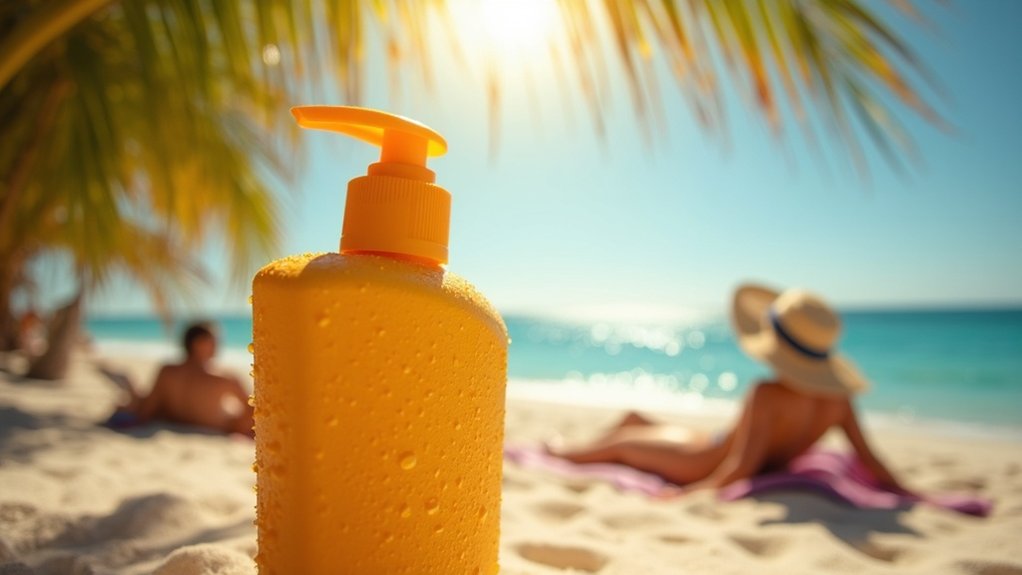
Despite what many sunscreen labels might suggest, SPF numbers don’t tell the complete story about your protection from the sun. SPF primarily measures protection against UVB rays (the ones causing sunburn), with SPF 30 blocking about 97% and SPF 50 blocking around 98% of UVB radiation.
For complete skin protection, look for “broad-spectrum” sunscreens that guard against both UVA rays (responsible for tanning and long-term damage) and UVB rays.
Remember that even high-SPF products can’t block 100% of UV radiation, which is why tanning still occurs despite sunscreen use.
To maximize your protection, reapply every two hours, especially after swimming or sweating. This consistent application helps minimize the UVA rays that penetrate your skin and cause melanin production, reducing your chances of tanning and skin damage.
Why You Can Still Tan While Wearing Sunblock

Even when you diligently apply sunblock, your skin can still develop a tan because no sunscreen provides a perfect shield against the sun’s rays.
Most sunscreens allow a small percentage of UV rays to penetrate your skin, which triggers melanin production and results in tanning.
Your SPF rating primarily measures protection against UVB rays, while UVA rays—which penetrate deeper into the skin—may not be fully blocked even with broad-spectrum formulations.
These UVA rays contribute significantly to your tan.
Additionally, if you’re not applying enough sunscreen or reapplying it regularly, you’re increasing your chances of tanning.
Remember that any tan is evidence of skin damage, regardless of whether you’re wearing protection.
To better prevent tanning, use high-SPF, broad-spectrum sunscreen applied generously and frequently.
The Science Behind Sunscreen Application and Coverage
The effectiveness of sunscreen hinges not just on its SPF rating but on how you apply it to your skin. For proper application, you’ll need approximately one ounce (a shot glass full) of broad-spectrum SPF 30 sunscreen to cover your entire body.
Apply sunscreen at least 15 minutes before going outdoors so it can fully absorb and create an effective barrier against harmful UV rays.
Many people underestimate the importance of reapplying sunscreen every two hours, or immediately after swimming or sweating. This oversight significantly reduces sunscreen effectiveness and increases your risk of tanning and skin damage.
Don’t forget to check expiration dates too—expired sunscreen won’t provide adequate protection.
Safer Alternatives for Achieving a Sun-Kissed Glow
While many people desire a golden tan, you don’t need to risk harmful UV exposure to achieve that coveted glow.
Self-tanning products offer a practical solution for maintaining healthy skin while still enjoying a bronzed look. These safer alternatives contain dihydroxyacetone (DHA), which reacts with amino acids on your skin’s surface to create a natural-looking tan.
Spray tans provide another excellent option, delivering an even, customizable tan without damaging your skin. You can choose professional application at salons or try at-home versions for convenience.
Whether you select lotions, mousses, or sprays, you’ll protect your skin health while achieving beautiful results.