
To remove a suntan effectively, start with gentle exfoliation using AHAs or a soft washcloth to slough off tanned skin cells. Apply natural remedies like lemon-honey mixture or aloe vera gel to gradually lighten your skin. Use store-bought products containing vitamin C or niacinamide for faster fading. Always follow with a moisturizer and SPF 30 sunscreen to prevent further tanning. This comprehensive approach will help restore your natural skin tone through consistent care.
Key Takeaways
- Exfoliate 1-2 times weekly with gentle products containing AHAs or BHAs to remove dead skin cells and fade tan.
- Apply natural remedies like lemon-honey mixture or aloe vera gel to lighten skin tone gradually.
- Use vitamin C serums daily to inhibit melanin production and brighten complexion effectively.
- Maintain a daily skincare routine with gentle cleanser, brightening products, moisturizer, and SPF 30 sunscreen.
- Consider professional treatments like chemical peels for faster results with stubborn tans or pigmentation.
Understanding the Science Behind Suntans
Nearly everyone has experienced the golden glow of a suntan after spending time outdoors. What you’re seeing is your body’s natural defense mechanism at work. When your skin is exposed to UV rays, special cells called melanocytes increase melanin production to protect you from further harm.
Different skin types respond differently to sun exposure. If you have lighter skin, you’ll likely burn before tanning because you have less melanin naturally. Darker skin types tan more deeply due to higher melanin levels.
While suntans might look attractive, they’re actually a sign of skin damage. Prolonged exposure to UV rays can harm your skin cells, leading to premature aging and increasing your risk of skin cancer.
That’s why proper sun protection is essential year-round, even on cloudy days.
Gentle Exfoliation Techniques for Tan Removal
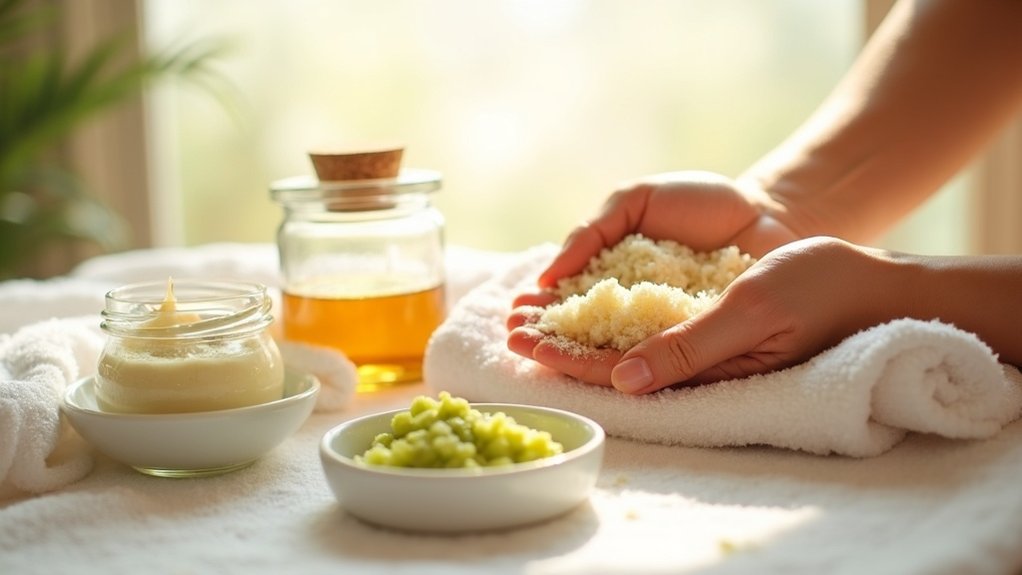
Exfoliation serves as your most powerful ally in the quest to fade unwanted suntans. When you incorporate gentle exfoliation into your weekly skincare routine, you’ll effectively remove dead skin cells, accelerating skin turnover and helping your suntan fade more quickly.
For sensitive skin, opt for chemical exfoliators containing AHAs (like lactic acid) or BHAs, which work without abrasive scrubbing. If you have oilier, thicker skin, try mechanical methods such as a soft facial brush or washcloth.
Remember to limit exfoliation to once weekly to avoid irritation.
After exfoliating, it’s essential to moisturize with hydrating ingredients like hyaluronic acid or aloe vera. This step maintains your skin barrier integrity while supporting the tan removal process, giving you a more even, brighter complexion without compromising your skin’s health.
Natural Remedies to Lighten Tanned Skin
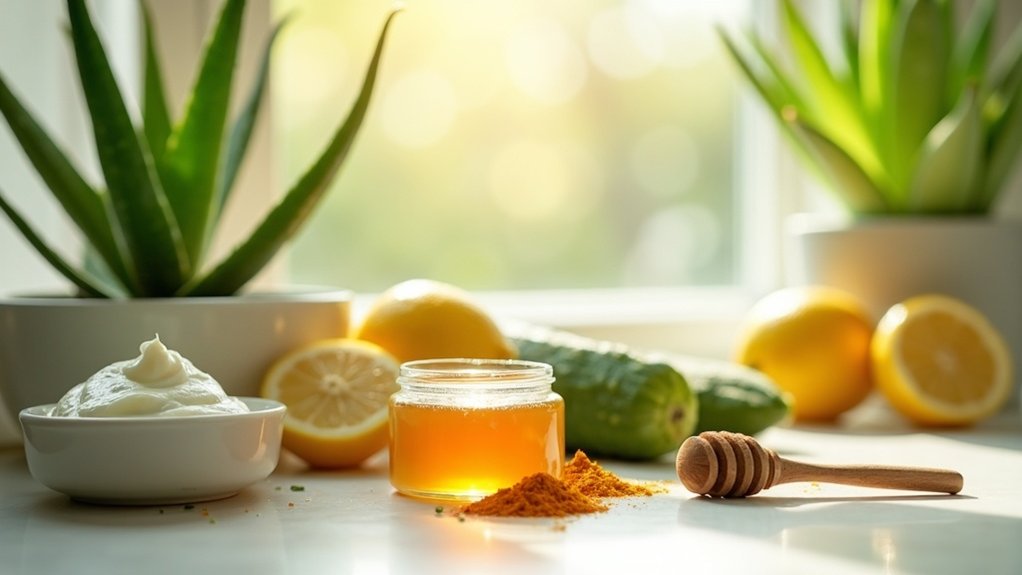
Your kitchen pantry houses powerful ingredients that can naturally diminish your suntan without harsh chemicals.
You’ll find that common items like lemon, honey, and cucumber can be combined to create effective exfoliating treatments that gently remove tanned skin cells.
These DIY remedies not only lighten your suntan but also nourish your skin with vitamins and minerals, making them perfect alternatives to commercial products.
Potent Kitchen Ingredients
When your skin has darkened from sun exposure, you’ll be surprised to discover that effective remedies are likely sitting right in your kitchen cupboards. Natural ingredients can work wonders for tan removal while being gentle on your skin.
Mix lemon juice with honey and apply for 20-30 minutes before rinsing with cold water to lighten your skin tone naturally.
Aloe vera gel offers soothing relief while gradually fading tans through its anti-inflammatory properties.
For exfoliating benefits, combine turmeric and gram flour with milk to create a paste that evens skin tone when used regularly.
Don’t overlook cucumber’s cooling effects—blend it with milk and apply for 20 minutes to reduce inflammation from sunburn.
For a simpler option, potato juice can be directly applied to tanned areas for 15-20 minutes, utilizing its natural bleaching properties.
DIY Exfoliation Methods
After the sun has left its mark on your skin, gentle exfoliation becomes a crucial step in fading unwanted tans while promoting cell turnover.
Try combining lemon juice and honey as a natural home remedy to remove tan. The lemon’s natural bleaching properties lighten while honey keeps your skin hydrated.
For a gentle exfoliator, mix turmeric with gram flour to create a paste that evens skin tone while sloughing away dead cells.
When you need to soothe sun-exposed skin, blend cucumber slices with milk – the lactic acid gently exfoliates while reducing inflammation.
Papaya makes another excellent option, as its enzyme papain works on exfoliating dead skin cells and diminishing pigmentation.
Apply these remedies once or twice weekly for best results, allowing your skin to naturally brighten while remaining balanced and nourished.
Effective Store-Bought Products for Tan Fading
You’ll find chemical exfoliants containing glycolic acid and lactic acid at most drugstores, which work by removing the top layer of tanned skin cells to reveal fresher, lighter skin underneath.
Vitamin C serums can help inhibit melanin production and brighten your complexion, with most dermatologists recommending morning application for maximum effectiveness.
Brightening body lotions with ingredients like niacinamide and kojic acid offer a convenient, daily solution to gradually fade your tan while keeping your skin moisturized and healthy.
Chemical Exfoliants
Although natural remedies have their place, chemical exfoliants represent the most scientifically proven method for effectively fading unwanted suntans. When incorporated into your skincare routine, glycolic acid and lactic acid work by gently removing dead skin cells, accelerating the natural turnover process to reveal brighter skin underneath.
For oily or acne-prone skin types, products containing 2% salicylic acid can penetrate deeply into pores to address sun-damaged pigmentation.
Niacinamide offers excellent skin-brightening properties when used consistently, helping to reduce dark spots and create a more even complexion. Additionally, Kojic acid effectively inhibits melanin production, making it particularly useful for stubborn tans.
For optimal skin clarity, combine these chemical exfoliants with daily sunscreen application to prevent further sun exposure damage while your skin recovers.
Vitamin C Serums
Vitamin C serums represent the gold standard in professional-grade products for fading unwanted tans at home. These powerful formulations directly inhibit melanin production, effectively lightening dark spots and reducing suntan intensity over time.
For optimal results, select serums containing L-ascorbic acid in concentrations between 10-20%, which clinical studies have proven most effective for skin brightening and pigmentation reduction.
When applied consistently, these serums deliver visible improvements in skin tone within 4-12 weeks. Beyond tan fading, vitamin C offers valuable antioxidant protection that shields your skin from environmental stressors and prevents additional UV damage.
This dual-action approach not only addresses your current tan but helps maintain your brightening results long-term. For best results, apply your vitamin C serum daily, following the exfoliation step in your tan-removal routine.
Brightening Body Lotions
When tackling stubborn suntans across larger body areas, brightening body lotions offer a convenient and effective solution that’s readily available at most beauty retailers.
These formulations typically contain powerful ingredients like vitamin C and niacinamide that target pigmentation issues while keeping your skin moisturized throughout the tan removal process.
For optimal results, select products that are dermatologically tested and specifically formulated for your skin type. This precaution helps prevent irritation while maximizing the benefits.
Many quality brightening body lotions also include SPF protection, which prevents further tanning while you’re working to fade your existing tan.
Remember that consistent application is key—most products recommend using them once or twice daily.
With patience and regular use, you’ll gradually achieve the lighter skin tone you desire, restoring your natural complexion.
Professional Treatments for Faster Results
For those seeking more immediate results than home remedies can provide, professional treatments offer powerful solutions to remove stubborn suntans.
Chemical peels use specialized acids to exfoliate the outer skin layers, promoting faster tan fading and fresh skin growth. If you’re looking for instant improvement, microdermabrasion physically removes tanned skin cells, enhancing both texture and tone in just one session.
Laser resurfacing targets and breaks down pigmented cells, stimulating skin regeneration for significant results within a few treatments.
You’ll appreciate that most of these procedures require minimal downtime, allowing you to return to your regular activities quickly.
Daily Skincare Routine for Tan Reduction
Establishing a consistent daily skincare routine forms the backbone of successful tan reduction efforts.
Begin by washing your face with a gentle cleanser to remove impurities, preparing your skin for treatment. Follow with a soothing toner to balance your skin’s pH and enhance absorption of other products.
Next, apply a brightening serum containing vitamin C or niacinamide, which targets tan pigmentation effectively. These ingredients work to fade discoloration while evening out your skin tone.
Always moisturize afterward to support your skin barrier function and promote healing.
The final essential step is applying a broad-spectrum sunscreen with at least SPF 30. This prevents further tanning while allowing your current tan to fade naturally.
Specialized Care for Sensitive Skin Areas
Sensitive areas of skin demand special attention within your tan reduction regimen.
When treating your face, neck, and underarms, choose gentle exfoliation methods that maintain skin integrity while effectively removing tan.
Opt for chemical exfoliants containing mild ingredients like lactic or glycolic acid instead of harsh mechanical scrubs. Before application, always conduct a patch test on a small area to ensure you won’t experience irritation.
After exfoliating sensitive skin, apply soothing agents such as aloe vera gel or fragrance-free moisturizers to calm and replenish your skin’s moisture barrier.
Preventing Further Tanning While Healing
While your skin undergoes the healing process after tan removal treatments, protecting it from additional UV exposure becomes critically important.
Apply broad-spectrum sunscreen with at least SPF 30 daily, even when clouds fill the sky, to shield your healing skin from UV damage.
Limit sun exposure by avoiding outdoor activities between 10 a.m. and 4 p.m. when UV rays are strongest.
When you must go out, wear protective clothing like wide-brimmed hats and long sleeves, and seek shade whenever possible.
Support your skin recovery by maintaining hydration with moisturizing products containing aloe vera or hyaluronic acid.
These ingredients soothe and replenish your skin while it heals.
Maintaining Even Skin Tone After Tan Removal
Once you’ve successfully removed your tan, the journey doesn’t end there—maintaining your newly even skin tone requires consistent care and protection.
Apply broad-spectrum SPF 30 sunscreen daily to shield your skin from UV rays that cause pigmentation.
Incorporate gentle exfoliation once weekly using products with AHAs or BHAs to remove dead skin cells and promote even texture.
Keep your skin hydrated with moisturizers containing hyaluronic acid and ceramides, which help maintain a uniform appearance.
Brightening serums with vitamin C, niacinamide, or alpha-arbutin can target residual pigmentation for a more even complexion.
Don’t forget internal hydration—drinking plenty of water and eating fruits and vegetables supports overall skin health.
This comprehensive approach ensures your skin remains healthy, radiant, and evenly toned long after tan removal.