
Your cologne goes bad through oxidation, heat, light, and humidity exposure. These factors break down the fragrance molecules, causing sour or metallic odors. Light citrus and floral scents typically degrade faster than woody notes. You’ll notice changes like darkened liquid, separated ingredients, quick-fading scents, and possible skin irritation. Most eau de toilettes last 3-4 years, while eau de parfums can survive up to 5 years. Proper storage in cool, dark places away from bathrooms will significantly extend your fragrance’s lifespan.
Key Takeaways
- Oxidation alters fragrance molecules, creating unpleasant sour or metallic odors when cologne expires.
- Exposure to heat, light, and humidity accelerates breakdown of volatile compounds and essential oils.
- Citrus and floral scents typically degrade faster than woody notes due to their molecular structure.
- Visual signs of degradation include darkening liquid, cloudiness, separation of ingredients, or floating particles.
- Improper storage in bathrooms or direct sunlight significantly shortens cologne’s 3-5 year average shelf life.
The Science Behind Cologne Degradation
When you open that cherished bottle of cologne you’ve had for years, you might notice it doesn’t smell quite the way it used to. This cologne degradation happens primarily through oxidation, a process where fragrance molecules interact with oxygen, gradually altering their chemical composition and sometimes creating unpleasant odors.
Your cologne contains volatile compounds and essential oils that are particularly susceptible to breakdown when exposed to heat and light. Citrus and floral scents typically deteriorate faster than woody notes due to their molecular structure.
Additionally, high humidity can cause separation of ingredients, changing both texture and scent profile.
Proper storage is your best defense against these chemical changes. By keeping your cologne in cool, dark places with tightly sealed caps, you’ll significantly slow this natural aging process and preserve your favorite scent longer.
Telltale Signs Your Cologne Has Expired
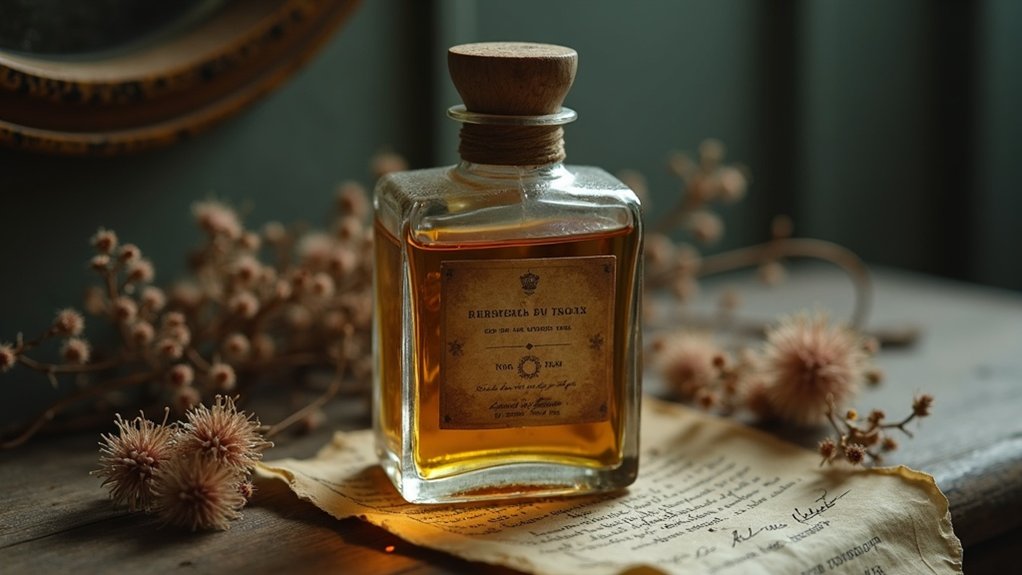
How do you know if that beloved fragrance sitting on your dresser has passed its prime? Your nose knows best—a noticeable change in scent, particularly a sour or metallic odor, is one of the most telltale signs your cologne has expired.
Visual cues matter too. If your once-clear fragrance has darkened or appears cloudy, your perfume has gone bad. You might also notice separation of ingredients or floating particles in the liquid.
Pay attention to your skin’s reaction. Unexpected skin irritation, including redness or rashes after application, suggests the cologne’s chemical composition has degraded.
Finally, if your signature scent doesn’t last as long as it used to, fading quickly after application, it’s time to check those expiration dates and consider a replacement.
Average Shelf Life of Different Fragrance Types
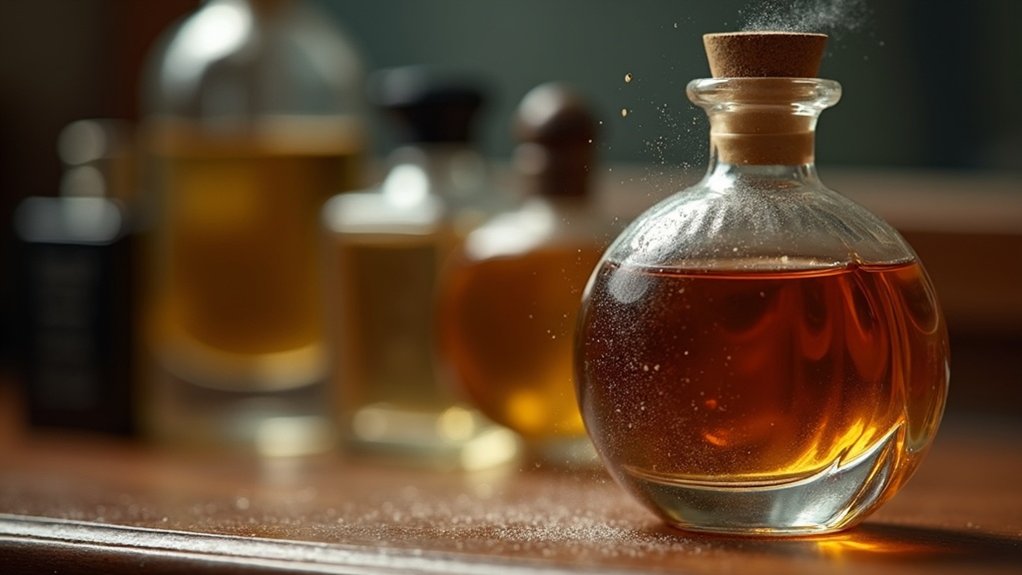
Your cologne’s life expectancy varies significantly based on its concentration, with eau de toilette typically lasting 3-4 years while stronger formulations like eau de parfum can remain viable for up to 5 years.
The composition of fragrance notes plays a crucial role in longevity, as heavier base notes found in woody or oriental scents will generally outlast their citrus or floral counterparts.
You’ll notice that unopened bottles maintain their integrity longer than those you’ve been using, since regular exposure to air accelerates the oxidation process that ultimately degrades your favorite scent.
Eau De Toilette Longevity
Why does that bottle of eau de toilette you’ve cherished for years suddenly smell different? Your favorite fragrance doesn’t last forever—eau de toilette will expire over time, typically within three to five years.
With only 8-12% perfume oil, it has a shorter shelf life than more concentrated fragrances.
To extend longevity, proper storage conditions are essential. You’ll want to keep the bottle in a cool, dark place, tightly sealed to minimize air exposure.
Pay special attention if you love fragrances with fruity or citrus notes, as these can deteriorate faster, often lasting just two years.
Be alert for changes in scent or color, which indicate your eau de toilette is losing its potency.
With careful storage and regular checks, you’ll maximize enjoyment of your favorite fragrances.
Stronger Concentrations Last Longer
When it comes to fragrance longevity, concentration matters significantly in determining how long your favorite scent will remain viable. Your eau de parfum, with its robust 12-18% perfume oil concentration, typically outlasts eau de toilette by several years.
While perfume does expire eventually, stronger concentrations can maintain their integrity for three to five years when properly stored.
To keep it fresh, consider both the formulation and storage conditions. Fragrances featuring heavier base notes, particularly oriental scents, generally have a longer expiration date compared to lighter citrus or floral compositions.
Remember that how long they last depends greatly on your care routine – storing bottles in cool, dark places and ensuring they remain tightly sealed will extend their lifespan significantly.
With proper attention, you’ll enjoy your premium scents much longer.
Note Composition Matters
Beyond concentration strength, the actual fragrance notes themselves play a significant role in determining how long your cologne will remain fresh.
If you’re wondering whether your perfume has expired, consider its composition. Heavier base notes like woody and oriental scents typically extend your perfume’s life beyond five years when properly stored. In contrast, lighter compositions featuring citrus and floral notes may only last two to three years before showing signs of expiration.
To maximize shelf life, store fragrances in cool, dark places with bottles tightly sealed. This prevents premature breakdown of the scent compounds.
Remember that an eau de parfum, with its higher concentration of oils, will generally outlast an eau de toilette with the same note profile. Understanding your fragrance’s composition helps you anticipate when it might begin to deteriorate.
How Storage Conditions Affect Longevity
Proper storage of your cologne dramatically influences how long it maintains its intended scent profile. To prevent your perfume expiring prematurely, keep your fragrances in a cool, dark place away from direct sunlight and temperature fluctuations.
Light exposure breaks down the fragrance molecules, while heat accelerates evaporation of essential oils.
Never store cologne in your bathroom, where humidity can degrade the scent compounds. Always replace the cap tightly after each use to minimize air exposure, which causes oxidation.
For particularly valuable fragrances, refrigeration offers an ideal environment for long-term preservation.
Maintain your cologne in its original bottle rather than transferring it to decorative containers. The manufacturer’s packaging is specifically designed to protect the fragrance from environmental factors that could compromise its quality and longevity.
Skin Reactions to Expired Cologne
Even with perfect storage, the chemical composition of cologne changes over time, which can lead to unexpected skin issues.
When using expired cologne, you’re risking more than just a fragrance that doesn’t smell right—you’re potentially exposing yourself to skin irritations. The breakdown of ingredients in older fragrances increases your chances of developing an allergic reaction.
You might notice redness, itching, or rashes where you’ve applied the product. Additionally, expired cologne can smell sour or unpleasant, making your personal care routine uncomfortable.
Before applying an older fragrance to your neck or wrists, test it on a small skin patch first. This precaution helps you determine if the cologne will irritate your skin.
Preserving Your Fragrance Investment
When you’ve invested in quality cologne, storing it properly becomes essential to maintain its character and potency over time. To preserve the fragrance effectively, keep bottles in a cool, dark place, as cologne exposed to light breaks down faster, altering its original scent.
After each use, ensure caps are tightly secured to prevent air from entering, which causes oxidation. Resist the urge to shake your cologne before application, as this introduces air that accelerates deterioration.
To help your cologne keep long, consider layering with matching products like body wash and lotion. Regularly check for signs of expiration, including changes in color, consistency, or smell.
Proper storage not only extends your cologne’s lifespan but also protects your investment, allowing you to enjoy its intended aroma for years.
Proper Disposal of Old Cologne
When it’s time to say goodbye to your expired cologne, you’ve got several environmentally friendly options that won’t harm local ecosystems.
You can take empty glass bottles to recycling centers where they’ll be processed and repurposed into new products, reducing waste and conserving resources.
For any remaining fragrance, transfer it to a sealed container before disposal, or check if your community offers hazardous waste collection events where professionals can safely handle potentially harmful chemicals.
Environmentally Friendly Options
Disposing of old cologne properly is essential for minimizing environmental impact and protecting our waterways. When your fragrance products reach the end of their life, seek out local hazardous waste collection programs specifically designed to handle these items. This prevents environmental contamination that can occur when chemicals leach into soil or water systems.
Many communities host regular collection events where you can safely drop off your unwanted colognes. If these aren’t available in your area, contact your local waste management facility for guidance on chemical disposal options.
As a last resort, you can dilute small amounts with plenty of water before pouring down the drain, though this isn’t ideal.
Don’t forget to recycle the empty glass bottles after thoroughly rinsing them. Always remove caps and separate components according to your local recycling guidelines.
Recycling Glass Bottles
Most cologne bottles, crafted from recyclable glass, offer an environmentally responsible afterlife once their fragrant contents are depleted.
When you’re ready for proper disposal, first ensure the bottle is completely empty and clean. Rinse thoroughly to remove any residual fragrance that could contaminate the recycling process.
Check your local recycling guidelines before tossing glass bottles in the bin. Some programs require you to remove caps, pumps, and other non-glass components. These parts often contain different materials that need separate processing.
If you’re feeling creative, consider repurposing your empty cologne bottles instead. They can transform into mini flower vases, decorative items, or storage for homemade oils.
This approach extends their usefulness while reducing waste, supporting your commitment to sustainable practices that benefit both community and environment.
When to Replace vs. When to Keep
How can you determine if your cologne has reached the end of its useful life? Your perfume won’t last forever, so it’s important to know the signs that indicate it’s time to toss it.
First, trust your nose—if your cologne has gone sour or smells metallic, that’s a clear sign of oxidation.
Check the color too; darkening or cloudiness suggests degradation. If you experience skin irritation after application, stop using it immediately.
Keep track of how long you’ve owned your cologne. Generally, if it’s been three to five years, it’s wise to replace it.
When in doubt, conduct a smell test—if your fragrance lacks its original potency or smells unpleasant, it’s time for a new bottle.