
Your perfume goes bad through oxidation, a chemical process triggered when oxygen interacts with fragrance compounds. This natural deterioration happens faster when you expose your bottles to heat, light, and air. You’ll notice your fragrance has expired when its color darkens, the scent turns sour or metallic, or the liquid becomes cloudy. Natural ingredients like citrus oils deteriorate quicker than synthetic components. Proper storage in cool, dark places with tight caps can significantly extend your perfume’s lifespan beyond the typical 2-3 years.
Key Takeaways
- Oxidation occurs when perfume is exposed to oxygen, causing chemical reactions that alter the scent profile, especially affecting top notes first.
- Heat, direct sunlight, and humidity accelerate degradation by breaking down fragrance molecules and disrupting the perfume’s chemical structure.
- Visual signs of expired perfume include color changes, cloudiness, visible separation, or floating particles in the liquid.
- Natural ingredients like citrus and floral oils deteriorate faster than synthetic components, affecting the overall longevity of the fragrance.
- Improper storage conditions such as bathroom counters or windowsills lead to premature degradation through temperature fluctuations and light exposure.
Understanding the Chemistry Behind Perfume Decay
When you spritz your favorite perfume, you’re actually releasing a complex mixture of chemical compounds that gradually transform over time.
Unlike many products, perfumes don’t feature a clear expiry date because their deterioration happens gradually through oxidation—a chemical reaction that occurs when fragrance molecules interact with oxygen in the air.
Your perfume’s chemical composition determines how quickly it deteriorates. Natural ingredients like citrus and floral oils break down faster than synthetic components such as musk. This explains why your favorite scent might smell different after several months.
Temperature fluctuations accelerate this process, while high alcohol content can actually help preserve the fragrance longer.
Remember that light exposure can trigger unwanted chemical reactions, potentially turning your beloved scent sour or metallic.
Proper storage away from heat and light will help maintain its intended character.
The Role of Oxidation in Fragrance Deterioration
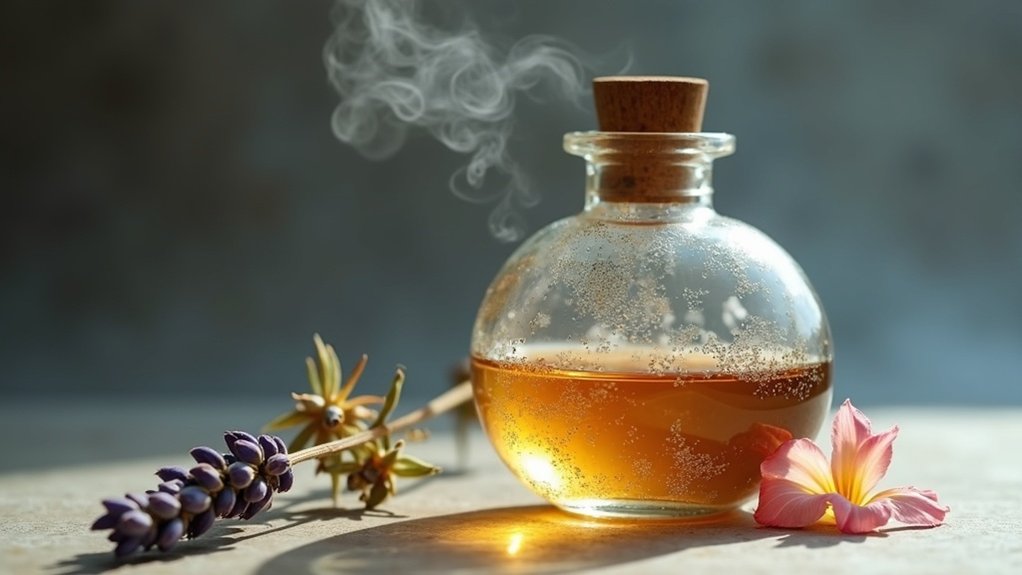
When you open your perfume bottle, oxygen molecules immediately begin their chemical assault on the fragrance compounds, gradually transforming your favorite scent into something unrecognizable.
This molecular breakdown process affects different perfume components at varying rates, with your bright citrus and floral notes typically surrendering first to oxidation’s effects.
Every time you expose your perfume to air, you’re accelerating this deterioration, which is why properly resealing bottles and minimizing unnecessary air contact can significantly extend your fragrance’s lifespan.
Oxygen’s Chemical Assault
Three invisible enemies constantly threaten your favorite perfume, with oxygen being the most relentless attacker. When your fragrance comes in contact with air, oxygen exposure initiates a destructive process called oxidation. This chemical reaction breaks down fragrance molecules, permanently altering your perfume’s carefully crafted scent profile.
You’ll notice this transformation first in the delicate top notes—those bright citruses and light florals that initially attracted you to the fragrance. As oxidation progresses, your perfume may develop unpleasant metallic, sour, or vinegar-like qualities, clear indicators that chemical deterioration has occurred.
To protect perfumes you’ve purchased for yourself or as gifts, minimize oxygen’s assault by keeping bottles tightly sealed when not in use, and store them in cool, dark locations where temperature remains stable.
Molecular Breakdown Process
At the molecular level, oxidation transforms your favorite fragrance through a series of chemical reactions that progressively dismantle the perfume’s structure.
When oxygen molecules interact with the ingredients in a perfume, they break chemical bonds, altering the original scent compounds into new substances with different properties and odors.
Natural ingredients like citrus and floral oils deteriorate faster than synthetic components, which is why you’ll notice your citrus-based perfumes change more quickly.
These oxidized molecules often produce sour or metallic notes, signaling your perfume has begun its decline.
Your storage conditions play a crucial role in slowing this process.
Air Exposure Effects
Each time you uncap your favorite perfume bottle, you’re inviting oxygen to begin its silent attack on your fragrance. This air exposure triggers oxidation, a chemical process that transforms your once-beautiful scent into something sour or vinegary.
Light, delicate notes suffer first—your citrus and floral fragrances deteriorate faster than heavier base notes like musk. You’ll notice the change not only in smell but also in appearance, as your perfume may darken to a brownish color over time.
Frequent opening leads to shorter shelf life, as each exposure accelerates the aging process.
To protect the fragrances you share with others, store bottles in cool, dark places and minimize how often you open them. This thoughtful care preserves their intended scent experience much longer.
Physical Signs That Your Perfume Has Expired
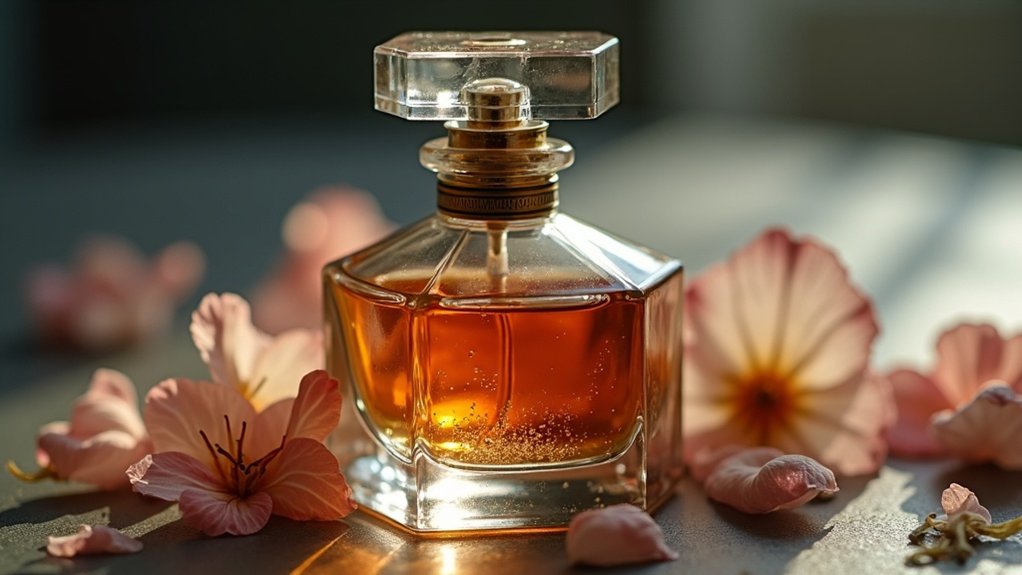
When your beloved perfume has expired, you’ll notice several telltale physical changes that signal it’s time for replacement.
Your once-pristine fragrance might show visible alterations in color, transforming from a light, clear liquid to something darker or cloudier with possible floating particles.
Perhaps the most obvious indication comes from your nose, as the scent profile shifts dramatically from the original bouquet to something sour, metallic, or reminiscent of vinegar, signaling that the chemical composition has fundamentally changed.
Visual Appearance Changes
Your perfume’s appearance can reveal significant clues about its condition, much like how food shows visible signs of spoilage.
When examining your fragrance, look for color changes—a shift from pale yellow to brown or orange often indicates the perfume has started to expire. This discoloration happens as ingredients break down over time.
Another telltale sign is cloudiness or visible separation within the liquid. If you notice layers forming or the once-clear solution becoming murky, it’s likely past its prime.
You should also watch for unusual sediment or floating particles, which suggest the perfume’s composition has degraded significantly.
These visual indicators typically appear before the perfume smell changes completely, giving you an early warning that your favorite scent may no longer deliver its intended aroma or could potentially irritate your skin.
Off-Scent Development Process
Perfumes transform gradually as they deteriorate, moving through distinctive stages before reaching full expiration.
When your favorite fragrance begins its decline, you’ll first notice a shift in its scent profile. What once smelled delightful may develop sour, metallic, or vinegary qualities due to oxidation of the oil content.
As the off-scent development process continues, you’ll observe your perfume projecting less intensely than before. The fragrance doesn’t last as long on your skin, and the complex notes flatten out.
This happens because the volatile compounds that give perfume its character break down over time.
To identify an expired perfume accurately, you should be familiar with how it originally smelled. This knowledge helps you detect subtle changes that signal the beginning of deterioration before it becomes completely unusable.
Texture and Consistency Shifts
Beyond the changing scent profile, visible alterations in your perfume’s physical appearance offer reliable warning signs of expiration.
When examining your fragrance, look for cloudiness in what was once a clear liquid or particles floating within the bottle. These texture changes are definitive indicators that your perfume has expired.
You might also notice unusual separation of ingredients, where different components visibly divide rather than remain blended.
If your once-flowing perfume becomes thicker or more viscous, this consistency change suggests degradation has occurred. These physical transformations typically accompany a decreased ability of the fragrance to project properly.
Regularly check your perfume’s appearance before application.
How Storage Conditions Impact Perfume Longevity
Three critical factors determine how long your favorite fragrance will last: light, temperature, and air exposure. To ensure your perfume lasts for years rather than months, you’ll need to be strategic about where you store your perfume.
Always keep fragrances in a cool, dark place—never on bathroom counters where humidity and temperature fluctuations cause chemical changes that diminish potency. Direct sunlight accelerates the breakdown of fragrance molecules, fundamentally altering the scent you love.
Your perfume’s original bottle provides essential protection against oxidation, so avoid transferring it to decorative containers. Fragrances with higher alcohol content typically remain stable longer, but proper storage remains vital regardless of composition.
Check your collection periodically for color changes or altered scents, which signal it’s time to use them up quickly.
Shelf Life Differences Between Natural and Synthetic Ingredients
While all perfumes eventually deteriorate, the ingredients in your fragrance significantly determine how quickly this process occurs.
Natural oils, particularly those derived from citrus and flowers, tend to have a much shorter shelf life than their synthetic counterparts. These natural components can begin degrading within a year due to their vulnerability to oxidation.
In contrast, synthetic ingredients like musk and aldehydes are engineered for stability, often extending the shelf life of your perfume by several years. When you purchase a fragrance with predominantly synthetic components, you’re investing in a scent that will remain consistent longer.
Some manufacturers even refrigerate natural raw materials to slow their deterioration process. If you’re concerned about longevity, you might consider fragrances with a balanced blend, as the synthetic base can help stabilize the natural elements.
Common Causes of Premature Perfume Degradation
Even the most exquisitely crafted perfumes can deteriorate before their expected shelf life when exposed to certain environmental factors. When you store your bottles improperly, you’re inviting early expiration.
Each time you open your perfume, air rushes in, accelerating oxidation that creates unpleasant sour or metallic notes. Temperature fluctuations, especially heat, break down delicate ingredients and diminish potency—which is why bathroom storage is particularly damaging.
Direct sunlight is another enemy of fragrance, decomposing molecules and often darkening the liquid. The humidity in bathrooms introduces moisture that compromises chemical stability, causing separation or cloudiness in your precious scents.
To prevent your perfume from expiring prematurely, keep bottles tightly sealed in cool, dark places away from temperature swings and direct light.
Preservation Methods for Extending Your Fragrance’s Life
Now that you understand what damages your perfume, let’s explore how to properly preserve your collection.
Store your fragrances in a cool, dark location away from windows and heat sources, which can break down the delicate molecules and potentially cause skin irritation when applied. Always keep perfumes in their original bottles with caps tightly secured to prevent air exposure, which leads to oxidation and alters the scent.
Avoid keeping your collection in bathrooms where humidity can compromise chemical stability. Instead, choose a bedroom drawer or dedicated cabinet.
Regularly check your perfumes for changes in color, clarity, or scent—signs they’re deteriorating. For maximum enjoyment, try to use your fragrances within two to three years after opening, rotating between bottles to ensure nothing goes to waste.