A natural sun tan typically lasts 7-10 days before beginning to fade as your skin naturally sheds cells. Your skin type significantly affects duration—darker complexions (Fitzpatrick IV-VI) can maintain tans for several weeks, while lighter skin tones (I-III) may lose color within 1-2 weeks. Factors like exfoliation, hot showers, and dehydration accelerate fading. You’ll extend your tan’s lifespan by moisturizing daily, gentle weekly exfoliation, and staying hydrated. The sections below reveal more strategies for preserving your sun-kissed glow.
Key Takeaways
- Natural sun tans typically last 7-10 days as skin cells shed through the natural renewal process.
- Darker skin types (Fitzpatrick IV-VI) maintain tans longer—potentially several weeks—compared to lighter skin types.
- Regular moisturizing, gentle exfoliation, and proper hydration can extend a tan’s lifespan significantly.
- Factors accelerating tan fading include hot showers, exfoliation, cool weather, and dehydrated skin.
- Consistent moderate sun exposure helps maintain tan duration, while self-tanners offer a UV-free alternative lasting 5-10 days.
The Science Behind Sun Tanning: Melanin Production Explained
When your skin soaks up those warm rays of sunshine, a fascinating biological process begins beneath the surface. Your skin cells recognize the sun’s UV rays as potential danger and activate a natural defense mechanism.
Specialized cells called melanocytes start producing melanin, the pigment that gives your skin its color and creates that coveted tan.
Your skin type and colour greatly influence how this process unfolds. Those with naturally darker skin produce more melanin, while fair-skinned individuals produce less.
The intensity of UV exposure determines how much melanin is produced – more sun means more pigment and a deeper tan.
Eventually, through normal cell turnover, these tanned skin cells shed and are replaced, which is why your tan fades over time without continued exposure.
Average Duration of a Natural Sun Tan
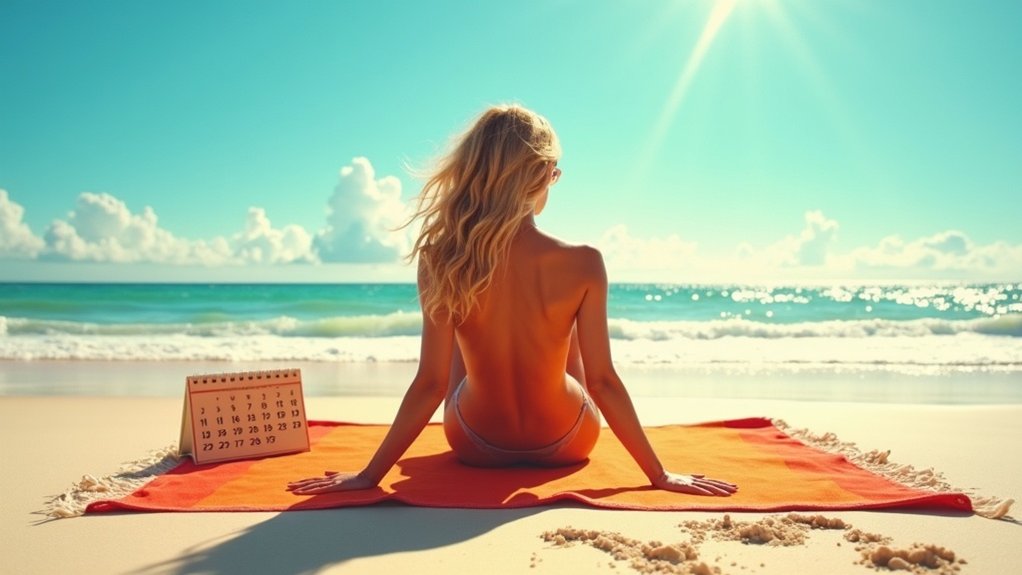
Most natural sun tans remain visible for about 7 to 10 days before beginning to fade. The average duration varies significantly depending on your skin tone, with darker complexions typically maintaining color longer than lighter ones.
If you’re hoping your tan lasts longer, consistent but moderate sun exposure during this period can help maintain your bronze glow.
Weather conditions play a surprising role—your natural tan will usually fade more quickly during cooler, cloudier seasons when you’re less exposed to UV rays.
To extend your tan’s lifespan beyond the average duration, proper hydration is essential. Drinking plenty of water and using moisturizers can help preserve your skin’s color by preventing the outer layers from drying and flaking off prematurely.
Skin Type Influence on Tan Longevity
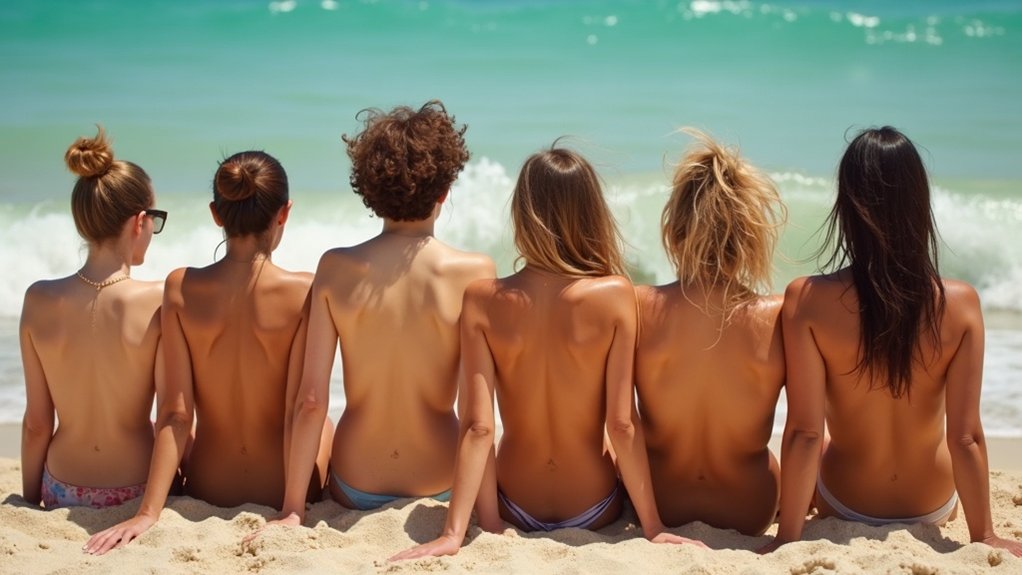
Your skin type fundamentally determines how long your tan will last, creating significant variations in tan longevity among different people.
If you have darker skin tones (Fitzpatrick types IV-VI), your tan lasts considerably longer—often several weeks—thanks to higher melanin production and slower skin cell turnover every 4-6 weeks.
In contrast, lighter skin types (I-III) may see their golden glow fade within just 1-2 weeks. This happens because lighter skin contains fewer keratinocytes that hold melanin.
You’re also more susceptible to sunburn and UV damage, which accelerates tan fading.
Regardless of your skin type, always protect yourself with at least SPF 30 sunscreen.
This helps prevent harmful damage while still allowing some melanin production for that desired summer glow.
Factors That Accelerate Tan Fading
Several environmental and lifestyle factors can significantly speed up how quickly your golden glow disappears, even if you’ve spent hours achieving the perfect tan.
Your skin’s natural renewal process causes tan fade within 7-10 days as pigmented skin cells are shed.
Exfoliation is a major contributor to faster fading, as it removes the outer layer of dead skin cells containing your tan.
If you’re experiencing cooler weather, you’ll notice quicker fading since reduced UV exposure decreases melanin production.
Dehydrated skin sheds cells more rapidly, so proper moisturization is essential for effective tan maintenance.
Be mindful of hot showers and high temperatures, as they increase skin cell turnover, causing your tan to fade more quickly than you might expect.
Proven Strategies to Extend Your Tan’s Lifespan
While your tan will naturally fade over time, you can significantly extend its lifespan with some proven strategies.
Your post-tan care should include a consistent moisturizing routine, smart exfoliation techniques that remove dead skin cells without stripping color, and even dietary adjustments that enhance your skin’s natural glow.
Let’s look at these practical approaches that’ll help you maintain your sun-kissed look for weeks longer than you’d expect.
Post-Tan Moisturizing Routine
The secret to extending your sun tan’s lifespan lies in a consistent post-tan moisturizing routine that nourishes your skin daily.
Hydrate your skin thoroughly with products specifically designed for post-tan care, focusing on those containing aloe vera to repair and rejuvenate sun-exposed areas.
Stay committed to drinking plenty of water throughout the day, as internal hydration directly affects how long your tan will last.
When showering, use lukewarm water instead of hot, which can accelerate skin cell turnover and fade your tan prematurely.
Gentle exfoliation once weekly helps maintain an even, vibrant appearance by removing only the uppermost dead skin cells without stripping away your hard-earned color.
This balanced approach to skin care will prolong your tan while keeping your skin healthy and glowing.
Smart Exfoliation Techniques
Many tanning enthusiasts make a critical mistake with overly aggressive exfoliation, unknowingly scrubbing away their hard-earned color. Instead, embrace gentle exfoliation just once weekly to remove dead cells while preserving your sun-kissed glow.
For a long-lasting tan, select a mild sugar or salt scrub that won’t accelerate skin cell turnover. Apply with light, circular motions to polish your skin without stripping the tanned layer. Harsh, abrasive products are your tan’s worst enemy, causing premature fading and uneven patches.
Incorporate hydrating ingredients into your regular exfoliation routine by choosing scrubs enriched with nourishing oils.
Always follow with a rich moisturizer to lock in hydration and maintain your tan’s vibrancy. This balanced approach ensures your complexion stays smooth while extending your tan’s lifespan.
Dietary Tan Enhancers
Beyond your skincare routine, what you put on your plate directly affects your tan’s longevity. Foods rich in beta-carotenes, like carrots and sweet potatoes, naturally enhance skin pigmentation to prolong your tan.
Staying hydrated isn’t just good advice—it’s essential for maintaining your tan and supporting overall skin health.
Incorporate plenty of antioxidant-rich fruits and vegetables into your meals to help your skin repair itself after sun exposure. Healthy fats from avocados and nuts improve skin elasticity, helping your golden glow last longer.
Additionally, foods high in vitamins C and E encourage skin regeneration, which can maintain your tan through the natural skin renewal process.
The Difference Between Gradual and Intense Tanning Results
When it comes to achieving a sun-kissed glow, your approach makes a significant difference in how long your tan will last.
Gradual tanning through multiple shorter sessions helps your body produce melanin more effectively, creating a tan that lasts 2-4 weeks. This method allows deeper skin layers to adapt to UV radiation, resulting in a more durable color even as skin cells are replaced.
In contrast, intense tanning from a single session typically only lasts 7-14 days because it primarily affects the outermost skin layers.
You’ll also find that gradual tanning reduces damage risk and promotes an even tone, while proper skin hydration helps extend both types of tans.
Remember that your natural skin tone matters too—darker skin types tend to retain their tan longer regardless of your approach.
Post-Vacation Tan Maintenance Routine
After returning from your beach getaway with that enviable golden glow, you’ll need a strategic approach to preserve it as long as possible.
Moisturize your skin daily to prevent peeling and flaking that rapidly diminish your tan’s longevity. Once weekly, gently exfoliate to remove dead skin cells without stripping away your color.
Replace hot showers with cool ones, as high temperatures accelerate skin cell turnover, causing your tan to fade faster.
Hydrate from within by drinking plenty of water throughout the day, which maintains moisture levels in your skin.
Additionally, boost your skin health by incorporating beta-carotene-rich foods like carrots and sweet potatoes into your diet.
This comprehensive maintenance routine helps extend the life of your vacation tan while keeping your skin healthy and radiant.
Skincare Products That Help Preserve Your Sun-Kissed Glow
The right skincare products can make a remarkable difference in how long your tan lasts, transforming a fleeting glow into a sustained summer look.
Daily moisturizing with hydrating lotions creates a moisture barrier that prevents your skin from drying and flaking, which would otherwise cause your tan to fade faster.
After-sun products containing aloe vera provide essential nourishment to sun-exposed skin, helping maintain that vibrant tan you’ve worked to achieve.
Remember to incorporate gentle exfoliating once weekly to remove dead skin cells without stripping color. For maximum longevity, invest in specialized tan extenders that enhance your natural glow.
Don’t forget that skin health starts from within—adding beta-carotene-rich foods like carrots and sweet potatoes to your diet supports your tan from the inside out.
Tanning Methods Compared: Natural Sun vs. Sunbeds vs. Spray Tans
Different tanning methods can yield dramatically different results, both in appearance and longevity.
Natural sun tanning typically produces a tan that lasts 7-10 days, as UV rays stimulate melanin production in your skin. With continued sun exposure, you’ll maintain your glow longer.
Tanning beds offer a similar timeframe of 7-14 days for a base tan, but with regular sessions, your color might extend to 2-4 weeks. The type of bed matters too—low-pressure beds often create deeper tans that fade more gradually than high-pressure alternatives.
Spray tans provide instant gratification but have the shortest lifespan at just 5-10 days. As your skin naturally exfoliates, the color will fade.
Healthy Alternatives for Year-Round Bronzed Skin
While tanning beds bombard your skin with harmful UV radiation, self-tanners offer a much safer alternative that can give you the same bronzed look without the damage.
You’ll find various options, from gradual tanning lotions that build color over several days to instant bronzers that wash off at the end of the day.
Bronzing makeup products, including powders, creams, and tinted moisturizers, can also provide a sun-kissed glow that you can apply in minutes and adjust to your preferred intensity.
Self-Tanners vs. Sunbeds
Many people wonder how they can maintain a sun-kissed glow throughout the year without damaging their skin. The answer may lie in choosing between self-tanners and sunbeds, two popular options with significant differences.
Self-tanners provide a bronzed appearance that typically lasts 5-10 days through DHA, which reacts with your skin’s amino acids without harmful UV exposure.
You’ll need regular maintenance, but you’ll avoid the skin damage associated with sunbeds.
In contrast, sunbeds accelerate melanin production through intense UV exposure, creating a tan that lasts 7-30 days.
While they work faster, they significantly increase your risk of premature aging and skin cancer.
For optimal skin health, consider using self-tanners as your primary method to maintain your glow, potentially supplemented with limited sunbed sessions if necessary.
Bronzing Makeup Magic
For those seeking a golden glow without risking sun damage, bronzing makeup offers an ideal solution that delivers immediate results.
You’ll find various options including bronzing powders, creams, and sprays designed to complement different skin tones naturally.
What makes bronzing makeup particularly beneficial is its ability to provide a sun-kissed look while actually caring for your skin.
Many products contain moisturizing ingredients that hydrate while enhancing your appearance.
Additionally, skin-nourishing components like antioxidants improve skin health with each application.