
When choosing between EDT and EDP fragrances, consider your needs carefully. EDTs contain 5-15% fragrance oils, making them lighter, perfect for daytime wear and summer months, but they’ll last only 3-5 hours. EDPs have 15-20% oils, creating a richer, longer-lasting scent (6-8 hours) that’s ideal for evenings and cooler seasons. Your budget matters too – EDPs cost more but require fewer applications. The right choice enhances both your presence and confidence in any situation.
Key Takeaways
- Consider fragrance concentration: EDPs contain 15-20% fragrance oils lasting 6-8 hours, while EDTs have 5-15% oils lasting 3-5 hours.
- Match to occasion: Choose EDT for casual daytime events and office settings; select EDP for evening occasions and special events.
- Factor in seasons: EDT works better in warm weather with its lighter composition, while EDP performs better in cooler months.
- Evaluate price value: EDP costs more initially but may offer better value through fewer applications and longer wear time.
- Assess personal preference: Your skin chemistry affects how fragrances develop, so test both to determine which scent profile you prefer.
Understanding EDT Vs EDP: Basic Concentration Differences
Fragrance enthusiasts often find themselves puzzled when choosing between Eau de Toilette (EDT) and Eau de Parfum (EDP). The fundamental difference lies in fragrance oil concentration: EDT contains 5-15% while EDP offers a more potent 15-20% concentration.
This difference in concentration directly impacts staying power. Your EDP will typically last 6-8 hours on skin, making it ideal when you need a longer-lasting scent for extended events.
In contrast, EDT provides 3-5 hours of fragrance, perfectly suited for casual settings or daytime wear.
The scent profile also varies significantly between formulations. EDT emphasizes lighter top and middle notes, creating a fresher, more subtle impression.
EDP reveals richer, more complex aromas with deeper base notes that evolve beautifully throughout the day.
Longevity Comparison: How Long Each Fragrance Type Lasts
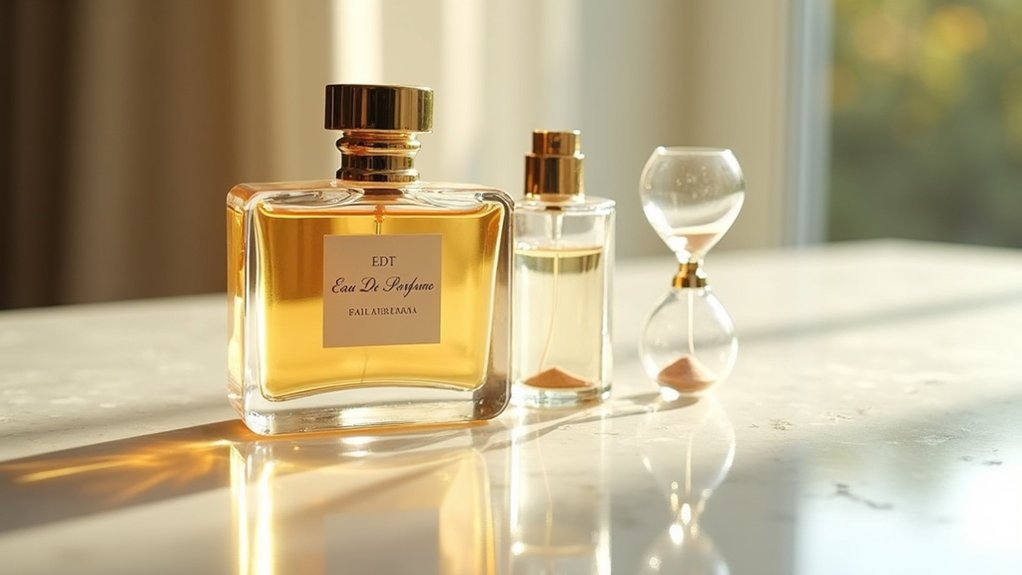
Your fragrance’s staying power depends on its concentration, with EDP typically lasting 6-8 hours while EDT provides 3-5 hours of scent projection.
Your skin chemistry will significantly affect how long a fragrance remains detectable, as factors like skin type, body temperature, and pH levels interact differently with the perfume compounds.
When applied to clothing instead of skin, you’ll notice extended longevity, with EDP often exceeding 8 hours and EDT remaining noticeable for up to 4 hours on fabric.
Hours of Scent Projection
When deciding between fragrance types, understanding how long the scent will actually last on your skin becomes a crucial factor in making the right choice.
Eau de Parfum (EDP) offers superior longevity, typically projecting its scent for 6-8 hours due to its higher fragrance oil concentration of 15-20%. You’ll experience a richer, more complex aroma that evolves throughout the day.
In contrast, Eau de Toilette (EDT) provides a lighter scent with shorter staying power, generally lasting 3-5 hours with its 5-15% fragrance oil concentration. Your skin chemistry plays a significant role in how long either type will last on you specifically.
For special occasions or full-day events, the longer-lasting EDP is your best option, while EDT works perfectly for casual outings or situations where a subtle fragrance is preferred.
Skin Chemistry Effects
Beyond the percentages of fragrance oils in each formula, your skin’s unique chemistry acts as the ultimate deciding factor in how long a scent lasts on you.
Your skin type, hydration levels, and pH balance all interact differently with Eau de Parfum versus Eau de Toilette, creating a truly personalized experience.
If you have drier skin, you’ll likely notice EDPs last longer on you, as the higher concentration of fragrance oils (15-20%) clings more effectively.
With oilier skin, you might find that both formulations project well, but environmental factors like temperature and humidity will still affect longevity.
While an EDP generally offers 6-8 hours of wear compared to EDT‘s 3-5 hours, your personal preference matters most.
Some people prefer the subtle, lighter presence of EDT, while others appreciate EDP’s deeper evolution throughout the day.
Best Occasions for EDT and When to Choose EDP Instead
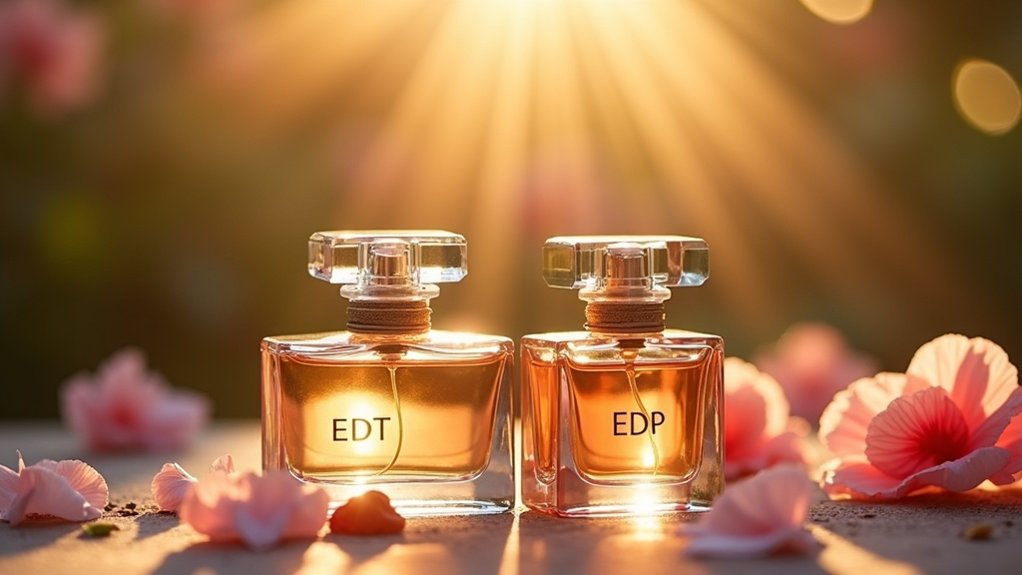
The perfect fragrance choice depends largely on the occasion you’re attending and the impression you want to make.
For daytime wear or office settings, Eau de Toilette is your ideal companion with its lighter concentration of 5-15% fragrance oils. EDT provides a subtle, refreshing scent that lasts 3-5 hours without overwhelming colleagues.
Reserve your Eau de Parfum for evening events or special occasions when you’re aiming to leave a lasting impression. With 15-20% fragrance oils, EDP delivers a richer, more complex scent that remains present for 6-8 hours—perfect for romantic dinners or formal gatherings.
Seasonal considerations should also guide your choice. EDT’s airy quality works beautifully in warmer months, while EDP’s stronger presence thrives during cooler weather when fragrances naturally dissipate more slowly.
The Price Factor: Why EDPs Generally Cost More
When you’re shopping for fragrances, you’ll notice EDPs typically come with a higher price tag than their EDT counterparts because they contain nearly twice the concentration of fragrance oils (15-20% versus 5-15%).
This increased concentration requires premium ingredients and more complex manufacturing processes, which significantly drives up production costs.
The investment in an EDP might feel worthwhile when you consider its superior longevity—your scent will remain noticeable for up to 8 hours or more, compared to just 3-5 hours with an EDT.
Higher Concentration Costs More
Several factors contribute to the price difference between fragrances, with concentration ranking among the most significant.
When you’re comparing Eau de Toilette to Eau de Parfum, you’re essentially paying for the amount of fragrance oil in each bottle. EDPs contain 15-20% fragrance oil, while EDTs only contain 5-15%.
This higher concentration in Eau de Parfum isn’t just about intensity—it’s about longevity and quality. You’ll notice your EDP lasts considerably longer throughout the day, requiring fewer applications.
While the initial price tag might seem steep compared to the more budget-friendly Eau de Toilette options, consider the cost-per-wear value. Your EDP’s longer-lasting wear means you’ll use less product over time, potentially making it the more economical choice despite its premium pricing.
Premium Ingredients Impact
Beyond concentration levels, premium ingredients significantly drive up the cost of Eau de Parfum compared to its lighter counterpart. When you choose an EDP, you’re investing in rare essential oils and complex scent blends that create a sophisticated fragrance profile you won’t find in standard formulations.
The intricate crafting process behind Eau de Parfum involves meticulous attention to detail, ensuring that the higher concentration of fragrance oils (15-20%) delivers both quality and longevity.
Your EDP will typically last 6-8 hours or more, making it ideal for those who need lasting fragrance throughout their day.
Many premium ingredients are sourced using sustainable practices and artisanal techniques, adding ethical value to your purchase while contributing to the distinctive character that makes each Eau de Parfum unique.
Longevity Justifies Price
The higher price tag of Eau de Parfum makes perfect sense when you consider its remarkable longevity. When you invest in an EDP, you’re getting 15-20% fragrance oils, compared to Eau de Toilette’s modest 5-15% concentration. This significant difference means your EDP will last 6-8 hours, while EDT typically fades after just 3-5 hours.
Your fragrance choice impacts how you serve and connect with others. The enhanced sillage of EDPs leaves a lasting impression in social and professional settings. The complex scent profile evolves beautifully throughout the day, reflecting the premium quality of ingredients used.
For special occasions or evening events where you want your presence subtly noticed, the price difference becomes justified through the extended wear time and sophisticated development of the fragrance.
Seasonal Considerations for Fragrance Strength
As seasons change throughout the year, your fragrance choices should adapt accordingly to complement the surrounding environment.
During warmer months, opt for lighter fragrances like Eau de Toilette, which offers a refreshing, airy quality perfect for daytime activities lasting 4-6 hours. The lighter concentration works well in heat when scents naturally project more.
When temperatures drop, consider switching to Eau de Parfum for its richer profile and longer-lasting performance of 6-8 hours. This higher fragrance strength provides the warmth and depth that cooler seasons call for, making it ideal for evening gatherings and extended occasions.
Remember that personal preference matters too. You might enjoy EDPs year-round for their complexity, while others may prefer EDTs even in winter for their subtle, less overwhelming presence.
The Art of Application: Proper Techniques for Each Type
Mastering fragrance application involves strategic placement on pulse points like wrists and behind ears, where your body’s natural warmth will help diffuse the scent throughout the day.
You’ll extend your EDT’s shorter lifespan by layering it over matching or unscented lotion, creating a foundation that helps the fragrance molecules cling to your skin longer.
As seasons change, you’ll need to adjust your application technique—apply lighter in summer when heat amplifies scents, and more generously in winter when cold air suppresses fragrance diffusion.
Pulse Point Placement
Where you apply your fragrance can dramatically affect its performance throughout the day.
For Eau de Parfum, target pulse points—wrists, neck, and behind ears—where body heat naturally activates and releases fragrance oils, maximizing longevity. Apply 2-4 sprays and allow them to dry naturally without rubbing to preserve the scent profile.
With Eau de Toilette, you’ll still want to focus on pulse points, but you can also lightly mist clothing for a refreshing effect. Remember that EDT requires reapplication every 3-4 hours, so keep it handy throughout your day.
For both fragrance types, consider layering with matching or fragrance-free lotions on pulse points to create deeper, more complex scent profiles that last longer and develop beautifully on your skin.
Layering for Longevity
Three key techniques can dramatically extend your fragrance’s staying power through strategic layering.
First, apply unscented or matching-scented body lotion before your Eau de Parfum on pulse points, creating a moisturized base that helps fragrance oils adhere better to your skin. This simple step can add hours to your EDP’s presence.
Second, remember that proper application technique matters—avoid rubbing your wrists together after applying either Eau de Toilette or Eau de Parfum, as this breaks down the delicate top notes prematurely. Instead, let the fragrance dry naturally.
Finally, understand the reapplication timeline: EDT typically needs refreshing every 3-4 hours, while EDP can last 6-8 hours before needing a touch-up.
Seasonal Application Adjustments
As the seasons shift from sweltering summer days to crisp winter evenings, your fragrance application techniques should adapt accordingly.
During warmer months, embrace Eau de Toilette‘s lighter composition with its 5-15% fragrance oils, applying it more liberally throughout the day. Its refreshing quality serves you well when temperatures rise, and you can enhance its presence by layering with scented lotions.
When cooler weather arrives, transition to Eau de Parfum with its richer 15-20% fragrance oil concentration.
Apply EDP strategically to pulse points—wrists, neck, and behind ears—where its complex notes can fully develop. The increased longevity (up to 8 hours) makes it perfect for winter, and pairing with unscented lotions allows the fragrance to shine without competition.
This seasonal application approach ensures your scent remains appropriate and effective year-round.
Signature Scent Development: Layering EDT and EDP
While many fragrance enthusiasts choose between EDT and EDP, combining both can actually create a unique signature scent that’s distinctly yours.
This layering technique enhances your fragrance experience by blending the fresh, lighter notes of Eau de Toilette (EDT) with the richer, deeper character of Eau de Parfum (EDP).
To create your perfect combination, start by applying EDT as your foundation layer, then strategically add EDP to pulse points where warmth will activate the scent.
Remember that concentration matters—use the stronger EDP sparingly to avoid overwhelming the composition.
Look for complementary fragrances that share similar note families, such as florals with florals or woody scents with similar earthy tones.
Experiment with different combinations across seasons to discover your perfect signature scent that serves you well in all settings.
Fragrance Families and How They Perform in Different Concentrations
Different fragrance families reveal unique personalities when crafted in EDT versus EDP concentrations, much like how the same musical notes sound distinct when played on different instruments.
When you’re choosing between an Eau de Parfum and Eau de Toilette, consider how the fragrance family responds to oil concentration.
Floral and oriental families typically shine in EDP form, where their complex notes can fully develop, offering extended longevity and a richer scent experience.
The higher oil concentration allows these families to evolve beautifully on your skin throughout the day.
In contrast, fresh and citrus families often perform wonderfully as EDTs, making them perfect for warmer weather and daytime wear.
Their lighter concentration captures the bright, immediate character of these scents without overwhelming those around you.
Key Storage Tips to Preserve Both Fragrance Types
Proper storage techniques significantly extend the life of your precious EDT and EDP fragrances, saving you money while ensuring each spritz delivers the scent as the perfumer intended.
Always store your Eau de Toilette and EDP bottles in cool, dark locations, away from windows and heat sources that accelerate deterioration.
After each use, securely replace the caps to minimize air exposure which can compromise fragrance integrity. Dark glass bottles offer superior protection against damaging light that alters the perfume’s composition.
Avoid keeping your fragrances in bathrooms, where humidity levels fluctuate dramatically and can degrade their quality.
Always store bottles upright to prevent leakage and contamination.
These simple storage practices will significantly enhance longevity, allowing you to enjoy your favorite scents exactly as designed—whether they’re the lighter EDT or more concentrated EDP formulations.
Making the Final Decision: Personal Preferences and Lifestyle Factors
Selecting the perfect fragrance ultimately comes down to your unique lifestyle needs and personal preferences rather than simply choosing between concentration levels.
Consider how EDT’s lighter formula makes it ideal for everyday wear in professional settings or warmer seasons when subtlety is appreciated. In contrast, EDP’s higher concentration of fragrance oils creates a longer-lasting impression perfect for special occasions and cooler months.
Your budget will inevitably influence your decision, as EDT typically costs less than its more concentrated EDP counterpart.
However, investing in both types might serve you well—EDT for casual daytime activities and EDP for evening events where you want your scent to endure.
Remember that seasonal factors should guide your choice; lighter scents work better in summer, while richer aromas complement winter atmospheres.