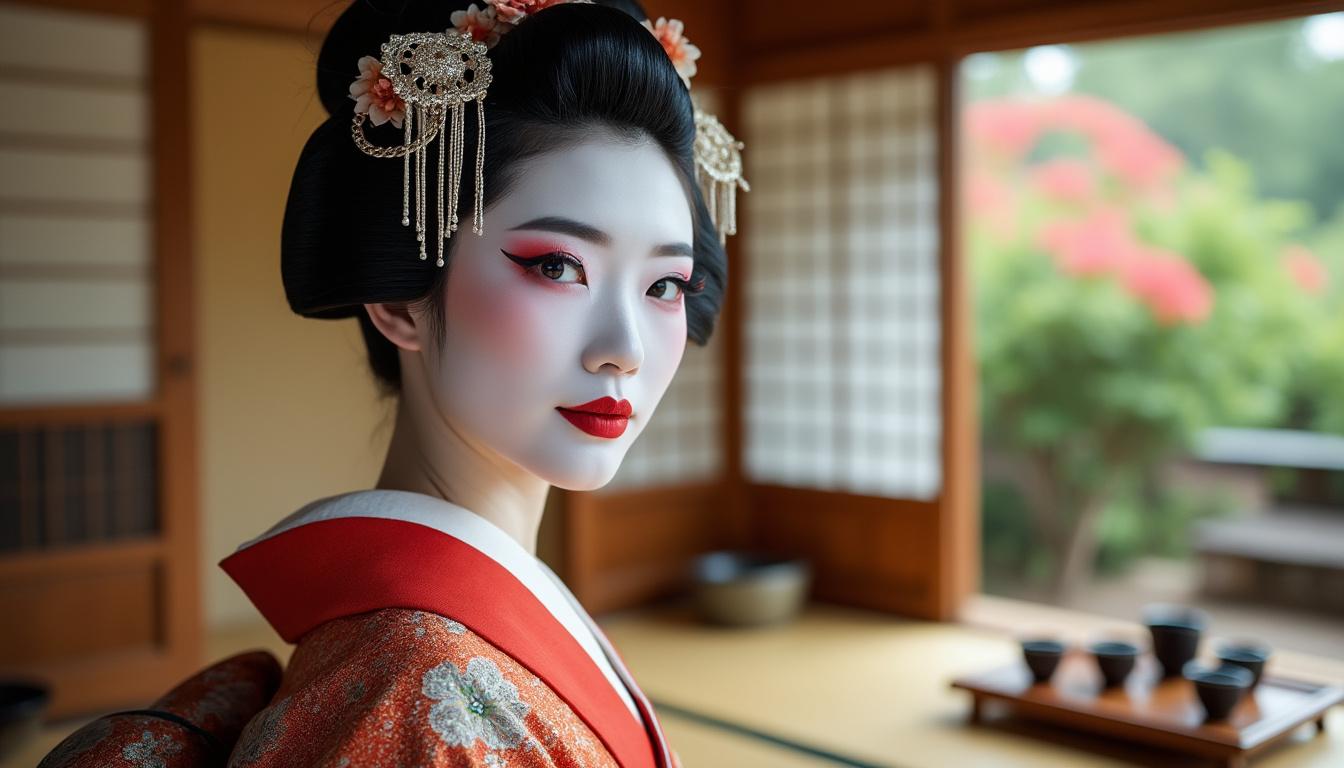
The captivating allure of geisha makeup is deeply woven into the fabric of Japanese culture, symbolizing a rich heritage and artistic precision that dates back centuries. This traditional makeup style, characterized by striking white face paint, red lips, and delicate eyeliner styles, offers more than just aesthetic appeal. It serves as a cultural emblem, reflecting the grace, poise, and storytelling of the geisha’s role in society. Understanding and mastering these makeup techniques is not only about recreating a look but honoring a time-honored tradition that balances ritual with creativity.
As interest in this iconic style grows internationally, it becomes essential to delve into the artistry behind every brushstroke and color choice. The use of white face paint sets a porcelain-like canvas that transforms the wearer into a living piece of art, while the bold red lips symbolize vitality and elegance. Skilled face contouring enhances facial features to express emotion and refinement, a principle deeply rooted in the historical context of geisha appearance. Discovering the nuances of eyeliner styles unique to this look reveals the precision and care devoted to each detail, making it a true mastery of makeup techniques.
This exploration goes beyond mere cosmetics; it invites enthusiasts to immerse themselves in a cultural narrative that has influenced beauty perspectives worldwide. For anyone seeking to achieve an authentic geisha-inspired makeup look, appreciating the symbolism and technical aspects is essential. Through dedicated practice and respect for tradition, one can transform a simple makeup session into a meaningful homage to Japanese beauty artistry.
In the following sections, we will examine the historical roots of geisha makeup, break down each essential makeup component, offer practical advice for perfect application, and highlight the importance of maintaining cultural respect while experimenting with this stunning aesthetic. Additionally, expert tips on selecting authentic products and tools will be provided to guide you toward achieving a flawless geisha makeup application.
Whether for cultural appreciation, performance, or personal exploration, mastering geisha makeup techniques reveals a fascinating intersection between art, beauty, and heritage.
Essential points to remember about mastering geisha makeup techniques:
- White face paint serves as the foundation, creating a classic, porcelain complexion.
- Red lips are meticulously shaped to evoke tradition and femininity.
- Eyeliner styles emphasize eye shape, blending sharpness with softness for a dramatic but balanced effect.
- Face contouring subtly sculpts features to maintain harmony with the overall look.
- Respect for Japanese culture and its history is crucial when adopting the traditional makeup style.
- Using authentic tools and products enhances the final result and protects skin health.
- Practice and patience are key components for learning the precise application techniques.
Exploring the Historical Significance of Geisha Makeup and Traditional Makeup Techniques
The story of geisha makeup is inseparable from the rich tapestry of Japanese history and culture. For centuries, geishas have served as cultural ambassadors, entertainers, and artists, their appearance carefully crafted to reflect mystique and sophistication. The origins of the iconic white face paint date back to the Heian period (794–1185), where aristocratic court ladies applied oshiroi—a white lead-based powder—not only for aesthetic reasons but to appear luminous in candlelight.
This tradition evolved as geishas refined their image, using white face paint as a symbol of purity and status. The thick, opaque base created an ethereal appearance that distinguished them from common folk, while simultaneously protecting the skin beneath from the elements. Over time, makeup techniques became increasingly codified, with each element serving symbolic purposes.
The red lips painted with precision represent vitality and allure, often shaped in a way that varies between beginner and experienced geishas. For example, apprentices (maiko) wear fuller lips, symbolizing youthfulness, while senior geishas adopt a more restrained lip shape. This subtle shift communicates maturity and depth, an integral part of the makeup’s meaning.
Particular attention is given to eyeliner styles, where dark lines enhance the eyes to express calmness and seduction simultaneously. Unlike Western makeup, which emphasizes exaggeration and boldness, geisha eyeliner strives for harmony and grace, balancing each delicate feature with artistry.
Though modern cosmetic products have replaced some traditional materials, the essence of the application remains unchanged. Face contouring techniques, for example, are subtle yet deliberate, supporting the character and expression imparted by the makeup. The neck also plays an essential role, with its own distinctive white paint pattern signifying elegance.
Understanding this cultural and historical context is fundamental for anyone aiming to achieve an authentic geisha makeup look. It encourages a respectful approach that honors tradition rather than mere imitation. For a detailed exploration of the makeup’s origin and significance, readers can visit the insightful piece on geisha makeup tradition, meaning, and technique.
Step-by-Step Guide to Applying Geisha Makeup with Professional Makeup Techniques
Achieving the iconic geisha makeup requires meticulous preparation, skilled technique, and high-quality products. Mastery begins with the classic white face paint, known as oshiroi, which forms the foundation of the look. This powder or cream must be applied evenly to create a smooth, luminous surface free of lines or streaks.
Preparation involves cleansing and moisturizing the skin thoroughly, ensuring a hydrated base for long-lasting application. Many makeup artists recommend using a specialized primer to prevent dryness and irritation, as traditional white powders can be heavy. A good brush or sponge designed for even coverage is essential, with layers built gradually to avoid cracking or caking.
Once the white base is perfected, attention shifts to red lips, which are often painted in a distinctive small bow shape reminiscent of a flower petal. The shape and size of the lips can vary according to the wearer’s preference and the style being emulated—maiko versus senior geisha makeup.
Prior to lip color application, outlines are sketched precisely using a small brush or lip liner in bold red tones. This framing technique helps achieve symmetry and sharp edges, vital for maintaining the look’s integrity. Red pigments traditionally contain natural ingredients, but modern formulations provide long-lasting vibrancy without sacrificing comfort.
Eyeliner styles take center stage next, framing the eyes through carefully drawn lines that enhance without overwhelming. A mix of black and subtle dark gray shades are used to create a soft but defined eye. The upper lash line is emphasized to elongate the eyes, while a lighter touch beneath adds depth. Geisha eyeliner avoids heavy smudging, instead focusing on clean, precise strokes that echo traditional brushwork.
Face contouring comes last but remains subtle. Using soft browns or greys, artists enhance cheekbones and jawlines to align with the refined aesthetic—a contrast to modern contouring trends that highlight dramatic shadows and angles. The subtlety here is key, reflecting the art form’s intrinsic restraint and balance.
For those eager to see this process in action, an excellent tutorial can be found on how to apply Japanese geisha makeup tutorial, which breaks down each stage with clarity and precision.
Choosing the Right Tools and Products for an Authentic Geisha Makeup Look
Behind every flawless geisha makeup application lies a carefully curated set of tools and quality products that respect both tradition and modern skincare needs. Selecting these items ensures the look is not only authentic but also skin-friendly and comfortable to wear.
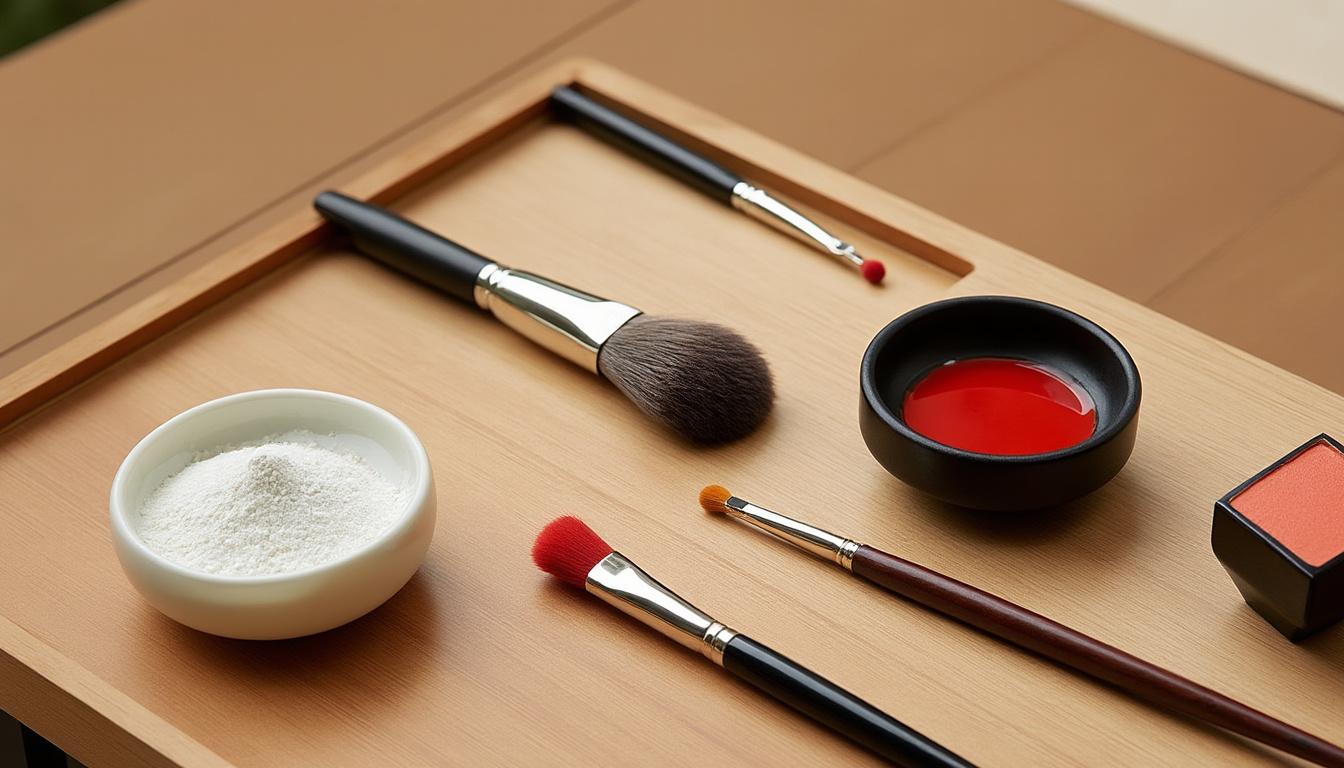
The cornerstone is the white face paint, historically made from rice powder mixed with water, but today replaced by less toxic alternatives such as mineral-based white cream or powder foundations designed for theatrical performance. Brands focusing on clean ingredients and hydration offer versions that provide the same opacity without harsh chemicals.
Brush quality is paramount when applying intricate details like eyelashes and lips. A fine-tipped eyeliner brush or a small bamboo brush aids in replicating the delicate, fine lines crucial for authentic eyeliner styles. For lips, a flat, narrow brush helps sculpt the unique red shapes precisely.
Moisturizing balms and primers specially formulated for sensitive skin types support makeup longevity, preventing dryness often associated with traditional products. Additionally, setting powders that do not disturb the underlying white base offer essential longevity for performances or photo shoots.
Here is a table summarizing essential tools and their functions for mastering geisha makeup:
| Tool/Product | Purpose | Recommended Features |
|---|---|---|
| White Face Paint (Oshiroi) | Create an even, luminous base | Mineral-based, moisturizing, non-toxic |
| Fine-tipped Eyeliner Brush | Draw precise dark lines around eyes | Soft bristles, slim tip for detail |
| Red Lip Brush | Shape vibrant traditional lips | Flat, narrow, smooth application |
| Moisturizing Primer | Prepare and protect skin | Hydrating, compatible with powders |
| Setting Powder | Ensure makeup longevity | Lightweight, translucent finish |
Getting acquainted with these tools not only improves application but respects the heritage behind each product’s role. For a comprehensive overview of materials and application techniques, resources like expert guides on Japanese geisha makeup provide valuable knowledge for enthusiasts and professionals alike.
Beauty Tips and Face Contouring Secrets to Perfect the Geisha Makeup Look
One of the most intriguing aspects of geisha makeup is the subtle art of face contouring, which supports the overall harmony without overwhelming the delicate features. Unlike Western contouring that often dramatizes bone structure, geisha contouring focuses on preserving softness and balance while enhancing natural elegance.
Contouring typically emphasizes the cheekbones and jawline with muted shades, created using soft powders or creams. These shades mimic natural shadows but must be blended impeccably to avoid stark contrasts. The aim is to frame the face delicately, enhancing expressions integral to the geisha’s storytelling through appearance.
Another essential tip is ensuring the white face paint is flawlessly applied and maintained because the slightest imperfections become highly visible under traditional lighting conditions. Frequent touch-ups and use of a gentle setting spray can preserve the porcelain effect throughout the day.
Furthermore, the classic eyeliner styles are enhanced by shaping the brows naturally yet defined, often with strokes mimicking hair to avoid harsh lines. Brows in geisha makeup act as soft accents rather than bold statements, balancing the eyes’ emphasis.
Facial skincare before and after wearing makeup is crucial to maintain skin health given the heaviness and duration of wear. Hydrating masks, cleansing routines, and sun protection ensure that the skin remains nourished and radiant beyond the makeup application.
- Apply thin layers of white face paint for a smooth finish and avoid caking.
- Shape lips carefully using a red lip brush for precision.
- Use light, natural brow strokes to frame eyes softly.
- Blend contour shades seamlessly to enhance without harshness.
- Maintain skin hydration before and after makeup application.
- Consider setting sprays to prolong makeup integrity.
Cultural Respect and Staying True to Japanese Aesthetic When Applying Geisha Makeup
Adopting geisha makeup carries a profound responsibility to honor and respect the cultural heritage it represents. This makeup style is not merely a beauty trend but a symbol deeply enmeshed in Japanese social customs, arts, and history. Understanding this significance is essential to avoid cultural appropriation or misinterpretation.
Traditional makeup celebrates a standard of beauty connected to grace, discipline, and artistic expression within a specific cultural framework. Engaging sincerely with the history, meanings, and rituals of geisha makeup helps wearers recognize its deeper narratives.
For those pursuing this look outside Japan, respectful practice includes researching authentic sources, acknowledging the origins, and supporting artisans who produce traditional materials. This approach fosters appreciation rather than mere imitation.
We recommend exploring informed articles such as the art of geisha makeup techniques and history to deepen understanding of cultural context and evolution.
Moreover, collaborating with Japanese makeup artists or cultural experts ensures the authenticity and sensitivity of the makeup’s application. This education enables practitioners to embrace the aesthetic with reverence, celebrating the intricate beauty of geisha art rather than reducing it to costume.
In essence, mastering geisha makeup is as much about cultivating respect as it is about perfecting technique. By honoring its lineage and cultural ties, the makeup transcends mere appearance, becoming a meaningful artistic ritual.