
For a faster, more even tan, exfoliate 12 hours before your session to remove dead skin cells. Apply a tanning lotion formulated for your skin type, focusing on proper coverage. Limit sun exposure to 2-3 hours during peak UV times (10 a.m.-4 p.m.), changing positions frequently. Stay hydrated and eat beta carotene-rich foods like carrots and sweet potatoes. After tanning, moisturize daily with gentle products to extend your glow. These strategies will transform your tanning routine.
Key Takeaways
- Exfoliate 12 hours before tanning to remove dead skin cells and create a smooth base for even color absorption.
- Consume beta carotene-rich foods like carrots and sweet potatoes to naturally enhance your skin’s tanning ability.
- Limit tanning sessions to 2-3 hours during peak UV times (10am-4pm), changing positions frequently for even results.
- Apply moisturizer to dry areas like elbows and knees just before tanning to prevent patchy absorption.
- Choose express self-tanners with DHA for quick color development within hours rather than waiting days.
Prepare Your Skin for Optimal Tanning Results
Three essential prep steps can make the difference between a flawless tan and a patchy disappointment. Start by exfoliating your skin at least 12 hours before tanning to remove dead skin cells, which ensures an even tan and prevents blotchiness. Your skin type doesn’t matter—everyone benefits from this crucial step.
Next, shave or wax areas you plan to tan at least 12 hours beforehand, using specialized shaving cream to prevent irritation. This allows pores to close before applying tanning products.
Finally, strategically moisturize dry areas like elbows and knees just before tanning, while avoiding heavy lotions elsewhere. This targeted approach prevents uneven absorption without creating barriers that interfere with tanning products.
Keeping your skin properly prepped ensures optimal UV protection and lasting results.
Choose the Right Tanning Products for Your Skin Type
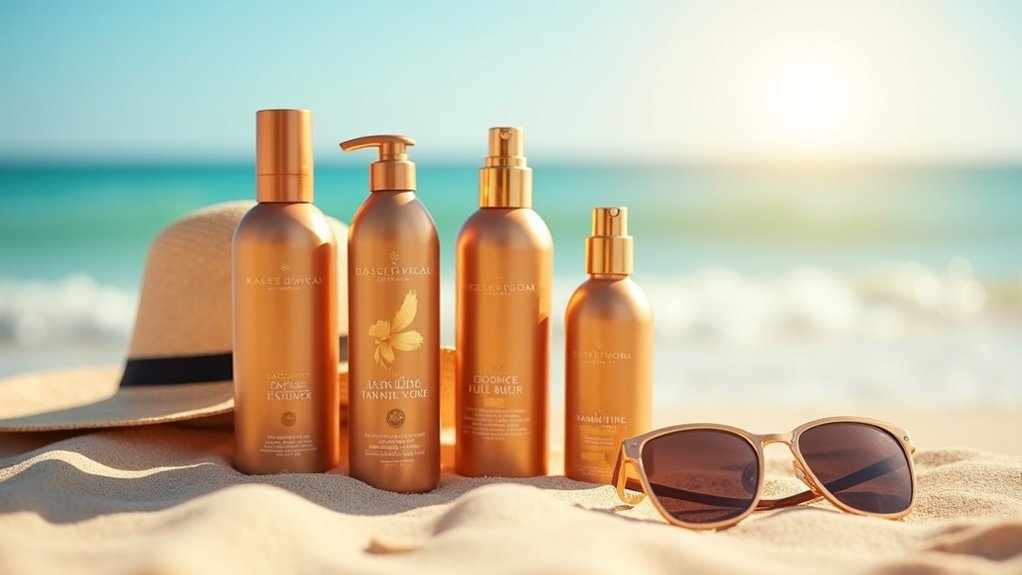
Finding your perfect tanning product match is crucial for achieving that sun-kissed glow without damaging your skin.
Consider your skin type when selecting tanning lotions—dry skin benefits from hydrating formulas, while oily skin responds better to lightweight options.
If you have fair skin, look for self-tanners with green or olive undertones to avoid the dreaded orange effect and create a natural-looking tan.
Bronzing products containing DHA work gradually by reacting with your skin’s amino acids, resulting in even color development.
For those with busy schedules, express self-tanners develop within hours, perfectly adapting to your skin needs and time constraints.
Before applying any new product to your entire body, always conduct a patch test, especially if you have sensitive skin, to prevent unwanted reactions.
Accelerate Your Tan With Strategic Sun Exposure
Smart sun exposure techniques can dramatically accelerate your tanning results while still protecting your skin from harmful UV damage.
For optimal results, limit your tanning sessions to 2-3 hours and always apply sunscreen with at least 30 SPF, even when actively trying to develop a deeper skin tone.
During peak UV exposure hours (10 a.m. to 4 p.m.), change positions frequently to tan evenly and prevent burning specific areas.
Keep your skin hydrated before and after sun sessions, as well-moisturized skin tans more effectively.
Boost your natural tanning ability by incorporating beta carotene-rich foods into your diet, such as carrots and sweet potatoes.
This strategic sun exposure approach helps you achieve that desired bronze glow while maintaining skin health and minimizing damage.
Enhance Results With Diet and Hydration
What you eat and drink plays a significant role in how quickly and evenly you’ll tan. Focus on beta carotene-rich foods like carrots and sweet potatoes, which naturally boost melanin production for a deeper, longer-lasting color.
Proper hydration is essential for maintaining skin elasticity and preventing sunburn while tanning. Aim to drink plenty of water throughout the day.
Include antioxidant-packed berries and leafy greens in your meals to protect your skin from damage caused by UV exposure.
Don’t forget to incorporate healthy fats from avocados and nuts, which improve skin hydration and promote an even tan.
Finally, reduce your consumption of processed foods and sugars, as they can trigger inflammation and compromise overall skin health.
These simple dietary adjustments will enhance your tanning results while supporting your skin’s natural functions.
Maintain and Extend Your Tan’s Lifespan
Once you’ve achieved that perfect sun-kissed glow, maintaining it requires consistent care and smart practices.
Moisturize daily with hydrating lotions to help your skin retain its color longer and prevent premature fading. When showering, use lukewarm water instead of hot, and select gentle, sulfate-free cleansers that won’t strip away your tan.
Remember to avoid exfoliating after tanning sessions, as this removes the top layer of skin where your tan resides. Wait until your color begins to fade before using any scrubs.
Despite having a tan, you’ll still need sunscreen during sun exposure to protect against UV damage while preserving your color.