
In the ever-evolving landscape of beauty and cosmetics, the fusion of art and makeup has opened up a fascinating pathway: cosmetics drawing. This specialized form of illustration not only celebrates the aesthetic allure of makeup products but also emphasizes the artistic skills required to depict them with precision and creativity. Whether used by professional makeup artists for planning looks or by aspiring artists exploring the interaction between color, form, and texture, cosmetics drawing is gaining traction as a valuable skill in both artistic and beauty communities.
At its core, cosmetics drawing bridges two distinct yet complementary worlds: the tactile, application-based craft of makeup artistry and the visual, imaginative realm of artistic design. As people seek to deepen their understanding of makeup application, visualization through sketching and detailed illustration has become indispensable. This practice allows for experimentation without physical application, fostering innovation and clarity in design. Moreover, in 2026, with an increasing demand for personalized and creative beauty content, cosmetics drawings provide an educational bridge and a tool for storytelling through visuals.
Key Highlights:
- Cosmetics drawing integrates foundational art techniques with the intricacies of makeup products and application.
- Mastery of basic shapes, lighting, and perspective is essential for realistic makeup product illustration.
- Different makeup products—lipstick, eyeshadow palettes, mascaras—pose unique challenges that require tailored drawing approaches.
- Texture rendering and reflective surfaces are crucial for conveying realism in makeup illustrations.
- Practical guidance and stepwise techniques facilitate beginners’ entry into the world of makeup sketching and cosmetic art design.
Foundational Drawing Techniques for Realistic Cosmetics Illustration
The art of cosmetics drawing begins with a thorough grasp of fundamental drawing concepts that form the backbone of any realistic portrayal. This mastery is critical as it provides the technical fluency required to translate three-dimensional makeup products into compelling two-dimensional art.
Breaking Down Complex Forms into Basic Shapes
Every makeup item, no matter how refined or intricate, can be simplified into basic geometric forms—cylinders, spheres, cones, and cubes. For instance, a lipstick is predominantly cylindrical with a tapered conical tip, while a compact mirror resembles a rounded cube. Training your eye to deconstruct these shapes enables you to achieve proportionate and spatially accurate sketches.
Practicing sketching these shapes from multiple viewpoints enhances your spatial intelligence and hand-eye coordination. Such foundational practice can be further honed by exploring various perspectives including one-point, two-point, and even three-point perspectives, essential for capturing the volume and depth of the illustrated product. The importance of this approach cannot be understated, as inaccurate proportion or perspective can undermine the realism and lifelikeness of your cosmetic illustration.
Mastering Light and Shadow to Add Dimension
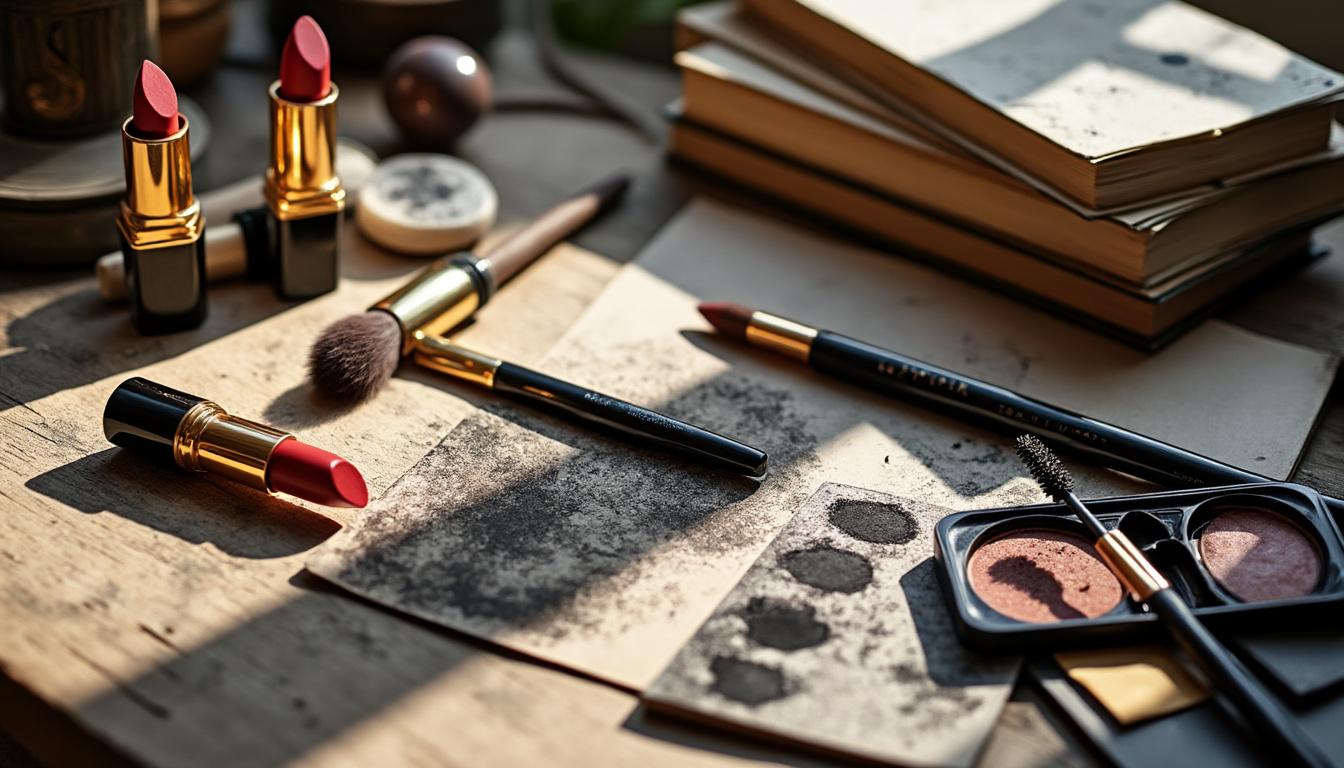
The interplay of light and shadow breathes life into flat drawings, creating volume and depth critical to realistic representations. In cosmetics, the shiny, reflective surfaces of packaging or the soft matte finish of powders each interact with light differently.
Carefully studying where highlights and shadows fall on actual makeup items will inform your shading techniques. Hatching, cross-hatching, and smooth blending are among the shading methods to simulate texture and reflectivity. For example, metallic lipstick tubes demand sharper, contrasted highlights, whereas a matte eyeshadow palette might require soft, diffused shading to suggest powder texture.
Exploring these techniques provides an excellent basis for more complex cosmetics art. For those seeking comprehensive artistic guidance in this niche, resources like professional makeup drawing tutorials offer valuable insights into these foundational skills.
Techniques for Drawing Diverse Makeup Products with Precision and Style
Understanding how to adapt your drawing approach for different cosmetics is key to mastering the full spectrum of makeup illustration. Each makeup product presents unique forms, textures, and reflective qualities that require customized techniques.
Lipstick and Lip Gloss
The smooth, cylindrical shape of lipstick tubes calls for careful proportioning and perspective work. When sketching, it’s important to differentiate between various finishes such as glossy versus matte packaging. Lip gloss, with its signature high-shine finish, poses particular challenges in capturing reflections and distorted highlights that subtly suggest its slick texture.
Adding decorative elements like brand logos and detailed caps enriches the authenticity of your drawing. For detailed product design or fashion illustrations, adding these subtle finishing touches can elevate your art from basic representation to refined visual storytelling.
Eyeshadow Palettes and Compact Mirrors
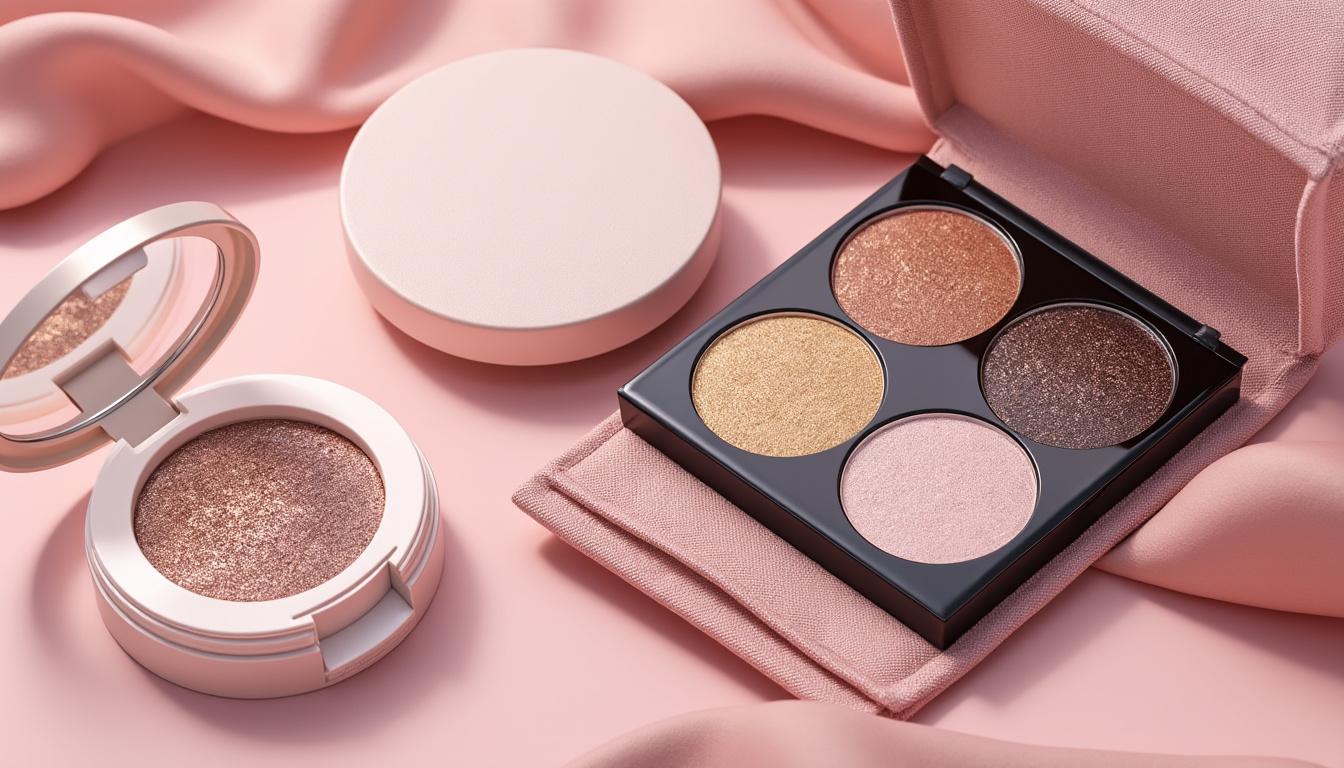
Angular and multi-faceted, these items benefit from a firm grasp of perspective and proportion. Rendering the reflection inside compact mirrors requires an understanding of environmental reflections and curvature. Palette drawings often demand color accuracy and texture differentiation, effectively conveying matte versus shimmer formulas.
Paying attention to hinge details and pan shapes enhances realism, while blending softly to mimic powder densities brings palettes to life. Such intricacies are highlighted in guides like those found on specialized drawing blogs dedicated to cosmetics illustration.
Mascara and Eyeliner
The elongated, often tapered shapes of mascara tubes and eyeliner pens require a refined approach to silhouette and detail. Capturing the application tips—the fine brush bristles on mascara wands or the pointed eyeliner tip—requires precision. Applying texture through tiny strokes mimics the volume and density of bristles, offering a tactile sense to your sketches.
Effective use of light and subtle gradations in tone can bring these slender objects to a believable, polished finish.
Rendering Textures and Surfaces: Capturing the Essence of Cosmetic Materials
Texture plays a defining role in cosmetics drawing, shaping the tactile spirit of a product through visual cues. From the soft powders of eyeshadows to the slick gloss of lip products, capturing these textures accurately enhances the realism and emotional impact of your art.
- Reflective Surfaces: Metallic and glossy packaging demands nuanced shading techniques. Highlight placement, smooth gradient transitions, and subtle distortions depict reflective qualities. Using blending tools like stumps and tortillons refines these effects.
- Matte Textures: Soft, powdery finishes require gentle shading without strong glare. Techniques like stippling or delicate cross-hatching communicate this subtle grain.
- Fabric Elements: Some makeup packaging includes fabric accents like velvet or sponge applicators. Layering light strokes combined with strategic shadows can create the sensation of softness or fluffiness.
Integrating branded logos and decorative typography also boosts authenticity. Precision in replicating font style, size, and placement adds depth to your illustration, making it resonate as a true-to-life design. Many artists find that combining traditional drawing skills with digital tools enriches their workflow for texture rendering and detail enhancement.
Practical Application: Step-by-Step Guide to Begin Drawing Makeup Effortlessly
For aspiring artists and makeup professionals alike, developing a structured approach to cosmetics drawing smooths the learning curve and builds confidence. Starting with the essentials and gradually advancing to complex techniques is crucial.
Essential Tools to Start Your Cosmetics Illustration Journey
High-quality materials can transform your artistic experience. At minimum, invest in:
- Graphite pencils ranging from HB to 6B for versatile shading and line work
- Blending tools such as stumps and tortillions to refine texture and gradients
- Erasers: kneaded for gentle corrections and plastic for precise adjustments
- Colored pencils or markers to experiment with makeup palettes and application
- Smooth drawing paper that supports layering without degradation
Stepwise Drawing Process for Beginners
- Observation – Study the makeup product carefully, noting shapes, texture, and color saturation.
- Basic Sketching – Begin by outlining fundamental shapes, aiming for correct proportion and perspective.
- Adding Details – Gradually incorporate finer details such as packaging textures, logos, and applicator specifics.
- Shading and Texture Rendering – Employ light and shadow techniques to add dimension and realism.
- Color Application – For colored illustrations, layer hues with attention to lighting and texture effects.
Adopting this structured approach allows for steady, manageable progress in mastering makeup sketching as both an art and a design discipline. Learners can benefit greatly from online tutorials and communities, such as those recommended by expert beauty illustration sites, which offer targeted advice for overcoming common obstacles.
Consistent practice, combined with reference to both physical products and high-quality digital resources, cultivates technical skill and artistic intuition simultaneously.
Advanced Artistry: Elevating Cosmetics Drawing to New Creative Heights
Beyond mastering the basics, the true art of cosmetics drawing lies in creative exploration and personal style development. As the beauty industry progressively embraces artistic expression, makeup illustration has become a medium not only for product depiction but for imaginative and conceptual design.
Experimenting with Lighting Effects and Color Dynamics
Advanced artists often manipulate lighting scenarios, introducing creative shadows or colored lighting to add mood and drama. This can be effective in fashion illustration settings or conceptual beauty editorials, where lighting enhances the narrative.
Incorporating Mixed Media and Digital Tools
Integrating digital software with traditional sketching broadens artistic possibilities. Digital layering, blending, and texturing tools allow for quick iteration and experimentation with both product design and makeup application effects. This hybrid approach is increasingly popular among contemporary artists aiming for polished, magazine-quality visuals.
Designing Original Makeup Looks through Illustration
Drawing also functions as a vital preparatory tool for professional makeup artists. By sketching proposed looks on face charts, artists plan techniques and color combinations before actual application, saving time and enhancing precision. This practice nurtures creativity and operational efficiency, bridging cosmetics art with makeup application professionally.
| Makeup Product | Shape Basics | Key Drawing Technique | Texture Rendering | Common Challenges |
|---|---|---|---|---|
| Lipstick & Lip Gloss | Cylinder & Cone | Highlight reflective surfaces & details | Smooth gradient & metallic sheen | Capturing gloss shine and reflection distortions |
| Eyeshadow Palettes | Rectangles & Rounded Cubes | Angular perspective & environmental reflections | Matte & shimmer powders | Accurate color blending and hinge detail |
| Mascara & Eyeliner | Slender Cylinders & Cones | Fine application tip detail | Delicate bristle textures | Precision in narrow shapes and tip curves |
Embracing these techniques with persistence and imagination allows artists to evolve their cosmetic drawing talents beyond technical replication into expressive, impactful beauty art. For those embarking on this rewarding journey, resources such as expert cosmetic product drawing guides are invaluable in deepening skillsets and refining artistic voice.