
Cold cream is a water-in-oil emulsion that both cleanses and moisturizes your skin. It combines equal parts water and oils (like mineral or almond oil) bound together by emulsifiers such as beeswax. When you apply it, the oils dissolve makeup and impurities while creating a protective barrier on your skin. It’s especially beneficial for dry or sensitive skin that can’t tolerate harsh cleansers. Understanding its centuries-old formula reveals why it remains a skincare staple today.
Key Takeaways
- Cold cream is an oil-in-water emulsion combining equal parts water and oil with emulsifiers like beeswax to cleanse and moisturize skin.
- It works by lifting away dirt and makeup while simultaneously providing hydration through its dual-action water and oil phases.
- The oil phase dissolves makeup and impurities, while the water phase provides hydration, creating a protective barrier on skin.
- Application involves massaging onto dry skin in circular motions, letting it sit briefly, then removing with a damp cloth.
- Cold cream is particularly beneficial for dry or sensitive skin types that react poorly to harsh surfactant-based cleansers.
What Is Cold Cream and How Does It Work?
Cold cream, a skincare staple with centuries of history, combines water, oil, and wax to create a versatile product that both cleanses and moisturizes your skin. This unique cold cream formula typically contains equal parts water and oil, bound together by emulsifiers like beeswax, creating a stable mixture that feels cool when applied.
When you massage it onto your face, the cream works by lifting away dirt, impurities, and makeup while simultaneously leaving behind a protective, hydrating barrier. This dual-action approach makes it especially beneficial for sensitive skin that might react poorly to harsh cleansers.
The moisturizing properties come from ingredients like mineral oil, almond oil, or coconut oil, which help improve your skin’s texture and appearance while providing lasting hydration.
The Ancient Origins and Evolution of Cold Cream
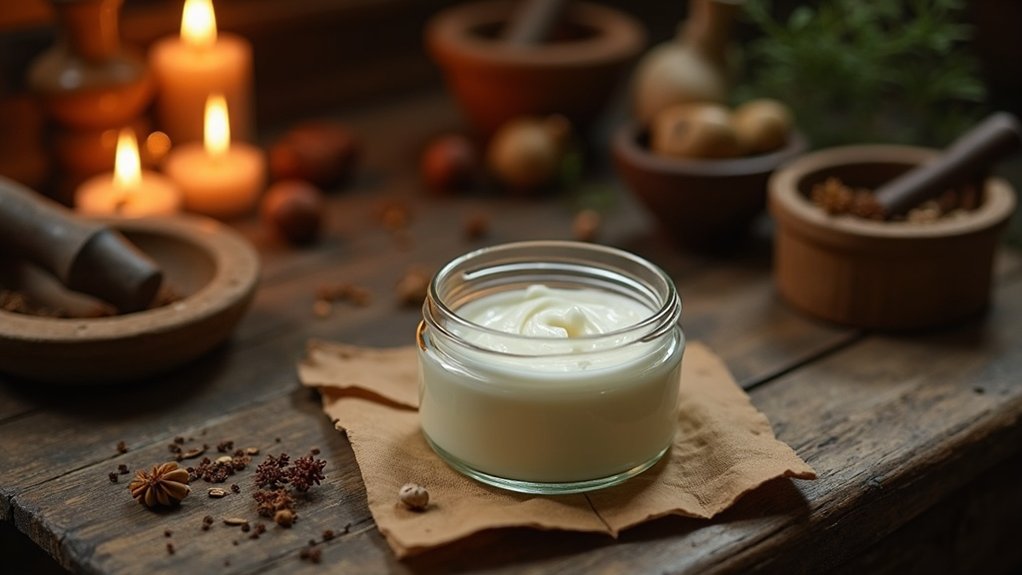
The beauty practice you enjoy today has a remarkable backstory that spans thousands of years. Cold creams originated in ancient Greece and Egypt, where they were essential elements of daily skincare routines.
The second-century physician Galen created “Cérat de Galien,” the original cold cream formulation that combined beeswax, oils, and water.
In the 1800s, Théophile LeClerc refined the recipe for French nobility, using beeswax, almond oil, and rosewater. This luxurious blend provided exceptional hydration and protection that women cherished.
As manufacturing processes evolved, traditional ingredients gradually gave way to alternatives like mineral oil, changing both texture and performance.
When you apply cold cream today, you’re participating in a skincare tradition that has served people across civilizations, continents, and centuries.
Understanding the Science Behind Cold Cream’s Formulation
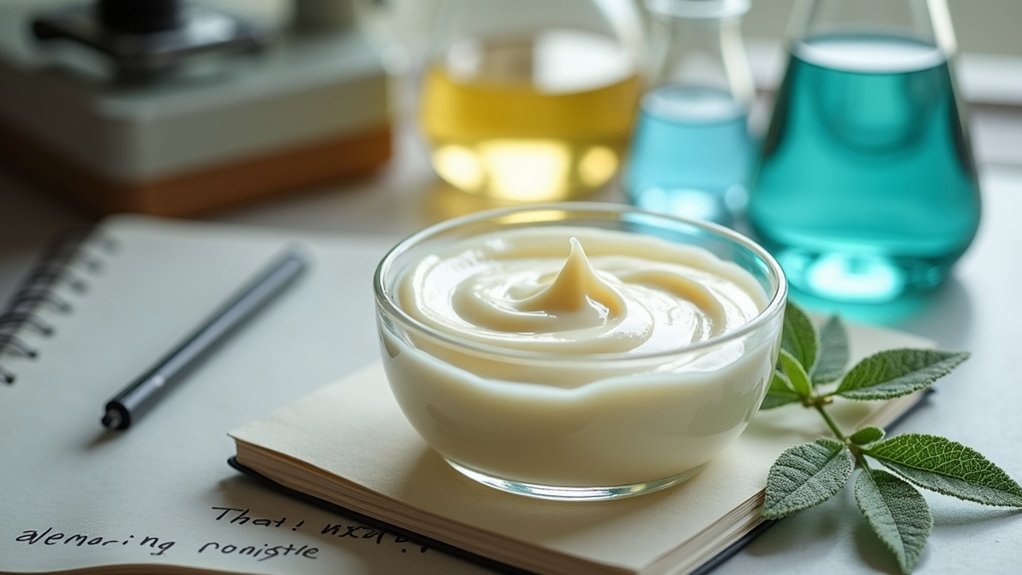
Cold cream’s effectiveness stems from its unique emulsion structure, where oil and water are held together by beeswax and other emulsifiers to form a stable, creamy product.
When you apply cold cream to your skin, the oil phase dissolves makeup and impurities while the water phase provides hydration, creating a dual-action cleansing and moisturizing effect.
The addition of preservatives like parabens helps maintain this delicate chemical balance, extending the shelf life of your cold cream without compromising its cooling, protective properties.
Emulsion Science Basics
Beneath the velvety texture of cold cream lies a fascinating scientific principle known as emulsion. When you apply cold cream to your skin, you’re using a special mixture where two liquids that normally don’t mix—oil and water—come together harmoniously.
Cold cream is specifically an oil-in-water emulsion, meaning tiny oil droplets are suspended throughout a water base.
How does this miracle happen? The secret is in emulsifiers like beeswax and borax that act as mediators between the opposing liquids. These specialized ingredients reduce surface tension, allowing mineral oils and water to coexist peacefully.
The high concentration of mineral oils creates a protective barrier on your skin while maintaining the cream’s thick, smooth consistency. Understanding this delicate balance helps scientists formulate cold creams that cleanse and moisturize effectively without separating or irritating your skin.
Oil-Water Bonding Mechanics
While most everyday substances either repel or dissolve into one another, the magic of cold cream’s formula happens when seemingly incompatible ingredients join forces through specialized bonding mechanics.
When you apply cold cream to your skin, you’re witnessing a scientific marvel. Emulsifiers like beeswax and borax create a stable bond between oil and water molecules that would normally separate.
These emulsifiers reduce surface tension between the two phases, allowing them to coexist harmoniously. The oil phase forms a protective barrier on your skin, preventing moisture loss, while the water phase delivers essential hydration.
This dual-action explains why cold cream excels at both cleansing and moisturizing simultaneously. The thickening agents not only give cold cream its signature consistency but also maintain the emulsion’s integrity, ensuring the product remains effective from the first scoop to the last.
Preservative Chemistry Elements
Beyond the ingenious oil-water bonding system of cold cream lies another scientific marvel: its preservative chemistry. When you apply cold cream to your skin, you’re benefiting from carefully selected preservatives that protect the formula from harmful microbial growth.
These protective ingredients work silently behind the scenes, ensuring your cream remains safe and effective throughout its shelf life.
The science gets even more interesting when you consider how preservatives interact with other components. Emulsifiers like beeswax don’t just stabilize the cream’s texture—they enhance preservative efficacy too.
The formula’s pH level is precisely calibrated, typically maintaining a slightly acidic environment where preservatives perform optimally. This delicate chemical balance creates a hostile environment for bacteria and fungi while remaining gentle on your skin.
Key Ingredients That Make Cold Cream Effective
At the heart of cold cream’s effectiveness lies its simple yet powerful composition of equal parts water and oil, bound together by crucial emulsifiers like beeswax and borax.
These emulsifiers, including fatty acids, create a stable mixture that allows the product to cleanse while providing essential moisture to your skin.
The high concentrations of mineral oils and waxes work by forming a protective barrier on the skin, preventing water loss and maintaining hydration.
This barrier helps lock in moisture, especially beneficial for those with dry or sensitive complexions.
Additional ingredients like glycerin and aloe vera enhance cold cream’s soothing properties, making it gentle enough for daily use.
This perfect balance of components explains why cold cream effectively removes makeup while simultaneously working to moisturize the skin.
Benefits of Cold Cream for Different Skin Types
Cold cream offers distinct advantages for various skin types, building on its balanced formulation discussed earlier.
If you’re dealing with dry or sensitive skin, you’ll find cold cream particularly beneficial as it provides deep hydration and creates a protective barrier against environmental stressors, while soothing irritation and redness.
For those with normal to combination skin, cold cream serves as a gentle makeup remover that nourishes without the harshness of traditional cleansers.
However, if you have acne-prone skin, exercise caution—cold cream’s rich texture may clog pores. Look for non-comedogenic formulations instead.
Regardless of your skin type, cold cream can improve your skin’s texture, enhancing softness and reducing the appearance of fine lines through its exceptional hydrating properties.
How to Properly Apply Cold Cream in Your Skincare Routine
Properly applying cold cream requires a few simple steps to maximize its benefits for your skin.
First, you’ll need to start with a clean, dry face, applying a small amount of the cream and gently massaging it in circular motions to help break down makeup and impurities.
After letting the cream sit for a minute to nourish your skin, you’ll remove it completely using a soft, damp washcloth or cotton pad, which ensures you’ve cleared away all traces of product while preserving your skin’s natural moisture.
Cleanse First, Apply Second
Although many skincare products have specific application requirements, cold cream stands out for its dual cleansing and moisturizing capabilities when applied correctly.
Start by applying the cold cream directly onto your dry skin, allowing it to work as both a makeup remover and moisturizer. Use gentle, circular motions with your fingertips to dissolve makeup and impurities without harsh scrubbing.
After massaging the cold cream thoroughly, remove it with a soft, damp cloth or cotton pad.
For a more comprehensive routine, follow with a gentle cleanser—this double cleansing approach is especially beneficial for oily or acne-prone skin.
Finally, apply your regular moisturizer to lock in hydration. This method ensures you’ll get the full cleansing benefits of cold cream while keeping your skin balanced, clean, and properly hydrated.
Massage in Circular Motions
When you’ve dispensed a small amount of cold cream onto your clean fingertips, the real magic begins with how you apply it to your skin. The key technique is to massage in circular motions, which helps the cream penetrate effectively while breaking down makeup and impurities.
As you apply the cold cream, pay special attention to areas with heavier makeup—your eyes and lips typically need extra care.
Continue the gentle circular massage for at least 30 seconds, allowing the cream to work its way into your skin’s outer layer. This methodical approach ensures the cold cream doesn’t just sit on top but actively nourishes your skin.
Once you’ve thoroughly massaged the cream, simply wipe away the excess with a soft cloth or rinse with water, revealing clean, moisturized skin underneath.
Removing Cold Cream Properly
Now that you’ve mastered the circular massage technique, the next step focuses on removing cold cream effectively to gain its full benefits.
After you apply cold cream, let it sit on your skin for a few minutes. This pause allows the product to dissolve makeup and nourish your skin thoroughly.
Next, take a soft damp cloth or cotton pad and gently wipe away the cream using upward motions. Be thorough but gentle, ensuring you remove all residue from your face.
For a complete cleanse, follow up with a mild cleanser or toner, especially if you have oily or acne-prone skin.
Finally, rinse your face with lukewarm water to refresh your skin and lock in moisture. This final step leaves your skin clean, hydrated, and ready for the next steps in your skincare routine.
Cold Cream vs. Modern Cleansers: A Comparison
Despite sharing the common goal of facial cleansing, cold cream and modern cleansers differ significantly in their formulation and function. Cold cream offers a unique dual-action approach, simultaneously cleansing and moisturizing your skin, while modern cleansers typically focus solely on removing impurities.
When you apply cold cream, you’re benefiting from its emulsified oils and water that create a protective barrier on your skin. This makes it especially suitable for dry or sensitive skin types that need extra hydration.
Modern cleansers, however, often contain surfactants that strip away oils, which may irritate delicate skin.
You’ll also appreciate that cold cream doesn’t require rinsing, unlike most modern cleansers that need water activation. This convenience, along with cold cream’s rich mineral oils and waxes, provides a gentler alternative to harsh ingredients found in many contemporary products.
Common Myths and Misconceptions About Cold Cream
Why do so many misunderstandings persist about this classic skincare product? Perhaps because cold cream has been around for generations, allowing myths to accumulate over time.
Contrary to popular belief, cold cream isn’t just a moisturizer—it’s an effective makeup remover that dissolves stubborn cosmetics while hydrating skin. While some believe it’s exclusively for mature skin, cold cream can benefit all skin types when used appropriately.
Many consider cold cream outdated, but modern formulations have evolved significantly from their ancient predecessors.
Another misconception is using it as a daily moisturizer, when it’s better suited as a cleansing step in your routine.
Worried about clogged pores? While some formulations can be comedogenic, non-comedogenic options exist specifically for acne-prone skin, allowing everyone to enjoy its gentle cleansing benefits.