
Eau de parfum (EDP) and eau de toilette (EDT) differ primarily in their fragrance concentrations. EDP contains 15-20% fragrance oils, making it more intense and longer-lasting (6-8 hours) than EDT, which has only 5-15% oils and lasts 4-6 hours. You’ll pay more for EDP due to higher oil content and complex production, but it’s ideal for special occasions. EDT offers a lighter, more affordable option perfect for everyday wear and warmer weather. The right choice depends on your specific needs and preferences.
Key Takeaways
- Eau de Parfum contains 15-20% fragrance oils while Eau de Toilette contains only 5-15%, creating different intensity levels.
- EDPs last 6-8 hours while EDTs typically last 4-6 hours due to their different concentrations.
- Eau de Parfum costs more due to higher oil concentration and complex production processes.
- EDTs are lighter for daily wear and warm weather, while EDPs are better for special occasions and evenings.
- EDPs have a stronger scent trail and lower alcohol content, making them gentler on sensitive skin.
Understanding Fragrance Concentrations: The Basics
When you’re shopping for perfumes, you’ll often encounter terms like “Eau de Parfum” and “Eau de Toilette” on elegant bottles, but these aren’t just fancy French phrases—they actually tell you important information about what’s inside.
These terms indicate fragrance concentrations, which directly affect how long the scent lasts and how strongly you’ll smell it.
Eau de Parfum (EDP) contains a higher concentration of fragrance oils, typically 15-20%, giving you a richer, more intense scent experience that lasts 6-8 hours.
In contrast, Eau de Toilette (EDT) has a lighter formula with 5-15% fragrance oils, making it perfect for daytime wear, especially in warm weather. The scent typically lingers for 4-6 hours.
Understanding these differences helps you choose the right option for your specific needs.
The Science Behind Eau De Parfum
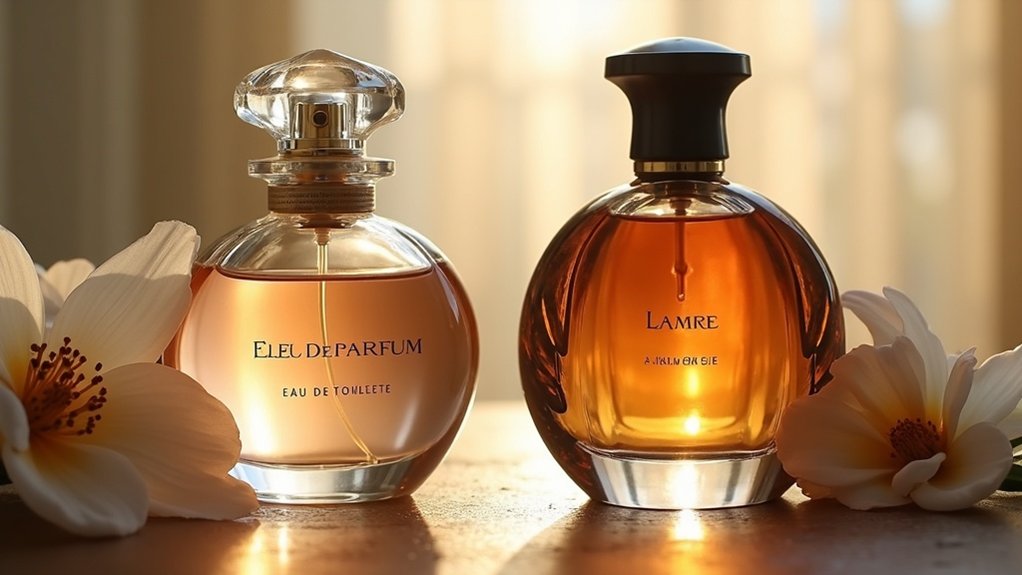
The true magic of Eau de Parfum lies in its carefully calibrated chemistry of fragrance oils and alcohol. When you choose an EDP, you’re selecting a formula with a higher concentration of fragrance oils—typically 15-20%—which creates a richer, more complex scent experience.
Unlike lighter fragrance types, Eau de Parfums deliver a long-lasting scent that typically remains on your skin for 6-8 hours. This exceptional longevity makes them perfect for special occasions or evening events where you want your fragrance to persist.
The lower alcohol content can also be gentler on sensitive skin.
What you’ll appreciate most is how EDPs evolve throughout wear, with different fragrance notes emerging over time. This layered composition creates a dynamic scent journey that transforms beautifully as you move through your day.
Exploring Eau De Toilette: Characteristics & Benefits
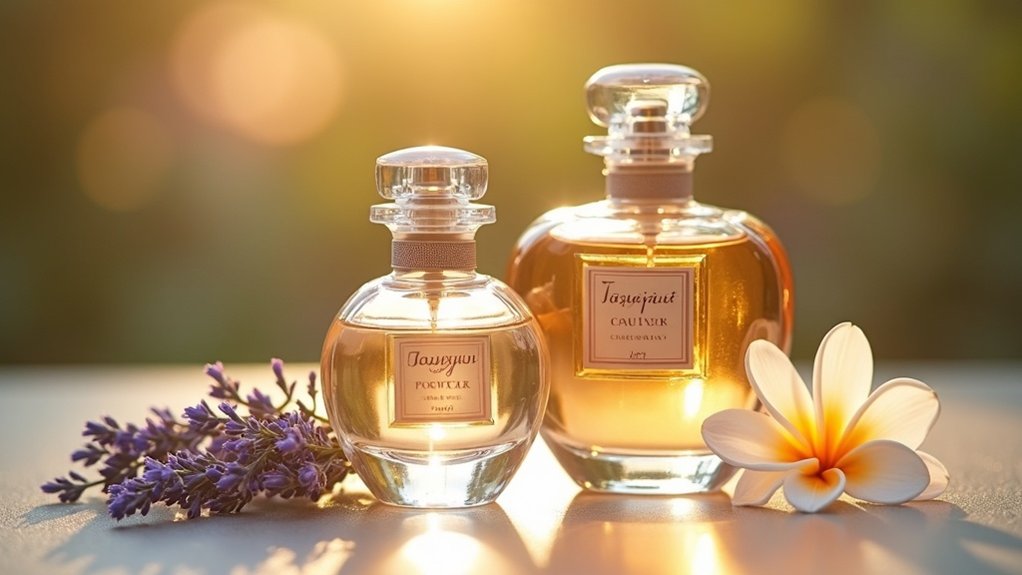
You’ll find Eau de Toilette offers a light, refreshing experience with its 5-15% concentration of fragrance oils, making it perfect for your everyday activities without overwhelming those around you.
Its 4-6 hour longevity strikes the ideal balance between presence and subtlety, allowing you to transition comfortably from morning meetings to afternoon outings.
EDT’s budget-friendly price point means you can build a diverse collection for different occasions, giving you versatility without straining your wallet.
Light and Refreshing
Diving into the world of Eau de Toilette reveals a fragrance category celebrated for its delicate balance of presence and subtlety.
With its lower concentration of fragrance oils (typically 5-15%), EDT offers you a light and refreshing alternative to heavier scent options.
You’ll appreciate how EDT’s gentle nature makes it perfectly suitable for daytime activities, professional settings, or casual outings where you don’t want your fragrance to overwhelm others.
The 4-6 hour longevity hits the sweet spot for those serving in public-facing roles, allowing for discreet reapplication when needed.
During warmer months, EDT’s airy character becomes particularly valuable, providing a cooling sensation while avoiding the cloying effect that more concentrated fragrances might create.
Plus, its affordability means you can enjoy quality scents without stretching your budget.
Everyday Versatility
Beyond its refreshing quality, Eau de Toilette shines in its remarkable adaptability to your daily routine. With its moderate concentration of 5-15% fragrance oils, EDT offers the perfect balance between presence and subtlety for various situations throughout your day.
You’ll appreciate how Eau de Toilette’s 4-6 hour duration makes it practical for work environments or casual outings where you want to make a gentle impression without overwhelming others.
Its everyday versatility extends to its affordability, allowing you to build a collection of scents for different occasions without breaking your budget.
EDT’s lighter nature also makes it ideal for layering with complementary scented products, creating a personalized fragrance experience.
While not among the most long-lasting fragrances, its accessible price point means you can reapply as needed throughout your day.
Budget-Friendly Option
One of the most compelling advantages of Eau de Toilette lies in its wallet-friendly nature, making quality fragrances accessible to fragrance enthusiasts on any budget.
You’ll typically find EDTs priced significantly lower than their EDP counterparts, allowing you to enjoy premium scents without the premium price tag.
This affordability stems from the lighter formulation, which contains just 5-15% fragrance oils compared to the higher concentration in parfums.
The economic benefit doesn’t mean compromising quality, though. Instead, you’re investing in a versatile product that can be applied more generously or reapplied throughout the day as needed.
For those who enjoy variety in their fragrance collection, the budget-friendly option of Eau de Toilette allows you to own several different scents for the price of one EDP.
Price Points: Why EDPs Typically Cost More
When you’re shopping for fragrances, you’ll notice that Eau de Parfum consistently carries a higher price tag than Eau de Toilette because EDPs contain 15-20% fragrance oils compared to EDT’s mere 5-15%, requiring more expensive raw materials.
The complex production process of EDPs involves higher-quality ingredients and extended aging periods, which add to manufacturing costs that companies pass on to consumers.
Your EDP investment pays off through significantly longer scent longevity, with fragrances typically lasting 6-8 hours versus the 4-6 hour lifespan of EDTs, making them worth the premium for all-day wear.
Raw Materials Impact Cost
The price difference between fragrances isn’t just about fancy bottles or brand names—it’s primarily about what’s inside.
When you compare Eau de Parfum to Eau de Toilette, you’re looking at a significant difference in raw material concentration.
EDPs contain 15-20% fragrance oils versus EDT’s 5-15%, requiring more of the precious ingredients that give perfumes their character.
These higher-quality raw materials often undergo more complex extraction and processing methods, directly impacting production costs.
The richer concentration allows for more complex scent profiles with deeper notes and higher intensity.
While you’ll pay more upfront for an EDP, consider the value: your fragrance will last 6-8 hours compared to an EDT’s 4-6 hours.
This extended longevity means you’re actually getting more fragrance per dollar over time.
Production Process Complexity
Beyond raw materials alone, manufacturing processes play a significant role in why you’ll pay more for that bottle of Eau de Parfum on the department store shelf.
When crafting an EDP, perfumers must manage a higher concentration of fragrance oils (15-20%), requiring more precise formulation techniques than the simpler Eau de Toilette (5-15%).
The production process for EDPs includes extended maceration periods where ingredients blend and mature together, sometimes for months.
This patient approach allows the complex scent profile to develop fully. The concentration impacts not just the final aroma but necessitates greater expertise in balancing fragrance notes.
Perfumers must carefully adjust each component to ensure harmonious development as the scent progresses on your skin.
This additional craftsmanship translates to the premium price you’ll see when comparing EDPs to their EDT counterparts.
Longer Scent Longevity
Perhaps the most significant difference you’ll notice between these two fragrance types lies in their staying power.
When you apply Eau de Parfum to your skin, you’re getting a fragrance with 15-20% concentration of fragrance oils, which allows the scent to last significantly longer—typically 6-8 hours.
In contrast, Eau de Toilette contains only 5-15% fragrance oils, resulting in a shorter scent duration of about 4-6 hours.
This extended longevity makes Eau de Parfum an excellent choice when you’re serving at evening functions or special occasions where you need your fragrance to persist.
The higher concentration not only ensures your scent remains noticeable longer but also creates a more pronounced sillage, leaving a distinctive scent trail that others will appreciate as you move through a room.
Choosing the Right Concentration for Different Occasions
When selecting a fragrance for your day-to-day activities, understanding the difference between concentration levels becomes essential for making appropriate choices.
Eau de Toilette contains 5-15% fragrance oils, making it perfect for casual settings or warmer weather when you need a lighter touch. In contrast, Eau de Parfum, with its higher 15-20% concentration, delivers greater scent intensity for special events or evening occasions.
Consider your schedule when choosing between these options. If you’re heading to school or casual outings, an EDT like Glen Rosa Fig & Ylang Ylang provides a refreshing, subtle presence lasting 4-6 hours.
For important social gatherings or dates where you want to make a lasting impression, an EDP like After the Rain will maintain its bold character for 6-8 hours, ensuring you feel confident throughout your event.
Maximizing Longevity: Storage & Application Tips
The perfect fragrance experience extends well beyond selecting the right concentration for your occasion—it also depends on how you store and apply your scents.
To maximize your Eau de Parfum’s longevity, always store bottles in their original boxes in a cool, dry place away from direct sunlight and heat sources.
When applying your fragrance, target pulse points where body heat naturally intensifies the scent—wrists, behind ears, and base of throat work wonderfully.
Remember not to rub your wrists together after application, as this breaks down the fragrance notes and diminishes their staying power.
For optimal scent duration, choose Eau de Parfum for important events, as it typically lasts 6-8 hours compared to Eau de Toilette’s 4-6 hours.
Always keep bottles tightly closed to prevent air exposure that can alter your precious fragrances over time.