
Dandruff can lead to hair loss through several mechanisms. When Malassezia fungus overgrows on your scalp, it releases irritating oleic acids, causing inflammation and itching. Your scratching damages hair follicles directly while chronic inflammation disrupts your normal hair growth cycle, pushing follicles into a resting phase. This combination weakens hair roots, increases shedding, and can eventually lead to noticeable thinning. Understanding this connection helps you tackle both problems with targeted treatments.
Key Takeaways
- Malassezia fungus releases oleic acid that irritates the scalp, causing inflammation and disrupting normal hair growth cycles.
- Scratching an itchy scalp damages hair follicles, weakens hair roots, and can lead to breakage and hair loss.
- Chronic scalp inflammation from dandruff triggers cytokines that push hair follicles prematurely into the resting phase.
- Dandruff creates an unhealthy scalp environment that weakens hair strands and makes them more susceptible to falling out.
- Untreated severe dandruff can develop into seborrheic dermatitis, causing prolonged inflammation and potentially permanent hair loss.
The Science Behind Dandruff and Hair Follicle Damage
While many people consider dandruff merely an embarrassing cosmetic issue, it actually represents a complex biological process that can potentially damage your hair follicles and contribute to hair loss.
At the core of this problem is Malassezia, a naturally occurring fungus that can overgrow on your scalp. When this happens, the fungus releases oleic acids that irritate your skin, causing inflammation and the characteristic flaking.
You’ll likely respond by scratching your itchy scalp, but this natural reaction can physically damage your hair follicles. The repeated trauma from scratching, combined with persistent inflammation, weakens your hair roots and disrupts the normal growth cycle.
Over time, this chronic inflammatory environment can lead to increased hair shedding and, in severe cases, permanent hair loss.
How Scalp Inflammation Disrupts the Hair Growth Cycle
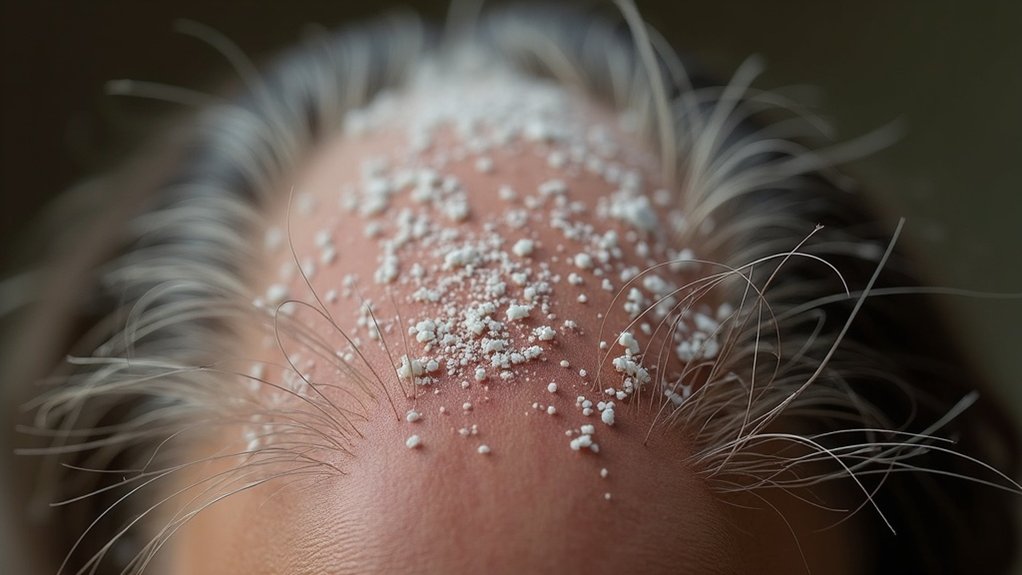
Your scalp’s inflammatory response to dandruff triggers a cascade of cytokines, small proteins that signal your immune system to ramp up inflammation.
These inflammatory messengers disrupt your normal hair growth cycle, pushing more follicles into the resting phase where they’re prone to shedding.
When this inflammatory cycle continues unchecked, you’ll experience increasing hair loss as your follicles spend less time in the growth phase and more time in a state of distress.
Cytokines Trigger Hair Shedding
Though often overlooked, the inflammatory response triggered by dandruff creates a cascade of events that can significantly impact your hair’s health.
When dandruff inflames your scalp, your body releases cytokines—signaling molecules that can disrupt your normal hair growth cycle.
These cytokines force your hair follicles to prematurely enter their resting phase, leading to increased hair shedding. You’ll notice more hair falling out during brushing or washing as these inflammatory signals trigger early release of hair strands before they’ve completed their full growth cycle.
The damage doesn’t stop there. Prolonged inflammation weakens your hair roots and can keep follicles dormant for extended periods, preventing new growth.
Fortunately, treating your dandruff with medicated products can reduce these cytokine levels, allowing your hair follicles to resume their normal, healthy functioning.
Inflammatory Cascade Effects
Beneath the visible flakes of dandruff lies a complex inflammatory process that can wreak havoc on your hair’s natural growth cycle.
When Malassezia fungus triggers an immune response on your scalp, your body releases chemicals that cause scalp inflammation, accelerating skin cell turnover and creating thicker flakes that can block hair follicles.
This chronic inflammation damages the delicate structures needed for healthy hair growth. Your follicles become weaker at the root, making your hair more likely to shed prematurely.
If you scratch your itchy scalp, you’ll cause additional trauma that could permanently damage follicles and prolong hair loss.
The good news? By treating dandruff with medicated shampoos and scalp treatments, you can interrupt this inflammatory cascade, allowing your follicles to heal and resume normal hair production.
The Connection Between Scratching and Hair Breakage
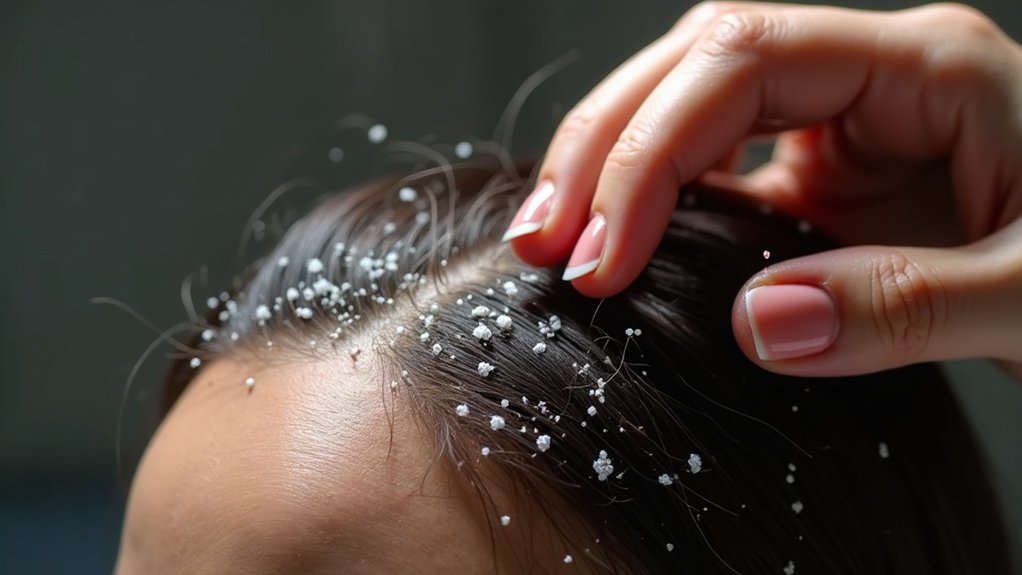
When dandruff causes an itchy scalp, the natural response to scratch can set off a problematic chain reaction for your hair health.
As you scratch to relieve the itch, you’re potentially damaging your hair follicles, which can lead to noticeable hair breakage and thinning over time.
The inflammation created by chronic scratching disrupts your natural hair growth cycle, sometimes resulting in temporary hair loss.
Additionally, the scratching motion weakens your hair strands, making them more vulnerable to breaking.
This repeated action can damage your scalp’s protective skin barrier, which worsens your dandruff condition and creates a frustrating cycle of itching, scratching, and hair loss.
Distinguishing Between Dandruff and Scalp Psoriasis
Many people confuse dandruff with scalp psoriasis, but these two conditions differ significantly in both appearance and treatment requirements.
When you examine dandruff, you’ll notice small white or yellow flakes, while scalp psoriasis presents as thicker, silvery scales with red, inflamed patches that may extend beyond your hairline.
Unlike dandruff, which responds well to medicated shampoos, scalp psoriasis is an autoimmune condition requiring medical intervention.
The intense itching from scalp psoriasis can lead to aggressive scratching, potentially damaging hair follicles and causing hair loss.
While dandruff affects nearly half the population, scalp psoriasis is less common but more serious.
If you’re experiencing persistent flaking and severe itching, consult a healthcare provider to determine which of these skin conditions you’re dealing with.
Fungal Overgrowth and Its Impact on Hair Retention
The hidden relationship between fungal overgrowth and hair loss often goes unrecognized despite its significant impact on scalp health.
When Malassezia fungi multiply excessively on your scalp, they trigger a cascade of problems affecting your hair. These fungi produce oleic acid, which irritates your scalp and leads to inflammation around hair follicles.
You might notice increased itchiness, prompting you to scratch your scalp and inadvertently damage hair roots. This combination of inflammation and physical trauma disrupts your normal hair growth cycle.
The resulting dandruff isn’t just embarrassing—it’s a sign that your scalp environment may be compromising hair retention. By addressing fungal overgrowth with appropriate antifungal treatments, you’re not only eliminating flakes but also creating optimal conditions for healthier hair growth and improved hair retention.
Effective Medicated Treatments to Preserve Hair Health
Four powerful medicated treatments can transform your dandruff problem while protecting your precious hair follicles. Shampoos containing pyrithione zinc, ketoconazole, and selenium sulfide offer potent antifungal properties that target Malassezia, the fungus responsible for dandruff and potential hair loss.
When you use these medicated shampoos according to their instructions, you’ll effectively control scalp flaking while maintaining optimal scalp health.
Don’t forget to keep your scalp moisturized with gentle oils or conditioners after treatment, as this prevents the dryness that can worsen dandruff.
Early and consistent intervention is crucial—by addressing dandruff promptly, you’ll prevent chronic inflammation that damages hair follicles. This proactive approach reduces your risk of temporary hair loss caused by scratching and irritation, preserving your hair’s strength and vitality.
Lifestyle Changes to Restore Scalp Balance and Minimize Hair Loss
Transforming your daily habits can create a healthier environment for your hair follicles and significantly reduce dandruff-related hair loss.
You’ll need to focus on consuming nutrient-rich foods, practicing stress management techniques, and adopting gentler hair washing methods that don’t strip your scalp of natural oils.
These lifestyle modifications, when consistently maintained, work together to restore your scalp’s natural balance, creating optimal conditions for hair retention and regrowth.
Nutrition for Scalp Health
While many people focus primarily on external treatments for dandruff and hair loss, your diet plays a crucial role in maintaining a healthy scalp environment. Your nutrition directly affects scalp health by providing essential nutrients that combat dandruff and strengthen hair follicles. Foods rich in zinc, biotin, and omega-3 fatty acids help reduce inflammation and support natural scalp function.
Incorporate antioxidant-packed fruits and vegetables to fight oxidative stress caused by Malassezia, the fungus associated with dandruff. These foods also boost your immune system, helping your body naturally defend against scalp conditions.
Stay hydrated and add probiotics to your meals to improve gut health, which indirectly benefits your scalp. Reducing sugar and processed foods can regulate sebum production, preventing the oily environment that dandruff thrives in.
Stress-Reduction Hair Protocols
Chronic stress doesn’t just affect your mind—it can significantly impact your scalp health and contribute to both dandruff and hair loss.
When you incorporate stress-reduction practices into your daily routine, you’re actively protecting your hair follicles and improving your scalp condition. Try beginning with just 10 minutes of meditation or yoga daily to create a healthier scalp environment.
Regular walks or aerobic exercise can lower stress hormones that worsen dandruff-related issues.
You’ll see improvements in your hair health when you practice deep breathing or mindfulness techniques, which mitigate scalp sensitivity.
Establishing a consistent sleep schedule helps regulate stress responses that affect your scalp.
Don’t forget that a balanced diet rich in hair-supporting nutrients works alongside these practices to restore your scalp’s natural balance.
Gentle Cleansing Routines
Establishing a gentle cleansing routine forms the foundation of effective dandruff management and hair loss prevention.
Select medicated shampoos containing zinc pyrithione or ketoconazole, which combat flaking while protecting your hair follicles. When washing, use lukewarm water instead of hot, as excessive heat can strip natural oils and worsen both dandruff and hair loss.
After cleansing, apply lightweight moisturizing conditioners to hydrate your scalp and strengthen hair strands against breakage.
Remember to massage products gently—avoid aggressive scrubbing that might damage follicles and accelerate hair loss.
Regular washing with appropriate products helps maintain balanced scalp health by removing excess oils and dead skin without causing irritation.
This balanced approach ensures you’re addressing the root causes of dandruff while simultaneously protecting your hair from unnecessary thinning.
When to Seek Professional Help for Dandruff-Related Hair Thinning
Although many dandruff cases respond well to over-the-counter treatments, certain warning signs indicate it’s time to consult a medical professional. If you’ve used medicated shampoos consistently for 4-6 weeks without improvement, your dandruff may require specialized attention.
Don’t delay seeking help if you notice hair thinning accompanied by severe itching, intense scalp redness, or inflammation, as these symptoms might signal seborrheic dermatitis or another serious condition.
Watch for concerning developments like thinning patches or bald spots where dandruff is present. When scratching damages your hair follicles, a healthcare provider can intervene before permanent hair loss occurs.
Any significant changes in hair density or increased shedding alongside dandruff warrants professional assessment. Your healthcare provider will develop a personalized treatment plan to address both conditions simultaneously.